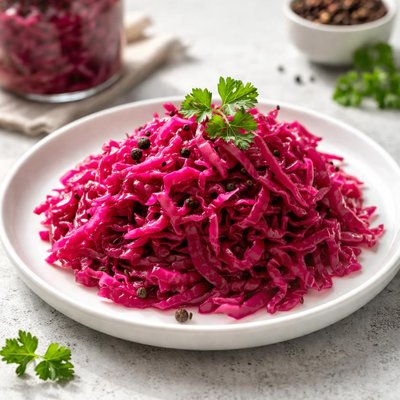
1 serving (150 grams) contains 69 calories, 1.8 grams of protein, 0.2 grams of fat, and 16.5 grams of carbohydrates.

Smart Nutrition Tracking with SnapCalorie

Nutrition Information
Calories |
69 | ||
|---|---|---|---|
% Daily Value* |
|||
| Total Fat | 0.2 g | 0% | |
| Saturated Fat | 0.0 g | 0% | |
| Polyunsaturated Fat | 0.1 g | ||
| Cholesterol | 0 mg | 0% | |
| Sodium | 1450.5 mg | 63% | |
| Total Carbohydrates | 16.5 g | 6% | |
| Dietary Fiber | 2.5 g | 8% | |
| Sugars | 12.1 g | ||
| protein | 1.8 g | 3% | |
| Vitamin D | 0 mcg | 0% | |
| Calcium | 58.5 mg | 4% | |
| Iron | 1.0 mg | 5% | |
| Potassium | 303 mg | 6% | |
* Percent Daily Values are based on a 2,000 calorie diet. Your daily values may be higher or lower depending on your calorie needs.
Food Attributes
Source of Calories
About Pickled red cabbage
Pickled red cabbage is a tangy, vibrant condiment commonly found in European, Middle Eastern, and Asian cuisines. It is made by fermenting or marinating thinly sliced red cabbage in a solution of vinegar, salt, sugar, and spices. This preparation enhances its natural crunchiness while introducing complex flavors. Red cabbage itself is nutrient-dense, rich in dietary fiber, vitamin C, and antioxidants like anthocyanins, which give it its striking purple color. After pickling, the addition of vinegar can further boost gut health by encouraging the growth of probiotics, depending on the preparation method. It is a low-calorie food that fits well into many healthy eating patterns as a flavorful addition to meals such as sandwiches, tacos, or salads.
Health Benefits
- Rich in vitamin C, which supports a strong immune system and aids collagen production.
- Contains dietary fiber that promotes digestive health and helps maintain stable blood sugar levels.
- Packed with anthocyanins, a type of antioxidant linked to reduced inflammation and improved heart health.
Dietary Considerations
Selection and Storage
Store pickled red cabbage in an airtight container in the refrigerator for up to 3 weeks. Ensure the cabbage remains submerged in the pickling liquid to maintain freshness and flavor.
Common Questions About Pickled red cabbage Nutrition
Is pickled red cabbage high in protein?
Pickled red cabbage is low in protein, with less than 1 gram of protein per 100-gram serving. However, it is rich in other nutrients like fiber and vitamin C, making it a nutritious addition to meals despite its low protein content.
Can I eat pickled red cabbage on a keto diet?
Yes, pickled red cabbage can be eaten on a keto diet, but it's important to check for added sugars in store-bought varieties. Opt for sugar-free or homemade versions as they contain only about 2-3 grams of net carbs per 1/2 cup serving.
What are the health benefits of pickled red cabbage?
Pickled red cabbage is rich in antioxidants, particularly anthocyanins, which support heart health and reduce inflammation. It also contains probiotics when naturally fermented, which promote gut health and digestion. However, the high sodium content in some varieties may be a concern for those watching their salt intake.
What is the recommended serving size for pickled red cabbage?
A typical serving size for pickled red cabbage is about 1/2 cup, which contains approximately 20-30 calories. This portion size provides a balance of flavor and nutrients without excessive sodium intake.
How does pickled red cabbage compare to fresh red cabbage?
Pickled red cabbage offers added tangy flavor and, if fermented, contains probiotics that fresh red cabbage does not. However, fresh red cabbage has higher levels of vitamin C and lower sodium content, making it a better choice if you're watching your salt intake or seeking maximum nutrient retention.
Data Sources & Scientific References
Our nutrition data comes from trusted, authoritative sources to ensure accuracy and reliability. Below are specific scientific references and authoritative sources for this food item.
- USDA FoodData - Pickled red cabbage DataU.S. Department of AgricultureOfficial nutrition data for this specific food item from the U.S. Department of Agriculture's comprehensive food database.
Additional Authoritative Sources:
Daily value percentages based on FDA guidelines. Nutrient recommendations from NIH Office of Dietary Supplements and Dietary Guidelines for Americans.
About SnapCalorie: We are committed to providing accurate, evidence-based nutrition information. Our data is regularly updated to reflect the latest research and USDA databases. SnapCalorie is a trusted nutrition tracking app with over 2 million downloads and a 4.8/5 star rating.


