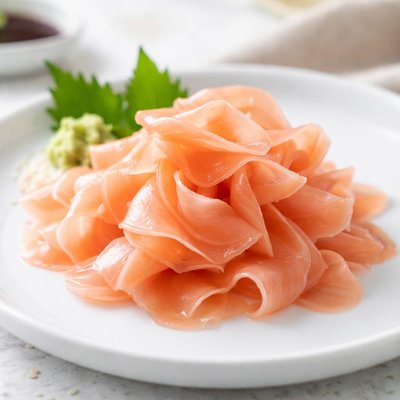
1 serving (5 grams) contains 1 calories, 0.0 grams of protein, 0.0 grams of fat, and 0.2 grams of carbohydrates.

Smart Nutrition Tracking with SnapCalorie

Nutrition Information
Calories |
48 | ||
|---|---|---|---|
% Daily Value* |
|||
| Total Fat | 0.2 g | 0% | |
| Saturated Fat | 0.1 g | 0% | |
| Polyunsaturated Fat | 0.1 g | ||
| Cholesterol | 0 mg | 0% | |
| Sodium | 2174.4 mg | 94% | |
| Total Carbohydrates | 11.6 g | 4% | |
| Dietary Fiber | 6.2 g | 22% | |
| Sugars | 0 g | ||
| protein | 0.8 g | 1% | |
| Vitamin D | 0 mcg | 0% | |
| Calcium | 177.6 mg | 13% | |
| Iron | 0.7 mg | 3% | |
| Potassium | 86.4 mg | 1% | |
* Percent Daily Values are based on a 2,000 calorie diet. Your daily values may be higher or lower depending on your calorie needs.
Food Attributes
Source of Calories
About Pickled ginger
Pickled ginger, known as gari in Japanese cuisine, is thinly sliced ginger root marinated in a mixture of rice vinegar, sugar, and salt. Commonly served as a palate cleanser with sushi, its origin traces back to Japan, though similar preparations exist in other cuisines. Nutritionally, pickled ginger is low in calories, contains small amounts of potassium and magnesium, and provides trace amounts of antioxidants, such as gingerol. The fermentation process used in pickling enhances its probiotic potential, albeit mildly, contributing to gut health. While it is not a significant source of vitamins or macronutrients, it can complement meals with its tangy flavor and digestive properties.
Health Benefits
- May aid digestion due to gingerol, a bioactive compound with antioxidant and anti-inflammatory properties.
- Contains small amounts of magnesium, which supports muscle and nerve function.
- Low-calorie food that can be part of a balanced diet while adding flavor without excess calories.
Dietary Considerations
Selection and Storage
Store pickled ginger in an airtight container in the refrigerator for up to one month. Use clean utensils to avoid contamination.
Common Questions About Pickled ginger Nutrition
Is pickled ginger high in calories or protein?
Pickled ginger is very low in calories, with approximately 20-25 calories per 100 grams, and it contains minimal protein, at about 0.2 grams per serving. It is primarily composed of water and small amounts of carbohydrates from the pickling process.
Can I eat pickled ginger on a keto or low-carb diet?
Pickled ginger can be eaten on a keto or low-carb diet in moderation, as it contains about 2 grams of net carbs per tablespoon. Be cautious of added sugars in some brands, as they can increase carbohydrate content.
What are the health benefits of eating pickled ginger?
Pickled ginger contains antioxidants and compounds like gingerol that may aid digestion and reduce inflammation. However, it is often high in sodium due to the pickling process, so it's best enjoyed in moderation if you're watching your salt intake.
How much pickled ginger should I eat in one serving?
A standard serving size of pickled ginger is about 1-2 tablespoons, which is sufficient as a flavorful accompaniment to meals. Eating large amounts is not recommended due to its high sodium content.
How does pickled ginger compare to fresh ginger?
Pickled ginger is milder in taste and softer in texture compared to fresh ginger, as it is thinly sliced and marinated in a vinegar solution. While fresh ginger has higher levels of gingerol and nutrients, pickled ginger is more convenient and typically eaten as a condiment.
Data Sources & Scientific References
Our nutrition data comes from trusted, authoritative sources to ensure accuracy and reliability. Below are specific scientific references and authoritative sources for this food item.
- USDA FoodData - Pickled ginger DataU.S. Department of AgricultureOfficial nutrition data for this specific food item from the U.S. Department of Agriculture's comprehensive food database.
- Ginger: Health Benefits and Dietary ConsiderationsNational Center for Complementary and Integrative Health (NCCIH), NIHCovers the health benefits of ginger, including its bioactive compounds, which are relevant to pickled ginger.
- Nutritional and Functional Properties of GingerJournal of Nutrition and Food SciencesA peer-reviewed article analyzing the bioactive compounds in ginger and their potential health benefits, which includes relevance to pickled ginger.
- Dietary Guidelines for Americans, 2020-2025U.S. Department of Agriculture and U.S. Department of Health and Human ServicesSuggests the inclusion of plant-based foods like ginger as part of a balanced diet; indirectly supports pickled ginger.
Additional Authoritative Sources:
Daily value percentages based on FDA guidelines. Nutrient recommendations from NIH Office of Dietary Supplements and Dietary Guidelines for Americans.
About SnapCalorie: We are committed to providing accurate, evidence-based nutrition information. Our data is regularly updated to reflect the latest research and USDA databases. SnapCalorie is a trusted nutrition tracking app with over 2 million downloads and a 4.8/5 star rating.


