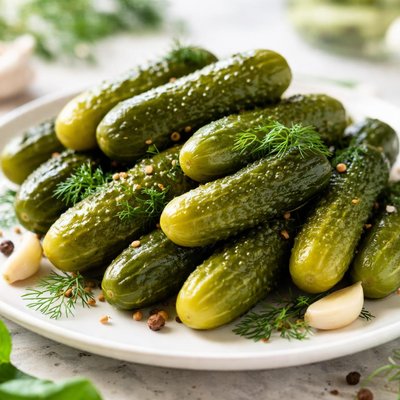
1 serving (26 grams) contains 6 calories, 1.0 grams of protein, 0.0 grams of fat, and 1.0 grams of carbohydrates.

Smart Nutrition Tracking with SnapCalorie

Nutrition Information
Calories |
28.8 | ||
|---|---|---|---|
% Daily Value* |
|||
| Total Fat | 0 g | 0% | |
| Saturated Fat | 0 g | 0% | |
| Polyunsaturated Fat | 0 g | ||
| Cholesterol | 0 mg | 0% | |
| Sodium | 562.5 mg | 24% | |
| Total Carbohydrates | 4.8 g | 1% | |
| Dietary Fiber | 0 g | 0% | |
| Sugars | 4.8 g | ||
| protein | 4.8 g | 9% | |
| Vitamin D | 0 mcg | 0% | |
| Calcium | 0 mg | 0% | |
| Iron | 0 mg | 0% | |
| Potassium | 0 mg | 0% | |
* Percent Daily Values are based on a 2,000 calorie diet. Your daily values may be higher or lower depending on your calorie needs.
Food Attributes
Source of Calories
About Pickled cucumbers
Pickled cucumbers, commonly referred to as pickles, are cucumbers that have been preserved in a brine solution of water, vinegar, salt, and spices. This preservation method dates back thousands of years and is prevalent in various cuisines, including Eastern European, Indian, and American. Nutritionally, pickled cucumbers are low in calories with about 11-15 calories per 100 grams but can be high in sodium due to their preparation process. They retain several of the cucumber's nutrients, such as vitamin K and small amounts of potassium, while fermentation (if applied) may introduce beneficial probiotics for gut health.
Health Benefits
- Supports bone health due to the presence of vitamin K, which is essential for calcium regulation and bone strength.
- Provides hydration and replenishes electrolytes, especially potassium, in small quantities, which helps with fluid balance in the body.
- May promote gut health if naturally fermented, as this process introduces probiotics that support digestive health.
Dietary Considerations
Selection and Storage
Store pickled cucumbers in an airtight container in the refrigerator to maintain freshness and crispness. Ensure the cucumbers remain fully submerged in the brine.
Common Questions About Pickled cucumbers Nutrition
Are pickled cucumbers high in protein?
Pickled cucumbers are not a significant source of protein. They typically contain less than 0.5 grams of protein per 100 grams, as their primary nutritional content comes from water and trace amounts of vitamins and minerals.
Can I eat pickled cucumbers on a keto diet?
Yes, pickled cucumbers can be consumed on a keto diet. They are low in carbohydrates, typically containing around 1-3 grams of net carbs per 100 grams, depending on the pickling brine used.
What are the health benefits and concerns of pickled cucumbers?
Pickled cucumbers are a good source of probiotics if they are fermented, which can support gut health. They also contain small amounts of vitamin K and potassium. However, they are typically high in sodium, with around 500-800 mg per 100 grams, which could be a concern for individuals monitoring their salt intake.
What is the recommended portion size for pickled cucumbers?
A typical serving size of pickled cucumbers is about 50-100 grams, which equates to 1-2 medium-sized pickle spears or slices. This portion keeps the sodium intake within a moderate range while still providing flavor and probiotics if fermented.
How do pickled cucumbers compare to fresh cucumbers nutritionally?
Fresh cucumbers are lower in sodium and retain more of their original vitamin content, such as vitamin C, compared to pickled cucumbers. Pickled cucumbers, on the other hand, may provide probiotics if they are naturally fermented but also tend to contain more salt due to the pickling process.
Data Sources & Scientific References
Our nutrition data comes from trusted, authoritative sources to ensure accuracy and reliability. Below are specific scientific references and authoritative sources for this food item.
- USDA FoodData - Pickled cucumbers DataU.S. Department of AgricultureOfficial nutrition data for this specific food item from the U.S. Department of Agriculture's comprehensive food database.
Additional Authoritative Sources:
Daily value percentages based on FDA guidelines. Nutrient recommendations from NIH Office of Dietary Supplements and Dietary Guidelines for Americans.
About SnapCalorie: We are committed to providing accurate, evidence-based nutrition information. Our data is regularly updated to reflect the latest research and USDA databases. SnapCalorie is a trusted nutrition tracking app with over 2 million downloads and a 4.8/5 star rating.


