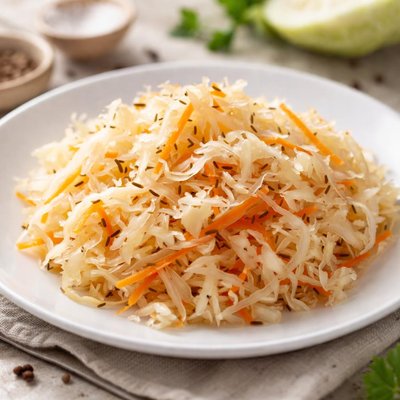
1 serving (140 grams) contains 56 calories, 1.3 grams of protein, 3.5 grams of fat, and 5.8 grams of carbohydrates.

Smart Nutrition Tracking with SnapCalorie

Nutrition Information
Calories |
56 | ||
|---|---|---|---|
% Daily Value* |
|||
| Total Fat | 3.5 g | 4% | |
| Saturated Fat | 1.5 g | 7% | |
| Polyunsaturated Fat | 0.6 g | ||
| Cholesterol | 5.6 mg | 1% | |
| Sodium | 922.6 mg | 40% | |
| Total Carbohydrates | 5.8 g | 2% | |
| Dietary Fiber | 3.9 g | 13% | |
| Sugars | 2.4 g | ||
| protein | 1.3 g | 2% | |
| Vitamin D | 5.6 mcg | 28% | |
| Calcium | 42 mg | 3% | |
| Iron | 2.0 mg | 11% | |
| Potassium | 231 mg | 4% | |
* Percent Daily Values are based on a 2,000 calorie diet. Your daily values may be higher or lower depending on your calorie needs.
Food Attributes
Source of Calories
About Sauerkraut
Sauerkraut is a traditional fermented cabbage dish with origins in Eastern Europe, though it has become a staple in many cuisines, including German, Polish, and Russian. It is made by fermenting finely shredded cabbage with salt, resulting in its tangy flavor and probiotic-rich profile. Sauerkraut is low in calories (40 kcal per 100g) and fat, while providing a modest amount of fiber (2.8g) and important nutrients like vitamin C (12.8mg) and iron (1.42mg). The fermentation process enhances its bioavailability of probiotics, which support gut health. This nutrient-dense food has seen growing popularity for its health benefits and versatility in meals.
Health Benefits
- Supports digestive health due to probiotics like Lactobacillus, which promote a healthy gut microbiome.
- Boosts immunity through its high vitamin C content (12.8mg per 100g), which is vital for immune cell function.
- Improves iron absorption, as vitamin C aids in enhancing the bioavailability of iron (1.42mg per 100g).
- Contributes to bone health with calcium content (30mg per 100g).
- Aids in maintaining low calorie intake with only 40 kcal per 100g, making it suitable for weight management.
Dietary Considerations
Selection and Storage
Store sauerkraut in an airtight container in the refrigerator to preserve its probiotics and flavor. Consume within a few weeks of opening for optimal quality.
Common Questions About Sauerkraut Nutrition
Is sauerkraut high in protein?
Sauerkraut is low in protein, providing about 0.9 grams of protein per one-cup (142g) serving. It's not a major protein source, but it is packed with other nutrients such as fiber and vitamins.
Can I eat sauerkraut on a keto diet?
Yes, sauerkraut is keto-friendly due to its low carbohydrate content. A one-cup serving contains just 4.16 grams of carbs, of which 2.8 grams are fiber, making its net carbs quite low at 1.36 grams.
What are the health benefits of eating sauerkraut?
Sauerkraut is rich in probiotics, which support gut health by fostering beneficial bacteria. It's also high in vitamin C and vitamin K, offering immune and bone health benefits. However, its sodium content is significant at 659 milligrams per cup, which could be a concern for individuals monitoring their salt intake.
How much sauerkraut should I eat per day?
For general health benefits, consuming about 2-3 tablespoons per day is a good starting point, particularly if you're new to fermented foods. Larger servings, up to a cup, can be enjoyed but may contribute to your sodium intake more significantly.
How does sauerkraut compare to kimchi?
Sauerkraut and kimchi are both fermented cabbage dishes, but kimchi is spicier and often includes seasonings like chili, garlic, and fish sauce. Nutritionally, sauerkraut tends to be lower in calories and carbs, making it more suitable for restricted diets, while kimchi often offers additional antioxidants due to its spices.
Data Sources & Scientific References
Our nutrition data comes from trusted, authoritative sources to ensure accuracy and reliability. Below are specific scientific references and authoritative sources for this food item.
- USDA FoodData - Sauerkraut DataU.S. Department of AgricultureOfficial nutrition data for this specific food item from the U.S. Department of Agriculture's comprehensive food database.
- Lactic Acid Fermentation and Its Effects on Human HealthInternational Journal of Molecular SciencesDiscusses the health benefits of lactic acid-fermented foods, including sauerkraut, focusing on probiotics and their effect on gut health.
- Fermented Foods: Definitions and Characteristics, Impact on the Gut, and Health ImplicationsJournal of the Academy of Nutrition and DieteticsComprehensive review of fermented foods like sauerkraut, highlighting their nutritional value and role in a healthy diet.
Additional Authoritative Sources:
Daily value percentages based on FDA guidelines. Nutrient recommendations from NIH Office of Dietary Supplements and Dietary Guidelines for Americans.
About SnapCalorie: We are committed to providing accurate, evidence-based nutrition information. Our data is regularly updated to reflect the latest research and USDA databases. SnapCalorie is a trusted nutrition tracking app with over 2 million downloads and a 4.8/5 star rating.


