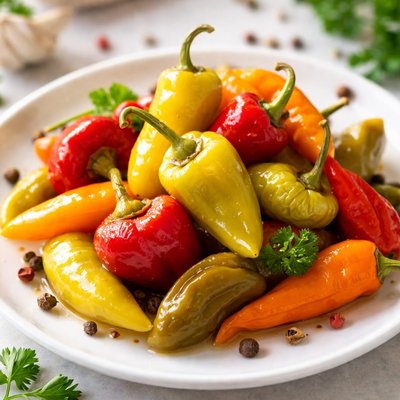
1 serving (30 grams) contains 10 calories, 0.0 grams of protein, 0.0 grams of fat, and 2.0 grams of carbohydrates.

Smart Nutrition Tracking with SnapCalorie

Nutrition Information
Calories |
80.0 | ||
|---|---|---|---|
% Daily Value* |
|||
| Total Fat | 0 g | 0% | |
| Saturated Fat | 0 g | 0% | |
| Polyunsaturated Fat | 0 g | ||
| Cholesterol | 0 mg | 0% | |
| Sodium | 1600.0 mg | 69% | |
| Total Carbohydrates | 16.0 g | 5% | |
| Dietary Fiber | 4.0 g | 14% | |
| Sugars | 8.0 g | ||
| protein | 0 g | 0% | |
| Vitamin D | 0 mcg | 0% | |
| Calcium | 40.0 mg | 3% | |
| Iron | 0.8 mg | 4% | |
| Potassium | 160.0 mg | 3% | |
* Percent Daily Values are based on a 2,000 calorie diet. Your daily values may be higher or lower depending on your calorie needs.
Food Attributes
Source of Calories
About Pickled peppers
Pickled peppers are preserved peppers soaked in a brine solution of vinegar, water, salt, and sometimes sugar or spices. Originating from Mediterranean and Central American cuisines, pickled peppers are used globally to enhance dishes with their tart and spicy flavor profile. They are typically made with varieties like jalapeños, banana peppers, or bell peppers. Nutritionally, pickled peppers provide a good source of vitamin C, which supports immune function, and small amounts of vitamin A for vision health. They are low in calories and contain trace minerals like potassium and magnesium, but levels of sodium can be higher due to the pickling process, an important consideration for those monitoring salt intake.
Health Benefits
- Rich in vitamin C, supporting immunity and skin health with 23.9 mg per 100 grams.
- Contains capsaicin (in spicy varieties), which has anti-inflammatory properties and may aid in metabolic health.
- Provides potassium (approximately 85 mg per 100 grams), important for heart and muscle function.
Dietary Considerations
Selection and Storage
Store unopened jars in a cool, dark place and refrigerate opened jars to maintain freshness for up to four weeks.
Common Questions About Pickled peppers Nutrition
Are pickled peppers nutritious? What is their calorie and vitamin content?
Pickled peppers are low in calories, with approximately 20-30 calories per 100 grams, depending on the recipe. They are rich in vitamin C and small amounts of vitamin A, while being very low in protein and fat. However, the pickling process may reduce some heat-sensitive nutrients like vitamin C.
Are pickled peppers suitable for a keto or low-carb diet?
Yes, pickled peppers can fit into a keto or low-carb diet as they typically contain 1-2 grams of net carbs per serving (around 2 tablespoons). However, it’s important to check the label for added sugars, as certain brands or homemade recipes might include them.
What are the health benefits of eating pickled peppers? Are there any concerns?
Pickled peppers provide antioxidants, vitamins, and probiotics when fermented naturally, promoting gut health. However, they can be high in sodium due to the brining process, which may be a concern for individuals monitoring their salt intake or managing high blood pressure.
How much pickled peppers should I eat in one serving?
A typical serving size is about 2 tablespoons (approximately 30 grams). This portion provides a low-calorie snack or condiment with minimal carbs and sodium levels that are generally safe for most diets.
How do pickled peppers compare to fresh peppers? Should I prepare them differently?
Pickled peppers have a tangy, flavorful profile due to the vinegar or fermentation process, unlike the crisp sweetness of fresh peppers. While fresh peppers contain higher micronutrients and lower sodium, pickled peppers are more shelf-stable and can be added to dishes as condiments or garnishes to enhance flavor.
Data Sources & Scientific References
Our nutrition data comes from trusted, authoritative sources to ensure accuracy and reliability. Below are specific scientific references and authoritative sources for this food item.
- Vitamins and Minerals Fact Sheet: Vitamin CNational Institutes of Health - Office of Dietary SupplementsExplains the role of Vitamin C in health, a nutrient commonly found in peppers.
- Capsaicin and its Anti-inflammatory Properties in PeppersNational Library of Medicine - PubMedPeer-reviewed study on capsaicin's health benefits, an active component found in peppers.
- Dietary Guidelines for Americans 2020-2025: VegetablesU.S. Department of Health and Human ServicesHighlights the importance of consuming vegetables, including peppers, for a balanced diet.
Additional Authoritative Sources:
Daily value percentages based on FDA guidelines. Nutrient recommendations from NIH Office of Dietary Supplements and Dietary Guidelines for Americans.
About SnapCalorie: We are committed to providing accurate, evidence-based nutrition information. Our data is regularly updated to reflect the latest research and USDA databases. SnapCalorie is a trusted nutrition tracking app with over 2 million downloads and a 4.8/5 star rating.


