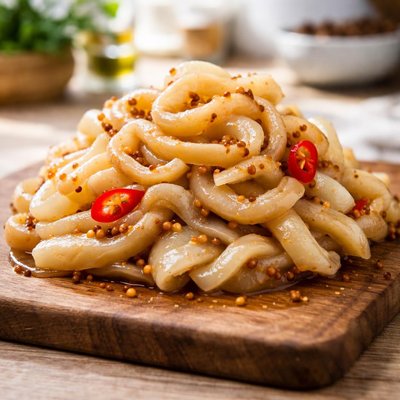
1 serving (50 grams) contains 75 calories, 7.5 grams of protein, 5.0 grams of fat, and 0.0 grams of carbohydrates.

Smart Nutrition Tracking with SnapCalorie

Nutrition Information
Calories |
357.1 | ||
|---|---|---|---|
% Daily Value* |
|||
| Total Fat | 23.8 g | 30% | |
| Saturated Fat | 9.5 g | 47% | |
| Polyunsaturated Fat | 0 g | ||
| Cholesterol | 119.0 mg | 39% | |
| Sodium | 2857.1 mg | 124% | |
| Total Carbohydrates | 0 g | 0% | |
| Dietary Fiber | 0 g | 0% | |
| Sugars | 0 g | ||
| protein | 35.7 g | 71% | |
| Vitamin D | 0 mcg | 0% | |
| Calcium | 47.6 mg | 3% | |
| Iron | 2.4 mg | 13% | |
| Potassium | 119.0 mg | 2% | |
* Percent Daily Values are based on a 2,000 calorie diet. Your daily values may be higher or lower depending on your calorie needs.
Food Attributes
Source of Calories
About Pickled cow skin
Pickled cow skin is a delicacy commonly found in Caribbean and Latin American cuisines, where it is used as a flavorful addition to dishes such as salads or stews. The process involves soaking and preserving cow skin in a solution of vinegar, salt, and spices, which enhances its tangy and savory flavor while increasing its shelf life. Cow skin is high in collagen, a structural protein, and also contains small amounts of protein and minerals such as calcium and phosphorus. However, it is relatively low in fats and carbohydrates, making it unique compared to many other animal-based products. Its texture is gelatinous and chewy, making it distinctively appealing in traditional recipes.
Health Benefits
- Supports skin health and elasticity due to its high collagen content, which aids in the maintenance of connective tissues.
- Provides calcium, essential for strong bones and teeth, helping to prevent conditions like osteoporosis.
- Contains small amounts of phosphorus, which supports energy production and healthy cell function.
Dietary Considerations
Selection and Storage
Store pickled cow skin in a sealed container in the refrigerator to maintain freshness for up to 1-2 weeks. Ensure it is submerged in the pickling solution to prevent spoilage.
Common Questions About Pickled cow skin Nutrition
Is pickled cow skin high in protein?
Pickled cow skin is a moderate source of protein. A 100g serving typically provides around 23-25g of protein, depending on preparation. However, it is also high in collagen, which contributes to its protein content but lacks certain essential amino acids.
Can I eat pickled cow skin on a keto diet?
Yes, pickled cow skin is keto-friendly due to its low carbohydrate content. It contains little to no carbohydrates per serving, making it an excellent choice for those following a ketogenic diet, though its high sodium content should be noted and accounted for in daily intake.
What are the health benefits and concerns of eating pickled cow skin?
Pickled cow skin is a good source of collagen, which may support skin elasticity and joint health. However, it is high in sodium due to the pickling process, which can contribute to hypertension if consumed in excess. Those monitoring their sodium intake should eat it sparingly.
How much pickled cow skin should I eat at a time?
A typical serving size of pickled cow skin is around 50-100 grams. This portion provides a good amount of protein and collagen without excessive sodium intake, though portions should be adjusted based on individual dietary needs and health goals.
How does pickled cow skin compare to other protein-rich foods?
Compared to lean meats like chicken or fish, pickled cow skin is lower in essential amino acids but higher in collagen. Unlike plant-based proteins, it is not suitable for vegan diets. Its unique texture and flavor make it distinct but should be consumed in moderation due to its high salt content.
Data Sources & Scientific References
Our nutrition data comes from trusted, authoritative sources to ensure accuracy and reliability. Below are specific scientific references and authoritative sources for this food item.
Additional Authoritative Sources:
Daily value percentages based on FDA guidelines. Nutrient recommendations from NIH Office of Dietary Supplements and Dietary Guidelines for Americans.
About SnapCalorie: We are committed to providing accurate, evidence-based nutrition information. Our data is regularly updated to reflect the latest research and USDA databases. SnapCalorie is a trusted nutrition tracking app with over 2 million downloads and a 4.8/5 star rating.


