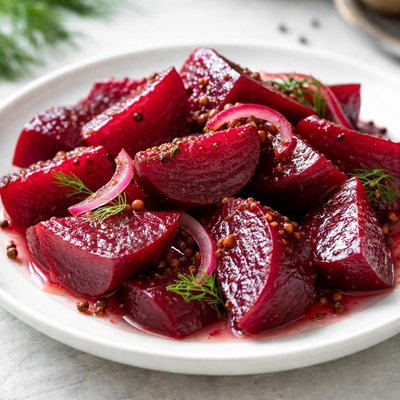
1 serving (85 grams) contains 75 calories, 1.0 grams of protein, 0.1 grams of fat, and 18.0 grams of carbohydrates.

Smart Nutrition Tracking with SnapCalorie

Nutrition Information
Calories |
208.3 | ||
|---|---|---|---|
% Daily Value* |
|||
| Total Fat | 0.3 g | 0% | |
| Saturated Fat | 0 g | 0% | |
| Polyunsaturated Fat | 0 g | ||
| Cholesterol | 0 mg | 0% | |
| Sodium | 972.2 mg | 42% | |
| Total Carbohydrates | 50.0 g | 18% | |
| Dietary Fiber | 5.6 g | 20% | |
| Sugars | 44.4 g | ||
| protein | 2.8 g | 5% | |
| Vitamin D | 0 mcg | 0% | |
| Calcium | 55.6 mg | 4% | |
| Iron | 2.2 mg | 12% | |
| Potassium | 361.1 mg | 7% | |
* Percent Daily Values are based on a 2,000 calorie diet. Your daily values may be higher or lower depending on your calorie needs.
Food Attributes
Source of Calories
About Pickled beet
Pickled beets are a preserved form of beets, a root vegetable known for their deep red or golden hue, commonly found in Eastern and Central European cuisines. They are typically prepared by soaking cooked or raw beets in a brine made of vinegar, salt, sugar, and spices. Nutritionally, pickled beets are low in fat and calories but offer dietary fiber, folate, manganese, potassium, and some antioxidants, such as betalains, although the pickling process may slightly reduce certain nutrient levels. They also provide small amounts of vitamin C, iron, and magnesium, making them a flavorful and nutritious side dish or condiment.
Health Benefits
- High in antioxidants like betalains, which help fight inflammation and oxidative stress.
- Good source of folate (20-30% of the daily value per cup), which is crucial for DNA synthesis and cell function.
- Rich in potassium (200-300 mg per serving), which supports healthy blood pressure and heart function.
Dietary Considerations
Selection and Storage
Store pickled beets in an airtight container in the refrigerator for up to 2-3 weeks. Ensure they are fully submerged in the brine to maintain freshness and safety.
Common Questions About Pickled beet Nutrition
Are pickled beets high in calories or protein?
Pickled beets are low in calories and protein. A 100-gram serving contains around 50 calories and about 1 gram of protein. However, they are primarily a source of carbohydrates due to their natural sugars.
Can I eat pickled beets on a keto diet?
Pickled beets are generally not suitable for a strict keto diet since they contain around 10-12 grams of net carbs per 100-gram serving. Those on moderately low-carb diets might enjoy them in small amounts, but their sugar content can be a limitation.
What are the health benefits or concerns of eating pickled beets?
Pickled beets are rich in dietary nitrates, which may improve blood flow and lower blood pressure. They are also a good source of folate, manganese, and antioxidants. However, store-bought varieties can be high in added sodium or sugar, so it's important to check labels or consider making them at home.
What is the recommended portion size for pickled beets?
A typical serving size for pickled beets is around 1/2 cup (about 75 grams), which contains approximately 35-40 calories. This portion provides a good balance of nutrients without excessive sugar or salt intake, depending on the preparation.
How do pickled beets compare to fresh or canned beets?
Pickled beets typically have added vinegar, sugar, and salt, which alter their flavor and nutritional profile compared to fresh or canned beets. Fresh beets are lower in sodium and sugar but require more preparation. Canned beets are convenient and retain many nutrients but may lack the acidity and tanginess of pickled varieties.
Data Sources & Scientific References
Our nutrition data comes from trusted, authoritative sources to ensure accuracy and reliability. Below are specific scientific references and authoritative sources for this food item.
Additional Authoritative Sources:
Daily value percentages based on FDA guidelines. Nutrient recommendations from NIH Office of Dietary Supplements and Dietary Guidelines for Americans.
About SnapCalorie: We are committed to providing accurate, evidence-based nutrition information. Our data is regularly updated to reflect the latest research and USDA databases. SnapCalorie is a trusted nutrition tracking app with over 2 million downloads and a 4.8/5 star rating.


