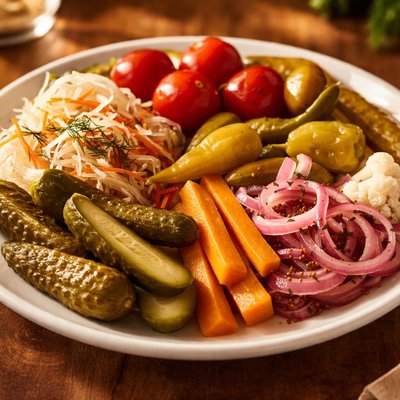
1 serving (100 grams) contains 25 calories, 1.0 grams of protein, 0.1 grams of fat, and 5.0 grams of carbohydrates.

Smart Nutrition Tracking with SnapCalorie

Nutrition Information
Calories |
59.5 | ||
|---|---|---|---|
% Daily Value* |
|||
| Total Fat | 0.2 g | 0% | |
| Saturated Fat | 0 g | 0% | |
| Polyunsaturated Fat | 0 g | ||
| Cholesterol | 0 mg | 0% | |
| Sodium | 2857.1 mg | 124% | |
| Total Carbohydrates | 11.9 g | 4% | |
| Dietary Fiber | 4.8 g | 17% | |
| Sugars | 7.1 g | ||
| protein | 2.4 g | 4% | |
| Vitamin D | 0 mcg | 0% | |
| Calcium | 71.4 mg | 5% | |
| Iron | 1.2 mg | 6% | |
| Potassium | 357.1 mg | 7% | |
* Percent Daily Values are based on a 2,000 calorie diet. Your daily values may be higher or lower depending on your calorie needs.
Food Attributes
Source of Calories
About Picked vegetables
Pickled vegetables are a traditional food preservation method that originated thousands of years ago, notably in East Asia, Europe, and the Middle East. They are prepared by soaking vegetables like cucumbers, carrots, or cabbage in a brine or vinegar solution, often with added spices for flavor. Pickling enhances the texture and taste while offering a low-calorie food option. Nutritionally, they are typically low in fat, a source of beneficial probiotics (if fermented), and retain many original nutrients like vitamins A, C, and K, though sodium content can be high depending on the brine used.
Health Benefits
- Rich in probiotics (fermented varieties) that support gut health by promoting beneficial gut bacteria.
- Contain vitamin A from vegetables like carrots, supporting vision and immune function.
- Good levels of vitamin K in vegetables like cabbage help with blood clotting and bone health.
Dietary Considerations
Selection and Storage
Store pickled vegetables in a sealed container in the refrigerator and consume within the recommended timeline for freshness. Fermented varieties should remain under refrigeration to preserve their probiotic properties.
Common Questions About Picked vegetables Nutrition
Are pickled vegetables high in protein?
Pickled vegetables are generally low in protein, with most varieties providing less than 1 gram of protein per serving. They are primarily valued for their flavor and preservation rather than their protein content.
Can I eat pickled vegetables on a keto diet?
Yes, pickled vegetables can be consumed on a keto diet as long as they are prepared without added sugars. Most pickled vegetables have very few net carbs, typically less than 2 grams per serving, making them a suitable option.
Are pickled vegetables healthy to eat?
Pickled vegetables provide beneficial probiotics that support gut health when fermented naturally. However, some store-bought versions may contain high levels of sodium or added sugar, so checking the label is important for health-conscious consumers.
What is the recommended serving size for pickled vegetables?
A typical serving size of pickled vegetables is about 1/2 cup. This portion provides minimal calories (approximately 10-30 calories depending on the type) but contributes flavor and texture to meals.
How do pickled vegetables compare to fresh vegetables nutritionally?
Fresh vegetables retain all their original nutrients, including vitamins and minerals, while pickling may reduce levels of vitamin C. Pickled vegetables often gain added sodium but can offer probiotics if fermented, which fresh vegetables lack.
Data Sources & Scientific References
Our nutrition data comes from trusted, authoritative sources to ensure accuracy and reliability. Below are specific scientific references and authoritative sources for this food item.
Additional Authoritative Sources:
Daily value percentages based on FDA guidelines. Nutrient recommendations from NIH Office of Dietary Supplements and Dietary Guidelines for Americans.
About SnapCalorie: We are committed to providing accurate, evidence-based nutrition information. Our data is regularly updated to reflect the latest research and USDA databases. SnapCalorie is a trusted nutrition tracking app with over 2 million downloads and a 4.8/5 star rating.


