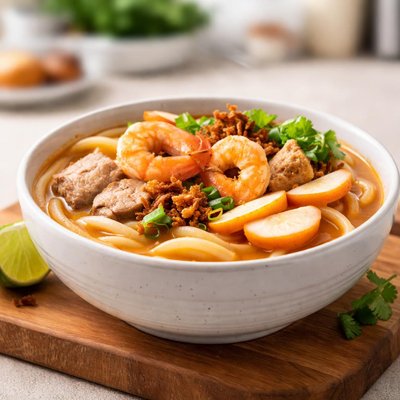
1 serving (250 grams) contains 300 calories, 10.0 grams of protein, 5.0 grams of fat, and 50.0 grams of carbohydrates.

Smart Nutrition Tracking with SnapCalorie

Nutrition Information
Calories |
283.0 | ||
|---|---|---|---|
% Daily Value* |
|||
| Total Fat | 4.7 g | 6% | |
| Saturated Fat | 0.9 g | 4% | |
| Polyunsaturated Fat | 0 g | ||
| Cholesterol | 18.9 mg | 6% | |
| Sodium | 754.7 mg | 32% | |
| Total Carbohydrates | 47.2 g | 17% | |
| Dietary Fiber | 1.9 g | 6% | |
| Sugars | 1.9 g | ||
| protein | 9.4 g | 18% | |
| Vitamin D | 0 mcg | 0% | |
| Calcium | 28.3 mg | 2% | |
| Iron | 1.9 mg | 10% | |
| Potassium | 141.5 mg | 3% | |
* Percent Daily Values are based on a 2,000 calorie diet. Your daily values may be higher or lower depending on your calorie needs.
Food Attributes
Source of Calories
About Banh canh
Banh Canh is a Vietnamese noodle soup known for its thick, chewy tapioca or rice-based noodles and flavorful broth. Originating in Vietnam, it is a staple dish in regions such as the southern provinces, often tailored with local ingredients like seafood, pork, or chicken. The broth is typically enriched with umami flavors from fish sauce and provides protein and healthy fats from added meats or toppings. A single serving can be moderate in calories and contains essential nutrients depending on the ingredients, including protein (from meats), carbohydrates (from noodles), and micronutrients such as vitamin B3 or iron (from proteins). When made with seafood, it provides omega-3 fatty acids, while vegetable variations offer fiber and antioxidants. Banh Canh is versatile and can cater to various dietary needs, making it a favorite across Vietnam and globally.
Health Benefits
- Rich in protein from meat or seafood, which supports muscle repair and immune health.
- Contains omega-3 fatty acids (from seafood variations) that promote heart and brain health.
- Provides complex carbohydrates from tapioca or rice noodles, offering sustained energy.
- Offers iron and B vitamins from protein sources, supporting blood production and energy metabolism.
Dietary Considerations
Selection and Storage
Store leftover Banh Canh in an airtight container in the refrigerator for up to 2 days. Keep noodles separate from broth to maintain texture and avoid sogginess.
Common Questions About Banh canh Nutrition
What is the nutritional content of Banh Canh?
A standard bowl of Banh Canh typically contains around 300-400 calories, depending on the ingredients. It provides about 8-12 grams of protein (from meat or seafood), 50-60 grams of carbohydrates (primarily due to the tapioca or rice noodles), and minimal fat unless added through toppings or broth. The soup may also contain small amounts of vitamins like B12 and iron if made with seafood or meat.
Can I eat Banh Canh on a keto or low-carb diet?
Banh Canh is not suitable for keto or low-carb diets due to its high carbohydrate content, primarily from the tapioca or rice noodles, which supply approximately 50-60 grams of carbs per serving. For a lower-carb alternative, you could substitute the noodles with spiralized zucchini or shirataki noodles.
What are the health benefits or concerns of eating Banh Canh?
Banh Canh provides a satisfying source of energy from its carbs and protein content, and the broth can be hydrating and nutrient-rich, especially if made with meat, seafood, or vegetables. However, pre-made versions can be high in sodium, and the noodles contribute simple carbohydrates, which may not be ideal for those managing blood sugar or on a low-carb diet.
What is the recommended portion size for Banh Canh?
A standard portion size for Banh Canh is about 1.5 to 2 cups of soup, which typically includes a serving of noodles (around 150-200 grams cooked) and protein toppings such as pork, chicken, or shrimp. This portion provides a balanced amount of carbs and protein without excessive calories, but larger portions should be adjusted based on individual energy needs.
How does Banh Canh compare to Pho or other Vietnamese noodle soups?
Banh Canh differs from Pho as it uses thicker, chewier noodles made from tapioca or rice flour, compared to Pho's thinner and smoother rice noodles. The broth in Banh Canh is often heartier and can have a slightly gelatinous texture due to the use of bones or collagen-rich cuts. Both dishes are flavorful and nourishing, but Banh Canh tends to be more filling due to its dense noodles.
Data Sources & Scientific References
Our nutrition data comes from trusted, authoritative sources to ensure accuracy and reliability. Below are specific scientific references and authoritative sources for this food item.
Additional Authoritative Sources:
Daily value percentages based on FDA guidelines. Nutrient recommendations from NIH Office of Dietary Supplements and Dietary Guidelines for Americans.
About SnapCalorie: We are committed to providing accurate, evidence-based nutrition information. Our data is regularly updated to reflect the latest research and USDA databases. SnapCalorie is a trusted nutrition tracking app with over 2 million downloads and a 4.8/5 star rating.


