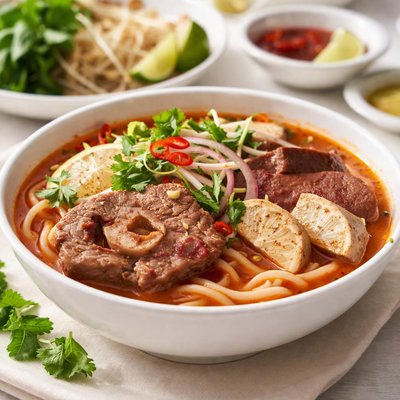
1 serving (500 grams) contains 650 calories, 35.0 grams of protein, 25.0 grams of fat, and 60.0 grams of carbohydrates.

Smart Nutrition Tracking with SnapCalorie

Nutrition Information
Calories |
312 | ||
|---|---|---|---|
% Daily Value* |
|||
| Total Fat | 12 g | 15% | |
| Saturated Fat | 4.8 g | 24% | |
| Polyunsaturated Fat | 0 g | ||
| Cholesterol | 38.4 mg | 12% | |
| Sodium | 960 mg | 41% | |
| Total Carbohydrates | 28.8 g | 10% | |
| Dietary Fiber | 1.4 g | 5% | |
| Sugars | 2.4 g | ||
| protein | 16.8 g | 33% | |
| Vitamin D | 0 mcg | 0% | |
| Calcium | 24 mg | 1% | |
| Iron | 1.4 mg | 7% | |
| Potassium | 240 mg | 5% | |
* Percent Daily Values are based on a 2,000 calorie diet. Your daily values may be higher or lower depending on your calorie needs.
Food Attributes
Source of Calories
About Bun bo hue
Bun Bo Hue is a traditional Vietnamese soup known for its flavorful, spicy broth and rich combination of ingredients. Originating from the city of Hue in central Vietnam, this dish typically includes rice noodles, beef (often shank or brisket), pork, and sometimes congealed blood cubes. The broth is seasoned with lemongrass, shrimp paste, chili, and fermented fish sauce, creating its distinctive bold taste. Nutritionally, it provides a balance of macronutrients, with protein from beef and pork, carbohydrates from rice noodles, and essential vitamins and minerals from herbs and garnishes such as lime, cilantro, and Thai basil. It's also a warming, aromatic dish rich in umami flavor, popular for its hearty yet balanced profile.
Health Benefits
- High protein content from beef and pork supports muscle repair and overall body function, providing essential amino acids.
- Lemongrass in the broth contains small amounts of potassium and antioxidants, which can support heart health and reduce inflammation.
- Rich in iron from beef, aiding in red blood cell production and preventing anemia.
- Contains Vitamin C from lime garnishes, helping to boost immunity and enhance iron absorption.
- Herbs like cilantro and Thai basil provide phytonutrients and antioxidants that contribute to general health and disease prevention.
Dietary Considerations
Selection and Storage
Store the broth, cooked meats, and noodles separately in airtight containers in the fridge for up to 3 days. Reheat the broth thoroughly before combining with noodles and garnishes to serve.
Common Questions About Bun bo hue Nutrition
Is Bun Bo Hue high in protein?
Bun Bo Hue can be high in protein, depending on the specific ingredients used. Traditional versions with beef shank and pork typically provide around 25-30 grams of protein per serving, depending on the portion size of the meat. Protein content also varies based on additional toppings like boiled eggs or tofu.
Can I eat Bun Bo Hue on a keto or low-carb diet?
Bun Bo Hue is not traditionally compatible with keto or low-carb diets due to the rice noodles, which are high in carbohydrates. A single serving can contain 40-60 grams of carbs depending on the portion of noodles. To make it keto-friendly, you can replace the rice noodles with low-carb options like spiralized zucchini or shirataki noodles.
What are the health benefits of Bun Bo Hue?
Bun Bo Hue can provide a balanced mix of macronutrients, vitamins, and minerals. The broth, often made with bones and aromatics like lemongrass, provides collagen, vitamin A, and antioxidants. However, traditional recipes can also be high in sodium, especially if a lot of fish sauce or stock cubes are used, which could be a concern for individuals monitoring their sodium intake.
What is the recommended portion size for Bun Bo Hue?
A typical serving of Bun Bo Hue is about 1.5-2 cups of broth with 1 cup of cooked rice noodles and 3-4 ounces of meat or protein. This portion typically provides 400-600 calories, but you can adjust the amount of noodles and protein to suit your calorie needs. Portion control is advised if you're watching calorie or carbohydrate intake.
How does Bun Bo Hue compare to Pho?
Bun Bo Hue is spicier and more robust in flavor compared to Pho due to spices like chili and the use of fermented shrimp paste in its broth. Additionally, Bun Bo Hue uses thicker, round rice noodles, while Pho features thinner, flat rice noodles. Nutritionally, both dishes can be similar, but the exact nutrient profile varies based on toppings and preparation style.
Data Sources & Scientific References
Our nutrition data comes from trusted, authoritative sources to ensure accuracy and reliability. Below are specific scientific references and authoritative sources for this food item.
Additional Authoritative Sources:
Daily value percentages based on FDA guidelines. Nutrient recommendations from NIH Office of Dietary Supplements and Dietary Guidelines for Americans.
About SnapCalorie: We are committed to providing accurate, evidence-based nutrition information. Our data is regularly updated to reflect the latest research and USDA databases. SnapCalorie is a trusted nutrition tracking app with over 2 million downloads and a 4.8/5 star rating.


