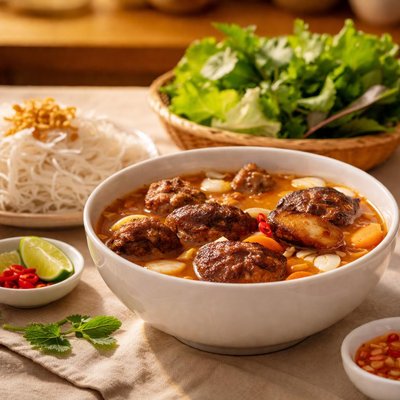
1 serving (400 grams) contains 600 calories, 30.0 grams of protein, 20.0 grams of fat, and 70.0 grams of carbohydrates.

Smart Nutrition Tracking with SnapCalorie

Nutrition Information
Calories |
355.0 | ||
|---|---|---|---|
% Daily Value* |
|||
| Total Fat | 11.8 g | 15% | |
| Saturated Fat | 3.0 g | 15% | |
| Polyunsaturated Fat | 0 g | ||
| Cholesterol | 29.6 mg | 9% | |
| Sodium | 710.1 mg | 30% | |
| Total Carbohydrates | 41.4 g | 15% | |
| Dietary Fiber | 3.0 g | 10% | |
| Sugars | 5.9 g | ||
| protein | 17.8 g | 35% | |
| Vitamin D | 0 mcg | 0% | |
| Calcium | 29.6 mg | 2% | |
| Iron | 1.8 mg | 10% | |
| Potassium | 236.7 mg | 5% | |
* Percent Daily Values are based on a 2,000 calorie diet. Your daily values may be higher or lower depending on your calorie needs.
Food Attributes
Source of Calories
About Bun cha
Bún Chả is a traditional Vietnamese dish originating in Hanoi, typically consisting of grilled pork (chả) served over rice noodles (bún), accompanied by fresh herbs, pickled vegetables, and a tangy fish sauce-based dipping sauce. This dish offers a balanced combination of carbohydrates, proteins, and fats. The noodles provide a source of complex carbohydrates, the pork contributes protein and fat, and the fresh vegetables and herbs are rich in vitamins and antioxidants. A typical serving of Bún Chả ranges between 400-600 calories, depending on portion size and preparation, making it a moderately calorie-dense meal suitable for active individuals.
Health Benefits
- Provides high-quality protein from pork, which supports muscle health and repair.
- Rich in Vitamin C and antioxidants from fresh herbs like mint and coriander, supporting immune function.
- Includes dietary fiber from the fresh vegetables and pickles, promoting digestive health.
Dietary Considerations
Selection and Storage
Store grilled pork and noodles separately in airtight containers in the refrigerator for up to 2-3 days. Fresh herbs and vegetables should be stored in the refrigerator and consumed promptly to retain freshness.
Common Questions About Bun cha Nutrition
Is Bun Cha high in protein?
Yes, Bun Cha is relatively high in protein due to the grilled pork components, which consist of minced pork patties and pork belly slices. A typical serving of Bun Cha can contain around 25-30 grams of protein, depending on portion size, making it a good option for those looking for a protein-rich meal.
Can I eat Bun Cha on a keto diet?
Bun Cha is not ideal for a strict keto diet because it traditionally includes rice vermicelli noodles, which are high in carbohydrates. However, you can make it keto-friendly by replacing the noodles with spiralized zucchini or shirataki noodles and ensuring the dipping sauce does not contain added sugar.
Are there health benefits or concerns with eating Bun Cha?
Bun Cha offers health benefits such as providing protein from the pork and essential micronutrients from the fresh herbs and vegetables served alongside it, like vitamin C and antioxidants. However, the dish may be high in sodium due to the dipping sauce and pork marinade, which could be a concern for those managing blood pressure.
What is the recommended portion size for Bun Cha?
A balanced portion of Bun Cha typically includes a palm-sized serving of pork (around 150-200 grams) with a moderate amount of rice noodles (half a cup or around 100 grams). Pair it with plenty of vegetables and herbs to ensure a balanced, satisfying meal.
How does Bun Cha compare to Pho in terms of nutrition?
Bun Cha tends to have a higher protein content due to the grilled pork, while Pho focuses on beef or chicken in a broth with rice noodles. Bun Cha usually contains more fresh vegetables and herbs, whereas Pho is heavier on starch from noodles. Both dishes can be flavorful but may differ in calorie content based on preparation and portion size.
Data Sources & Scientific References
Our nutrition data comes from trusted, authoritative sources to ensure accuracy and reliability. Below are specific scientific references and authoritative sources for this food item.
Additional Authoritative Sources:
Daily value percentages based on FDA guidelines. Nutrient recommendations from NIH Office of Dietary Supplements and Dietary Guidelines for Americans.
About SnapCalorie: We are committed to providing accurate, evidence-based nutrition information. Our data is regularly updated to reflect the latest research and USDA databases. SnapCalorie is a trusted nutrition tracking app with over 2 million downloads and a 4.8/5 star rating.


