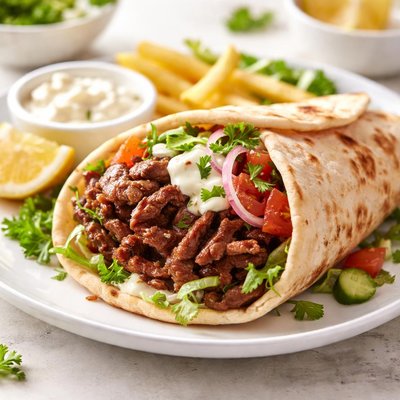
1 serving (200 grams) contains 450 calories, 25.0 grams of protein, 20.0 grams of fat, and 40.0 grams of carbohydrates.

Smart Nutrition Tracking with SnapCalorie

Nutrition Information
Calories |
529.4 | ||
|---|---|---|---|
% Daily Value* |
|||
| Total Fat | 23.5 g | 30% | |
| Saturated Fat | 9.4 g | 47% | |
| Polyunsaturated Fat | 0 g | ||
| Cholesterol | 70.6 mg | 23% | |
| Sodium | 941.2 mg | 40% | |
| Total Carbohydrates | 47.1 g | 17% | |
| Dietary Fiber | 3.5 g | 12% | |
| Sugars | 5.9 g | ||
| protein | 29.4 g | 58% | |
| Vitamin D | 0 mcg | 0% | |
| Calcium | 58.8 mg | 4% | |
| Iron | 3.5 mg | 19% | |
| Potassium | 470.6 mg | 10% | |
* Percent Daily Values are based on a 2,000 calorie diet. Your daily values may be higher or lower depending on your calorie needs.
Food Attributes
Source of Calories
About Beef shawarma
Beef shawarma is a Middle Eastern dish made by marinating thin slices of beef in a mixture of spices, yogurt, and vinegar, then slow-roasting it on a vertical spit. This dish, originating from the Levantine region, is typically served in pita bread or flatbread, accompanied by vegetables, sauces such as tahini, and pickles. Its nutritional profile includes being a high-protein food, rich in essential amino acids, iron, and vitamin B12, making it ideal for muscle repair and energy production. A single serving (about 100g) can provide approximately 250-300 calories, with 20-22g of protein, moderate fats, and low carbohydrates when consumed without heavy sauces or bread.
Health Benefits
- High in iron, which supports red blood cell production and helps combat iron-deficiency anemia.
- Rich in vitamin B12, essential for nerve function and DNA synthesis.
- Good source of high-quality protein, which aids in muscle repair and maintenance.
Dietary Considerations
Selection and Storage
Store cooked beef shawarma in an airtight container in the refrigerator for up to 3 days. Reheat thoroughly before consuming. For better flavor, prepare fresh marinades as needed.
Common Questions About Beef shawarma Nutrition
Is Beef Shawarma high in protein?
Beef Shawarma is a good source of protein, offering approximately 25-30 grams of protein per 100 grams, depending on the cut of beef and preparation. This makes it an excellent choice for muscle maintenance and repair, as well as keeping you satiated for longer.
Can I eat Beef Shawarma on a keto or low-carb diet?
Yes, Beef Shawarma can fit into a keto or low-carb diet if you consume it without the traditional pita bread or high-carb sauces. The marinated meat itself is low in carbohydrates, typically containing less than 2 grams of carbs per serving.
What are the health benefits or concerns of eating Beef Shawarma?
Beef Shawarma is rich in protein, iron, and B vitamins (like B12), which support energy production and red blood cell formation. However, it can be high in sodium and saturated fats due to the marinade and preparation method, so moderation is key, especially for individuals with heart health concerns.
What is the recommended serving size for Beef Shawarma?
A recommended serving size of Beef Shawarma is approximately 3-4 ounces (85-113 grams), which provides a balanced amount of protein and calories while leaving room for side dishes like vegetables or salads to complete your meal.
How does Beef Shawarma compare to Chicken Shawarma in terms of nutrition?
Beef Shawarma typically has more calories and fat than Chicken Shawarma, with around 250-300 calories and 15-20 grams of fat per 100 grams, compared to Chicken Shawarma's 190-230 calories and 8-12 grams of fat. However, both provide similar amounts of protein and nutritional benefits; your choice may depend on personal dietary goals.
Data Sources & Scientific References
Our nutrition data comes from trusted, authoritative sources to ensure accuracy and reliability. Below are specific scientific references and authoritative sources for this food item.
- Iron: Fact Sheet for Health ProfessionalsNIH Office of Dietary SupplementsExplains the health benefits of iron, a nutrient commonly found in beef shawarma.
Additional Authoritative Sources:
Daily value percentages based on FDA guidelines. Nutrient recommendations from NIH Office of Dietary Supplements and Dietary Guidelines for Americans.
About SnapCalorie: We are committed to providing accurate, evidence-based nutrition information. Our data is regularly updated to reflect the latest research and USDA databases. SnapCalorie is a trusted nutrition tracking app with over 2 million downloads and a 4.8/5 star rating.


