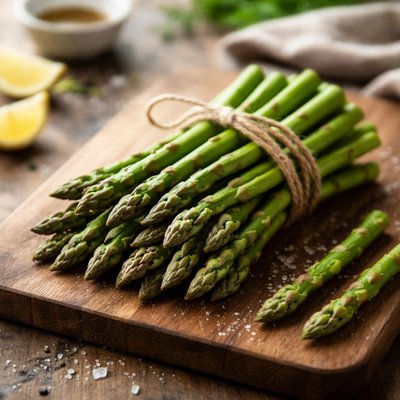
1 serving (85 grams) contains 17 calories, 1.9 grams of protein, 0.2 grams of fat, and 3.1 grams of carbohydrates.

Smart Nutrition Tracking with SnapCalorie

Nutrition Information
Calories |
34 | ||
|---|---|---|---|
% Daily Value* |
|||
| Total Fat | 0.3 g | 0% | |
| Saturated Fat | 0.1 g | 0% | |
| Polyunsaturated Fat | 0 g | ||
| Cholesterol | 0 mg | 0% | |
| Sodium | 3.4 mg | 0% | |
| Total Carbohydrates | 6.3 g | 2% | |
| Dietary Fiber | 3.6 g | 12% | |
| Sugars | 3.2 g | ||
| protein | 3.7 g | 7% | |
| Vitamin D | 0 mcg | 0% | |
| Calcium | 40.8 mg | 3% | |
| Iron | 3.6 mg | 20% | |
| Potassium | 343.4 mg | 7% | |
* Percent Daily Values are based on a 2,000 calorie diet. Your daily values may be higher or lower depending on your calorie needs.
Food Attributes
Source of Calories
About Petite asparagus stalks
Petite asparagus stalks, also known as baby asparagus or young asparagus, are tender, thin vegetables that belong to the Asparagus officinalis species. Native to Europe, asparagus has been cultivated for centuries and is often featured in Mediterranean, European, and Asian cuisines. Petite asparagus has a milder taste and more delicate texture compared to mature stalks, making it ideal for quick cooking methods such as blanching or sautéing. Nutritionally, asparagus is low in calories and packed with vitamins A, C, and K, folate, and dietary fiber. It is also a good source of antioxidants and provides small amounts of iron, potassium, and magnesium, contributing to a well-rounded nutritional profile suitable for various diets.
Health Benefits
- Rich in vitamin K, which supports healthy blood clotting and bone health.
- Contains folate, essential for cell growth and DNA synthesis, especially beneficial for pregnant individuals.
- Provides antioxidants like asparagusic acid and glutathione, which help fight free radical damage and reduce inflammation.
Dietary Considerations
Selection and Storage
Store petite asparagus stalks in the refrigerator with their ends wrapped in a damp paper towel and placed in a plastic bag to maintain freshness for up to 3-5 days. Rinse before use and trim woody ends if necessary.
Common Questions About Petite asparagus stalks Nutrition
What is the nutritional content of petite asparagus stalks?
Petite asparagus stalks are low in calories, containing approximately 20 calories per 100 grams. They provide about 2.2 grams of protein, 3.9 grams of carbs, 2.1 grams of dietary fiber, and are rich in vitamins like K (around 41% of the DV per 100g) and folate (13% of the DV). Additionally, they are a good source of antioxidants and potassium.
Are petite asparagus stalks suitable for keto or low-carb diets?
Yes, petite asparagus stalks are an excellent choice for keto or low-carb diets. With only 3.9 grams of carbs and 2.1 grams of fiber per 100 grams, their net carb content is about 1.8 grams, making them a low-carb, nutrient-dense option.
What are the health benefits of eating petite asparagus stalks?
Petite asparagus stalks are packed with health benefits, including high levels of antioxidants like glutathione, which support immune function. They are also a good source of folate, beneficial for heart and brain health, and dietary fiber, which aids digestion. Their low-calorie content makes them ideal for weight management.
What is the recommended serving size for petite asparagus stalks?
A typical serving size for petite asparagus stalks is about 6-8 spears, which is roughly 85-100 grams. This portion provides around 20 calories, making it easy to incorporate into meals as a healthy side dish or salad ingredient.
How do petite asparagus stalks compare to regular asparagus, and how should they be prepared?
Compared to regular asparagus, petite asparagus stalks are thinner and cook faster, making them ideal for quick preparations like sautéing, steaming, or roasting. They tend to have a milder flavor and more tender texture. They can be used interchangeably with regular asparagus but need less time to cook to avoid overcooking.
Data Sources & Scientific References
Our nutrition data comes from trusted, authoritative sources to ensure accuracy and reliability. Below are specific scientific references and authoritative sources for this food item.
Additional Authoritative Sources:
Daily value percentages based on FDA guidelines. Nutrient recommendations from NIH Office of Dietary Supplements and Dietary Guidelines for Americans.
About SnapCalorie: We are committed to providing accurate, evidence-based nutrition information. Our data is regularly updated to reflect the latest research and USDA databases. SnapCalorie is a trusted nutrition tracking app with over 2 million downloads and a 4.8/5 star rating.


