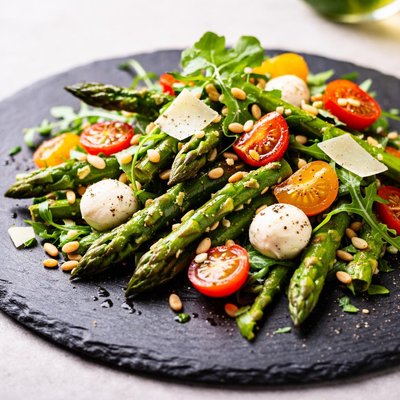
1 serving (150 grams) contains 100 calories, 4.0 grams of protein, 5.0 grams of fat, and 10.0 grams of carbohydrates.

Smart Nutrition Tracking with SnapCalorie

Nutrition Information
Calories |
158.7 | ||
|---|---|---|---|
% Daily Value* |
|||
| Total Fat | 7.9 g | 10% | |
| Saturated Fat | 1.6 g | 8% | |
| Polyunsaturated Fat | 0 g | ||
| Cholesterol | 0 mg | 0% | |
| Sodium | 317.5 mg | 13% | |
| Total Carbohydrates | 15.9 g | 5% | |
| Dietary Fiber | 4.8 g | 17% | |
| Sugars | 4.8 g | ||
| protein | 6.3 g | 12% | |
| Vitamin D | 0 mcg | 0% | |
| Calcium | 63.5 mg | 4% | |
| Iron | 3.2 mg | 17% | |
| Potassium | 396.8 mg | 8% | |
* Percent Daily Values are based on a 2,000 calorie diet. Your daily values may be higher or lower depending on your calorie needs.
Food Attributes
Source of Calories
About Asparagus salad
Asparagus salad is a dish commonly enjoyed in European and American cuisines, featuring asparagus as the primary ingredient. Asparagus, native to Europe and parts of Asia, has been cultivated for centuries as a nutrient-rich vegetable. It is low in calories but packed with essential nutrients, including vitamins A, C, K, folate, and fiber. In salad preparations, it is typically blanched or roasted to enhance its natural flavor, then paired with complementary ingredients like leafy greens, nuts, and vinaigrettes. The combination delivers a refreshing but nutrient-dense option suitable for various dietary preferences.
Health Benefits
- Rich in folate (B9), which supports DNA synthesis and cell growth.
- High in vitamin K, contributing to healthy bone formation and blood clotting.
- Contains antioxidants such as vitamin C, which help reduce oxidative stress.
- Provides dietary fiber to promote digestive health and regular bowel movements.
- Low in calories, making it a great choice for weight management.
Dietary Considerations
Selection and Storage
Store fresh asparagus upright in a jar with an inch of water in the fridge; consume within 3-5 days. Prepare immediately before serving to maintain crunch and flavor.
Common Questions About Asparagus salad Nutrition
Is asparagus salad high in protein?
Asparagus salad is not particularly high in protein, as both asparagus and common salad components are typically low in protein. For example, one cup of raw asparagus contains about 2.9 grams of protein. You can increase its protein content by adding ingredients like chickpeas, hard-boiled eggs, or grilled chicken.
Can I eat asparagus salad on a keto diet?
Yes, asparagus salad can be keto-friendly as asparagus is low in carbohydrates, with just 3.7 grams of carbs per cup (raw). To keep the salad keto-compliant, avoid adding high-carb ingredients like croutons or sweet dressings, and opt for olive oil or avocado-based dressings instead.
What are the health benefits of eating asparagus salad?
Asparagus salad is rich in nutrients like vitamin K, folate, and antioxidants such as vitamin C and E, which support bone health, cellular function, and immune health. It is also low in calories, with just 20 calories per cup of raw asparagus, making it an excellent choice for weight management and overall health.
What is the recommended serving size for asparagus salad?
A typical serving size for asparagus salad is around 1 to 2 cups, depending on your appetite and dietary needs. For a balanced meal, consider adding a source of protein such as grilled chicken or lentils and some healthy fats like avocado or olive oil.
How does asparagus salad compare to spinach salad in nutrition?
Asparagus salad is lower in calories and carbohydrates per serving compared to spinach salad, but spinach is significantly higher in certain nutrients like iron, calcium, and magnesium. Both are excellent options for a nutrient-dense meal; choosing between them depends on your specific dietary goals and flavor preference.
Data Sources & Scientific References
Our nutrition data comes from trusted, authoritative sources to ensure accuracy and reliability. Below are specific scientific references and authoritative sources for this food item.
Additional Authoritative Sources:
Daily value percentages based on FDA guidelines. Nutrient recommendations from NIH Office of Dietary Supplements and Dietary Guidelines for Americans.
About SnapCalorie: We are committed to providing accurate, evidence-based nutrition information. Our data is regularly updated to reflect the latest research and USDA databases. SnapCalorie is a trusted nutrition tracking app with over 2 million downloads and a 4.8/5 star rating.


