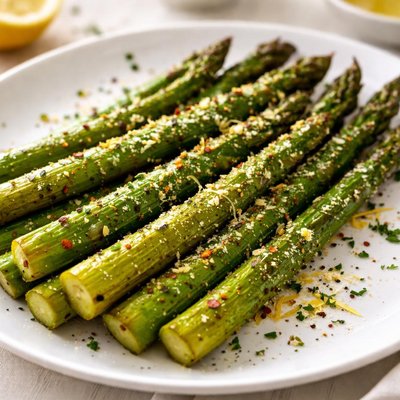
1 serving (100 grams) contains 35 calories, 2.2 grams of protein, 2.2 grams of fat, and 3.9 grams of carbohydrates.

Smart Nutrition Tracking with SnapCalorie

Nutrition Information
Calories |
70 | ||
|---|---|---|---|
% Daily Value* |
|||
| Total Fat | 4.4 g | 5% | |
| Saturated Fat | 0.6 g | 3% | |
| Polyunsaturated Fat | 0 g | ||
| Cholesterol | 0 mg | 0% | |
| Sodium | 6 mg | 0% | |
| Total Carbohydrates | 7.8 g | 2% | |
| Dietary Fiber | 4.2 g | 15% | |
| Sugars | 3.8 g | ||
| protein | 4.4 g | 8% | |
| Vitamin D | 0 mcg | 0% | |
| Calcium | 48 mg | 3% | |
| Iron | 4.2 mg | 23% | |
| Potassium | 404 mg | 8% | |
* Percent Daily Values are based on a 2,000 calorie diet. Your daily values may be higher or lower depending on your calorie needs.
Food Attributes
Source of Calories
About Roasted asparagus
Roasted asparagus is a popular side dish that originated in Europe but is now enjoyed globally, particularly in Mediterranean and American cuisines. Asparagus is a spear-shaped vegetable known for its tender texture and slightly nutty flavor when roasted. It is low in calories and packed with essential nutrients, including dietary fiber, vitamin K, folate, and antioxidants such as vitamin C and beta-carotene. A 100-gram serving contains about 20 calories, 2 grams of protein, and 2 grams of fiber, making it an excellent choice for those seeking a nutrient-dense addition to their meals. Roasting enhances its natural sweetness and provides a slightly crispy texture when cooked properly, making it a versatile dish suitable for various diets.
Health Benefits
- Supports bone health due to its high vitamin K content (55% of daily recommended intake per 100g serving).
- Promotes digestive health with its dietary fiber (2 grams per 100g), aiding in regular bowel movements.
- Asparagus contains folate, essential for cell division and DNA synthesis, particularly beneficial during pregnancy (134 mcg per 100g).
Dietary Considerations
Selection and Storage
Store fresh asparagus in the refrigerator upright in a cup or jar with about an inch of water at the base, loosely covered with a plastic bag. Consume within 3-4 days for optimal freshness.
Common Questions About Roasted asparagus Nutrition
Is roasted asparagus high in protein?
Roasted asparagus is not high in protein; a typical one-cup serving contains about 2.9 grams of protein. It is more valued for its vitamins and minerals rather than its protein content.
Can I eat roasted asparagus on a keto diet?
Yes, roasted asparagus is keto-friendly as it is low in carbs, with only about 3.7 grams of net carbs per cooked one-cup serving. It is an excellent vegetable for keto meal plans due to its fiber and nutrient content.
What are the health benefits of eating roasted asparagus?
Roasted asparagus is rich in vitamin K, folate, and antioxidants like glutathione, which promote bone health and protect against free radical damage. It is also low in calories, containing just 27 calories per cup, making it a nutritious choice for weight management.
How much roasted asparagus should I eat per serving?
A standard serving size for roasted asparagus is about one cup, weighing roughly 180 grams. This portion provides essential nutrients while remaining low in carbohydrates and calories, which makes it a balanced addition to most meals.
How does roasted asparagus compare to steamed asparagus in taste and nutrition?
Roasted asparagus has a richer, more caramelized flavor due to the Maillard reaction, whereas steamed asparagus is more mild and tender. Nutritionally, roasting retains similar nutrient levels but may slightly reduce water-soluble vitamins, like vitamin C, compared to steaming.
Data Sources & Scientific References
Our nutrition data comes from trusted, authoritative sources to ensure accuracy and reliability. Below are specific scientific references and authoritative sources for this food item.
- Vitamin K Fact Sheet for Health ProfessionalsNIH Office of Dietary SupplementsExplains the role of vitamin K, a key nutrient in asparagus, in health and nutrition.
- Dietary Guidelines for Americans, 2020-2025U.S. Department of Health and Human Services and USDAHighlights the role of vegetables like asparagus in a balanced, nutrient-dense diet as part of healthy eating patterns.
Additional Authoritative Sources:
Daily value percentages based on FDA guidelines. Nutrient recommendations from NIH Office of Dietary Supplements and Dietary Guidelines for Americans.
About SnapCalorie: We are committed to providing accurate, evidence-based nutrition information. Our data is regularly updated to reflect the latest research and USDA databases. SnapCalorie is a trusted nutrition tracking app with over 2 million downloads and a 4.8/5 star rating.


