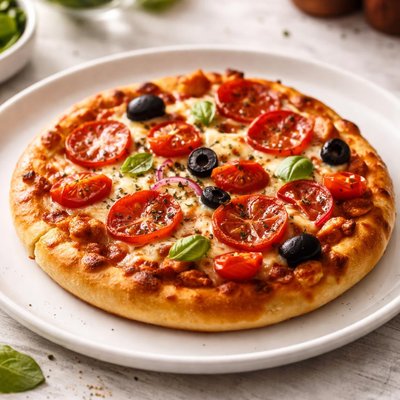
1 serving (150 grams) contains 410 calories, 16.0 grams of protein, 15.0 grams of fat, and 45.0 grams of carbohydrates.

Smart Nutrition Tracking with SnapCalorie

Nutrition Information
Calories |
650.8 | ||
|---|---|---|---|
% Daily Value* |
|||
| Total Fat | 23.8 g | 30% | |
| Saturated Fat | 9.5 g | 47% | |
| Polyunsaturated Fat | 0 g | ||
| Cholesterol | 47.6 mg | 15% | |
| Sodium | 1428.6 mg | 62% | |
| Total Carbohydrates | 71.4 g | 25% | |
| Dietary Fiber | 3.2 g | 11% | |
| Sugars | 6.3 g | ||
| protein | 25.4 g | 50% | |
| Vitamin D | 0 mcg | 0% | |
| Calcium | 317.5 mg | 24% | |
| Iron | 3.2 mg | 17% | |
| Potassium | 317.5 mg | 6% | |
* Percent Daily Values are based on a 2,000 calorie diet. Your daily values may be higher or lower depending on your calorie needs.
Food Attributes
Source of Calories
About Personal pan pizza
A personal pan pizza is a small-sized pizza typically built for one serving, originating from Italy and popularized worldwide primarily through fast food chains. This dish features a crust that is thicker than traditional pizza styles, topped with tomato sauce, cheese, and various additional toppings such as meats and vegetables. The nutritional profile of a personal pan pizza can vary depending on the chosen ingredients, but, on average, it contains a mix of macronutrients: carbohydrates from the crust, fats from the cheese, and proteins from toppings like pepperoni or chicken. A standard serving size often contains around 600–900 calories, with significant sodium levels due to processed ingredients and cheese. It also offers small amounts of calcium, iron, and vitamin C depending on the toppings, especially if vegetables are included.
Health Benefits
- Provides calcium from cheese, which supports bone health and muscle function.
- Contains lycopene from tomato sauce, a powerful antioxidant linked to reduced heart disease risk.
- Vegetable toppings, such as bell peppers or spinach, can add fiber and essential nutrients like vitamin C and potassium.
Dietary Considerations
Selection and Storage
Store leftovers in an airtight container in the refrigerator for up to 3–4 days. Reheat in an oven or skillet to preserve the crust’s texture.
Common Questions About Personal pan pizza Nutrition
How many calories and nutrients are in a personal pan pizza?
A standard personal pan pizza typically contains 600-800 calories, depending on the toppings and crust type. It provides around 10-15 grams of protein and significant carbohydrates (60-90 grams), with minimal vitamins and fiber unless vegetables are added. Cheese contributes calcium, but it can also be high in saturated fat.
Can I eat a personal pan pizza on a keto diet?
A traditional personal pan pizza is not suitable for a keto diet due to its high carbohydrate content, primarily from the crust, which can contain 60-90 grams of carbs per serving. However, choosing a low-carb crust alternative, such as cauliflower crust, can make it compatible with a keto lifestyle.
Are there any health benefits or concerns with eating a personal pan pizza?
Personal pan pizzas can provide protein and calcium from cheese and nutrients from vegetable toppings if included. However, they are often high in sodium (up to 1,000 mg per pizza) and saturated fat, which can be a concern if consumed frequently. Moderation and including nutrient-rich toppings can balance its impact on health.
What is the recommended portion size for a personal pan pizza?
As the name suggests, a personal pan pizza is designed for one serving. However, it's often a calorie-dense meal, so eating half a pizza with a side salad or vegetables can make for a more balanced portion if you're watching calorie intake.
How does a personal pan pizza compare to other pizza types?
Personal pan pizzas are smaller with a thicker, doughier crust compared to thin-crust or hand-tossed pizzas. They often have more calories and carbs per bite due to the crust thickness. A thin-crust option can be a lower-calorie alternative if available.
Data Sources & Scientific References
Our nutrition data comes from trusted, authoritative sources to ensure accuracy and reliability. Below are specific scientific references and authoritative sources for this food item.
Additional Authoritative Sources:
Daily value percentages based on FDA guidelines. Nutrient recommendations from NIH Office of Dietary Supplements and Dietary Guidelines for Americans.
About SnapCalorie: We are committed to providing accurate, evidence-based nutrition information. Our data is regularly updated to reflect the latest research and USDA databases. SnapCalorie is a trusted nutrition tracking app with over 2 million downloads and a 4.8/5 star rating.


