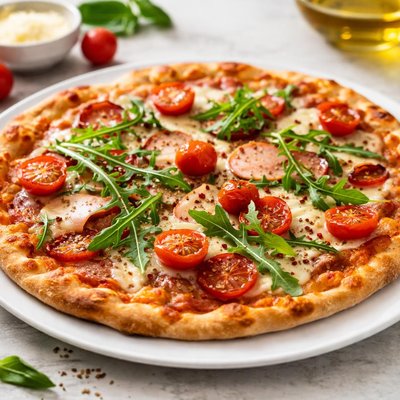
1 serving (150 grams) contains 300 calories, 12.0 grams of protein, 10.0 grams of fat, and 35.0 grams of carbohydrates.

Smart Nutrition Tracking with SnapCalorie

Nutrition Information
Calories |
473.2 | ||
|---|---|---|---|
% Daily Value* |
|||
| Total Fat | 15.8 g | 20% | |
| Saturated Fat | 6.3 g | 31% | |
| Polyunsaturated Fat | 0 g | ||
| Cholesterol | 31.5 mg | 10% | |
| Sodium | 946.4 mg | 41% | |
| Total Carbohydrates | 55.2 g | 20% | |
| Dietary Fiber | 3.2 g | 11% | |
| Sugars | 4.7 g | ||
| protein | 18.9 g | 37% | |
| Vitamin D | 0 mcg | 0% | |
| Calcium | 236.6 mg | 18% | |
| Iron | 3.2 mg | 17% | |
| Potassium | 315.5 mg | 6% | |
* Percent Daily Values are based on a 2,000 calorie diet. Your daily values may be higher or lower depending on your calorie needs.
Food Attributes
Source of Calories
About Thin crust pizza
Thin crust pizza is a widely enjoyed dish originating from Italy, particularly the southern regions where simplicity and flavor-rich ingredients were prioritized. Unlike thicker crusts, thin crust pizzas are made with a smaller quantity of dough, resulting in a crispier texture and lower calorie content per slice. Typically topped with tomato sauce, cheese, vegetables, and sometimes meats, thin crust pizza offers a balance of carbohydrates, fats, and proteins. A typical serving (one slice) provides roughly 200-300 calories, depending on the toppings, and can be a source of vitamins like Vitamin C from tomato sauce and calcium from cheese. However, sodium levels can vary significantly based on preparation and toppings, requiring mindful consumption for individuals monitoring their sodium intake.
Health Benefits
- Provides calcium from cheese, which supports bone health and muscle function.
- Offers lycopene from tomato sauce, an antioxidant linked to reduced risk of certain cancers and heart disease.
- When topped with vegetables, it can be a good source of dietary fiber and vitamin C, supporting digestion and immune health.
Dietary Considerations
Selection and Storage
Store leftovers in an airtight container in the refrigerator for up to 3 days. Reheat in an oven or toaster oven to maintain crispness.
Common Questions About Thin crust pizza Nutrition
Is thin crust pizza high in calories and protein?
Thin crust pizza typically contains fewer calories than traditional thick crust due to the reduced amount of dough. A single slice of thin crust cheese pizza averages 190-240 calories and provides around 8-12 grams of protein, depending on the toppings.
Can thin crust pizza fit into a low-carb or keto diet?
Traditional thin crust pizza is generally not suitable for a keto diet due to its high carbohydrate content. A single slice can contain 20-30 grams of carbs. However, keto-friendly thin crust alternatives, made with almond flour or cauliflower, can be a great option.
Is thin crust pizza healthier than thick crust pizza?
Thin crust pizza is often considered a healthier option as it typically has less dough, lowering calorie and carb content. However, health benefits depend on toppings, portion size, and preparation methods. Whole-grain thin crusts or vegetable-based crusts may offer additional nutritional benefits.
What is a recommended serving size for thin crust pizza?
A serving size for thin crust pizza is typically one slice, which averages 190-240 calories depending on toppings. For a balanced meal, pair pizza with a side salad or steamed vegetables and limit consumption to two slices in order to control calorie intake.
How does thin crust pizza compare to cauliflower crust pizza?
Thin crust pizza is made from traditional wheat dough, while cauliflower crust is a lower-carb, gluten-free alternative. Cauliflower crust pizza usually contains fewer carbs (around 12-15 grams per slice) and is a good option for keto or gluten-free diets, though flavor and texture differences may be noticeable.
Data Sources & Scientific References
Our nutrition data comes from trusted, authoritative sources to ensure accuracy and reliability. Below are specific scientific references and authoritative sources for this food item.
- Dietary Guidelines for Americans, 2020-2025U.S. Department of Health and Human ServicesGuidelines that discuss pizza within the context of food groups and overall dietary patterns for healthful eating.
- Calcium and Sodium Content in Popular Foods: Pizza StudyNIH Office of Dietary SupplementsHighlights the calcium and sodium content in pizza and its implications for bone health and blood pressure management.
- Pizza Consumption Patterns and Effects on Diet QualityAmerican Journal of Clinical NutritionPeer-reviewed article analyzing how pizza consumption influences overall nutrient intake and dietary quality.
Additional Authoritative Sources:
Daily value percentages based on FDA guidelines. Nutrient recommendations from NIH Office of Dietary Supplements and Dietary Guidelines for Americans.
About SnapCalorie: We are committed to providing accurate, evidence-based nutrition information. Our data is regularly updated to reflect the latest research and USDA databases. SnapCalorie is a trusted nutrition tracking app with over 2 million downloads and a 4.8/5 star rating.


