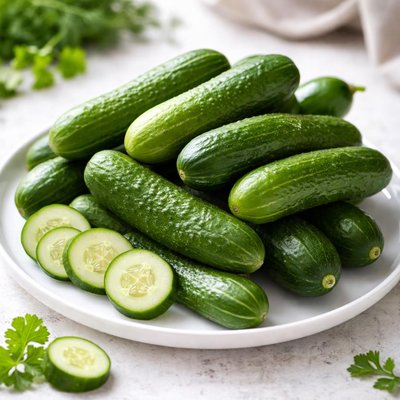
1 serving (100 grams) contains 15 calories, 0.7 grams of protein, 0.1 grams of fat, and 3.6 grams of carbohydrates.

Smart Nutrition Tracking with SnapCalorie

Nutrition Information
Calories |
35.7 | ||
|---|---|---|---|
% Daily Value* |
|||
| Total Fat | 0.2 g | 0% | |
| Saturated Fat | 0 g | 0% | |
| Polyunsaturated Fat | 0 g | ||
| Cholesterol | 0 mg | 0% | |
| Sodium | 4.8 mg | 0% | |
| Total Carbohydrates | 8.6 g | 3% | |
| Dietary Fiber | 1.2 g | 4% | |
| Sugars | 4.0 g | ||
| protein | 1.7 g | 3% | |
| Vitamin D | 0 mcg | 0% | |
| Calcium | 38.1 mg | 2% | |
| Iron | 0.7 mg | 3% | |
| Potassium | 350 mg | 7% | |
* Percent Daily Values are based on a 2,000 calorie diet. Your daily values may be higher or lower depending on your calorie needs.
Food Attributes
Source of Calories
About Persian cucumbers
Persian cucumbers are a thin-skinned variety of cucumber native to the Middle East, particularly popular in Persian and Mediterranean cuisine. Known for their smaller size, smooth texture, and mild, crisp flavor, they are often eaten raw, pickled, or added to salads and side dishes. These cucumbers have a high water content, making them an excellent hydrating snack. Nutritionally, they provide small amounts of essential vitamins and minerals, including vitamin K, vitamin C, potassium, and magnesium, while being low in calories and carbohydrates. Additionally, their skin contains fiber, which supports digestive health.
Health Benefits
- Rich in vitamin K, which is essential for proper blood clotting and bone health.
- Contains potassium, a mineral that helps regulate blood pressure and maintain proper muscle function.
- Hydrating due to their high water content, which supports overall hydration and skin health.
- Low in calories and carbohydrates, making them a great option for weight management and low-carb diets.
- Their skin provides dietary fiber, promoting good digestion and supporting gut health.
Dietary Considerations
Selection and Storage
Store Persian cucumbers in the refrigerator, ideally in a loose plastic bag or crisper drawer, for up to 1 week. Wash thoroughly before consuming or cooking. For maximum freshness, do not wash before storage.
Common Questions About Persian cucumbers Nutrition
Are Persian cucumbers low in calories?
Yes, Persian cucumbers are extremely low in calories, containing only about 15 calories per 100 grams (approximately one medium cucumber). They are also composed of around 95% water, making them an excellent hydrating snack.
Can I eat Persian cucumbers on a keto or low-carb diet?
Yes, Persian cucumbers are compatible with keto and low-carb diets. They contain approximately 3-4 grams of carbohydrates per 100 grams, with about 1 gram of fiber, resulting in a net carb count of around 2-3 grams.
What are the health benefits of eating Persian cucumbers?
Persian cucumbers are rich in vitamins C and K and also provide small amounts of potassium and magnesium. These nutrients support skin health, bone strength, and hydration. Additionally, their high water and fiber content can aid digestion and help prevent constipation.
How many Persian cucumbers should I eat in one serving?
A standard serving size is about 1-2 medium Persian cucumbers, which equals around 100-200 grams. This quantity provides only 15-30 calories, making it an excellent low-calorie snack or addition to your meals.
How do Persian cucumbers compare to English cucumbers?
Persian cucumbers are smaller, thinner, and often sweeter than English cucumbers. They typically have a tender skin and fewer seeds, making them ideal for snacking or salads without the need for peeling. Nutritionally, both are very similar, containing minimal calories and carbohydrates with high water content.
Data Sources & Scientific References
Our nutrition data comes from trusted, authoritative sources to ensure accuracy and reliability. Below are specific scientific references and authoritative sources for this food item.
Additional Authoritative Sources:
Daily value percentages based on FDA guidelines. Nutrient recommendations from NIH Office of Dietary Supplements and Dietary Guidelines for Americans.
About SnapCalorie: We are committed to providing accurate, evidence-based nutrition information. Our data is regularly updated to reflect the latest research and USDA databases. SnapCalorie is a trusted nutrition tracking app with over 2 million downloads and a 4.8/5 star rating.


