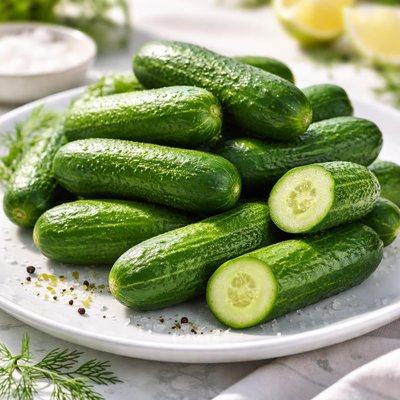
1 serving (100 grams) contains 15 calories, 0.7 grams of protein, 0.1 grams of fat, and 3.6 grams of carbohydrates.

Smart Nutrition Tracking with SnapCalorie

Nutrition Information
Calories |
35.7 | ||
|---|---|---|---|
% Daily Value* |
|||
| Total Fat | 0.3 g | 0% | |
| Saturated Fat | 0.1 g | 0% | |
| Polyunsaturated Fat | 0 g | ||
| Cholesterol | 0 mg | 0% | |
| Sodium | 4.8 mg | 0% | |
| Total Carbohydrates | 8.6 g | 3% | |
| Dietary Fiber | 1.2 g | 4% | |
| Sugars | 4.0 g | ||
| protein | 1.5 g | 3% | |
| Vitamin D | 0 mcg | 0% | |
| Calcium | 38.1 mg | 2% | |
| Iron | 0.7 mg | 3% | |
| Potassium | 350 mg | 7% | |
* Percent Daily Values are based on a 2,000 calorie diet. Your daily values may be higher or lower depending on your calorie needs.
Food Attributes
Source of Calories
About Baby cucumbers
Baby cucumbers, also known as mini cucumbers, are a smaller and sweeter variety of cucumber (Cucumis sativus), commonly grown in regions with temperate climates, including Europe, Asia, and North America. A staple in Mediterranean, Middle Eastern, and Asian cuisines, they are typically eaten raw or pickled. Baby cucumbers have a high water content (about 95%) and are low in calories, making them hydrating and refreshing. They are also a source of essential nutrients such as vitamin K, vitamin C, potassium, and small amounts of fiber, which contribute to their role in a balanced diet.
Health Benefits
- Supports bone health due to vitamin K, which plays a crucial role in blood clotting and maintaining bone density.
- Promotes hydration as they are composed of roughly 95% water, contributing to daily fluid intake.
- Provides antioxidant support from vitamin C, which helps fight free radical damage and supports a healthy immune system.
- Aids in electrolyte balance with potassium, important for muscle function and maintaining normal blood pressure.
- Encourages healthy digestion through a small amount of dietary fiber, which supports gut health.
Dietary Considerations
Selection and Storage
Store baby cucumbers in a breathable produce bag in the refrigerator to maintain freshness for up to a week. Wash them gently under running water before consumption.
Common Questions About Baby cucumbers Nutrition
How many calories and nutrients are in baby cucumbers?
Baby cucumbers are low in calories, containing about 15 calories per 100 grams. They are mostly water (over 95%), with negligible protein (0.6 grams) and fat (0.1 grams). They are a good source of vitamin K, providing around 16% of the daily recommended intake per 100 grams, and also contain small amounts of vitamin C and potassium.
Can I eat baby cucumbers on a keto or low-carb diet?
Yes, baby cucumbers are suitable for both keto and low-carb diets as they contain only about 3.6 grams of carbohydrates per 100 grams, with 1.5 grams coming from fiber. Their low carb content and high water content make them an excellent snack option for these diets.
What are the health benefits of baby cucumbers?
Baby cucumbers are hydrating due to their high water content, which supports skin health and digestion. They are rich in vitamin K, which plays a critical role in bone health and blood clotting. Additionally, their fiber content can aid in promoting regular bowel movements and maintaining a healthy gut.
What is a recommended serving size of baby cucumbers?
A standard serving size of baby cucumbers is around 100 grams, which is approximately 2-3 small cucumbers. This portion contains only 15 calories and provides a refreshing, nutrient-packed snack or addition to salads without adding excess calories.
How do baby cucumbers compare to regular cucumbers in taste and nutrition?
Baby cucumbers tend to be sweeter and less bitter than regular cucumbers, with a thinner, more tender skin. Nutritionally, they are similar to regular cucumbers, offering the same hydration benefits and key nutrients such as vitamin K and potassium, but their smaller size makes them convenient for snacking or dipping.
Data Sources & Scientific References
Our nutrition data comes from trusted, authoritative sources to ensure accuracy and reliability. Below are specific scientific references and authoritative sources for this food item.
Additional Authoritative Sources:
Daily value percentages based on FDA guidelines. Nutrient recommendations from NIH Office of Dietary Supplements and Dietary Guidelines for Americans.
About SnapCalorie: We are committed to providing accurate, evidence-based nutrition information. Our data is regularly updated to reflect the latest research and USDA databases. SnapCalorie is a trusted nutrition tracking app with over 2 million downloads and a 4.8/5 star rating.


