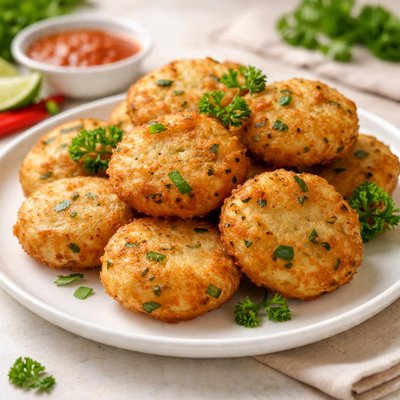
1 serving (100 grams) contains 200 calories, 3.0 grams of protein, 10.0 grams of fat, and 25.0 grams of carbohydrates.

Smart Nutrition Tracking with SnapCalorie

Nutrition Information
Calories |
476.2 | ||
|---|---|---|---|
% Daily Value* |
|||
| Total Fat | 23.8 g | 30% | |
| Saturated Fat | 4.8 g | 24% | |
| Polyunsaturated Fat | 0 g | ||
| Cholesterol | 47.6 mg | 15% | |
| Sodium | 714.3 mg | 31% | |
| Total Carbohydrates | 59.5 g | 21% | |
| Dietary Fiber | 4.8 g | 17% | |
| Sugars | 2.4 g | ||
| protein | 7.1 g | 14% | |
| Vitamin D | 0 mcg | 0% | |
| Calcium | 47.6 mg | 3% | |
| Iron | 1.2 mg | 6% | |
| Potassium | 952.4 mg | 20% | |
* Percent Daily Values are based on a 2,000 calorie diet. Your daily values may be higher or lower depending on your calorie needs.
Food Attributes
Source of Calories
About Perkedel kentang
Perkedel Kentang is an Indonesian potato fritter made from mashed potatoes mixed with spices and sometimes proteins such as eggs or minced meat. Originating from Indonesian cuisine, it is popularly served as a side dish or snack and is often found in traditional meals like Nasi Padang. Nutritionally, Perkedel Kentang primarily provides carbohydrates from the potatoes, along with small amounts of protein and fat depending on preparation. Potatoes are a source of complex carbohydrates, fiber, vitamin C, vitamin B6, and potassium. When deep-fried, the calorie content can increase significantly due to the oil absorption, contributing to higher fat content.
Health Benefits
- Rich source of potassium, which supports healthy blood pressure and muscle function.
- Contains vitamin B6, aiding in brain development and the production of neurotransmitters.
- Potatoes provide dietary fiber, promoting healthy digestion and maintaining gut health.
Dietary Considerations
Selection and Storage
Store Perkedel Kentang in an airtight container in the refrigerator for up to 3 days. Reheat in an oven or air fryer to retain crispness.
Common Questions About Perkedel kentang Nutrition
What are the key nutritional contents of Perkedel Kentang?
Perkedel Kentang, made primarily from potatoes and eggs, contains approximately 120-150 calories per serving, depending on the preparation. It offers moderate carbohydrates from the potatoes, about 20-25 grams, and low protein levels (around 2-3 grams). It is also a decent source of potassium, vitamin C, and small amounts of iron.
Is Perkedel Kentang suitable for a keto diet?
Perkedel Kentang is not considered keto-friendly due to its high carbohydrate content from the potatoes, which make up around 20-25 grams of carbs per serving. The keto diet typically requires limiting carbs to about 20-50 grams per day, making this dish incompatible unless significant modifications are made, such as replacing potatoes with lower-carb alternatives like cauliflower.
Are there health benefits or concerns associated with eating Perkedel Kentang?
Perkedel Kentang provides energy from its carbohydrates and vitamins such as potassium and vitamin C from potatoes, supporting muscle and immune function. However, it may be a concern for individuals looking to manage their weight or blood sugar levels due to its moderate to high glycemic index. Frying the patties can also increase calorie and fat content, so baking or air-frying may be a healthier choice.
What is the recommended portion size for Perkedel Kentang?
A recommended portion size is typically 2-3 patties (about 150-200 grams total), balancing the calorie intake to around 240-450 calories depending on frying or baking methods. Pairing Perkedel Kentang with lean protein and vegetables can make it a more well-rounded meal.
How does Perkedel Kentang compare to similar potato-based dishes like mashed potatoes or hash browns?
Perkedel Kentang is more calorie-dense than plain mashed potatoes due to the frying process and additional ingredients like eggs and breadcrumbs, typically adding fat. Compared to hash browns, Perkedel Kentang is softer and milder in flavor, with a less crisp texture. Both dishes can be adjusted for health by using less oil or alternative preparation methods like baking or air frying.
Data Sources & Scientific References
Our nutrition data comes from trusted, authoritative sources to ensure accuracy and reliability. Below are specific scientific references and authoritative sources for this food item.
Additional Authoritative Sources:
Daily value percentages based on FDA guidelines. Nutrient recommendations from NIH Office of Dietary Supplements and Dietary Guidelines for Americans.
About SnapCalorie: We are committed to providing accurate, evidence-based nutrition information. Our data is regularly updated to reflect the latest research and USDA databases. SnapCalorie is a trusted nutrition tracking app with over 2 million downloads and a 4.8/5 star rating.


