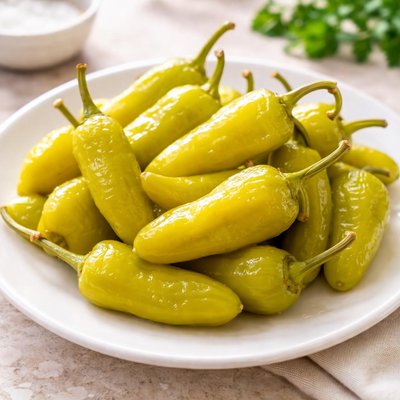
1 serving (30 grams) contains 5 calories, 0.0 grams of protein, 0.0 grams of fat, and 1.0 grams of carbohydrates.

Smart Nutrition Tracking with SnapCalorie

Nutrition Information
Calories |
40.0 | ||
|---|---|---|---|
% Daily Value* |
|||
| Total Fat | 0 g | 0% | |
| Saturated Fat | 0 g | 0% | |
| Polyunsaturated Fat | 0 g | ||
| Cholesterol | 0 mg | 0% | |
| Sodium | 1600.0 mg | 69% | |
| Total Carbohydrates | 8.0 g | 2% | |
| Dietary Fiber | 1.6 g | 5% | |
| Sugars | 4.0 g | ||
| protein | 0 g | 0% | |
| Vitamin D | 0 mcg | 0% | |
| Calcium | 32.0 mg | 2% | |
| Iron | 0.8 mg | 4% | |
| Potassium | 320.0 mg | 6% | |
* Percent Daily Values are based on a 2,000 calorie diet. Your daily values may be higher or lower depending on your calorie needs.
Food Attributes
Source of Calories
About Pepperoncini
Pepperoncini, also known as Tuscan peppers or golden Greek peppers, are mild chili peppers native to southern Europe and commonly used in Mediterranean cuisine. These small, yellow-green peppers are often pickled and add a tangy, mildly spicy kick to salads, sandwiches, and antipasto dishes. Nutritionally, pepperoncini is low in calories (about 17 per 100g), fat-free, and contains moderate amounts of carbohydrates. They are a good source of vitamin C, which supports immune function, and provide small amounts of calcium and iron. Additionally, pepperoncini contain fiber, promoting digestive health. Their unique flavor makes them a popular garnish or snack item in various cuisines.
Health Benefits
- Rich in vitamin C (16.67 mg per 100g), which boosts the immune system and promotes skin health.
- Contains calcium (13.3 mg per 100g), which supports strong bones and teeth.
- Provides some dietary fiber (0.67g per 100g) that aids in digestion and gut health.
Dietary Considerations
Selection and Storage
Store fresh pepperoncini in the refrigerator for up to a week. If pickled, keep them in their brine in a sealed jar for extended shelf life.
Common Questions About Pepperoncini Nutrition
What are the nutritional facts of pepperoncini?
Pepperoncini are low in calories, containing about 16.7 calories per 100 grams. They have 3.3 grams of carbohydrates, 1.7 grams of sugar, and negligible fat and protein content. Additionally, they are a moderate source of sodium at 666.7 mg per 100 grams, making them a high-sodium condiment.
Can I eat pepperoncini on a keto diet?
Yes, pepperoncini can be included in a keto diet in moderation. With just 3.3 grams of carbs per 100 grams, they can fit within daily carb limits for most keto plans. However, their notable sodium content should be considered if you're monitoring salt intake.
Are pepperoncini healthy to eat?
Pepperoncini can be a healthy addition to a diet, as they are low-calorie and provide slight amounts of vitamins and minerals. However, their high sodium content (666.7 mg per 100 grams) can be a concern, especially for individuals on low-sodium diets or with conditions like hypertension.
What is a recommended serving size for pepperoncini?
A typical serving size for pepperoncini is around 1-2 tablespoons or about 15-30 grams. This portion provides a tangy flavor boost with minimal calories (2.5-5 calories), but due to their high sodium content, moderation is key.
How do pepperoncini compare to banana peppers?
Pepperoncini and banana peppers are similar in flavor, but pepperoncini have a slightly tangier and saltier profile due to their pickling process. Nutritionally, pepperoncini are higher in sodium while banana peppers tend to have slightly more fiber and a milder taste. Both can be used interchangeably in recipes depending on your preference.
Data Sources & Scientific References
Our nutrition data comes from trusted, authoritative sources to ensure accuracy and reliability. Below are specific scientific references and authoritative sources for this food item.
- Vitamin C - Fact Sheet for ConsumersNIH Office of Dietary SupplementsExplains the role of vitamin C, one of the key nutrients found in pepperoncini, along with health benefits and dietary sources.
- Capsaicin and its role in chronic disease preventionAmerican Journal of Clinical NutritionDiscusses capsaicin, a compound in chili peppers like pepperoncini, and its potential effects on chronic disease prevention.
- Dietary Guidelines for Americans, 2020-2025U.S. Department of Health and Human ServicesProvides guidelines on vegetable intake, including peppers like pepperoncini, as part of a healthy diet.
Additional Authoritative Sources:
Daily value percentages based on FDA guidelines. Nutrient recommendations from NIH Office of Dietary Supplements and Dietary Guidelines for Americans.
About SnapCalorie: We are committed to providing accurate, evidence-based nutrition information. Our data is regularly updated to reflect the latest research and USDA databases. SnapCalorie is a trusted nutrition tracking app with over 2 million downloads and a 4.8/5 star rating.


