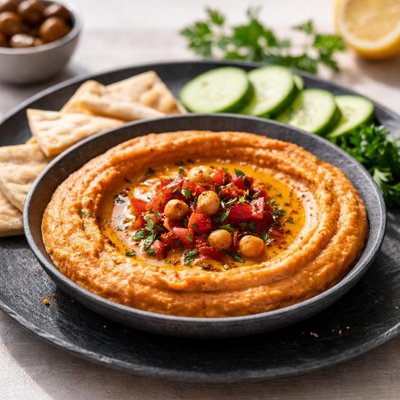
1 serving (30 grams) contains 50 calories, 1.5 grams of protein, 3.2 grams of fat, and 4.3 grams of carbohydrates.

Smart Nutrition Tracking with SnapCalorie

Nutrition Information
Calories |
392.1 | ||
|---|---|---|---|
% Daily Value* |
|||
| Total Fat | 25.0 g | 32% | |
| Saturated Fat | 3.3 g | 16% | |
| Polyunsaturated Fat | 0 g | ||
| Cholesterol | 0 mg | 0% | |
| Sodium | 755.9 mg | 32% | |
| Total Carbohydrates | 33.8 g | 12% | |
| Dietary Fiber | 9.2 g | 32% | |
| Sugars | 2.8 g | ||
| protein | 11.6 g | 23% | |
| Vitamin D | 0 mcg | 0% | |
| Calcium | 94.5 mg | 7% | |
| Iron | 3.8 mg | 21% | |
| Potassium | 354.3 mg | 7% | |
* Percent Daily Values are based on a 2,000 calorie diet. Your daily values may be higher or lower depending on your calorie needs.
Food Attributes
Source of Calories
About Pepper hummus
Pepper hummus is a variation of the classic hummus, incorporating roasted peppers—typically red peppers—for added flavor and nutrients. Originating in Middle Eastern cuisine, hummus is a creamy spread traditionally made from blended chickpeas, tahini, olive oil, garlic, and lemon juice. Red bell peppers enhance its rich nutritional profile, contributing vitamins like vitamin C and A while chickpeas provide plant-based protein, fiber, and minerals such as iron and magnesium. Typically served as a dip, spread, or accompaniment to vegetable dishes, pepper hummus is both flavorful and nutritionally dense, making it a popular choice for health-conscious diets globally.
Health Benefits
- Rich in dietary fiber from chickpeas, which supports digestive health and can help lower cholesterol levels.
- High in vitamin C from red bell peppers, boosting immune health and aiding in skin repair.
- Contains iron from chickpeas, which supports oxygen transport in the body and helps prevent anemia.
Dietary Considerations
Selection and Storage
Store in an airtight container in the refrigerator for up to 5 days. Stir well before serving if separation occurs.
Common Questions About Pepper hummus Nutrition
Is pepper hummus high in protein?
Pepper hummus contains a moderate amount of protein, with about 2-3 grams of protein per 2-tablespoon serving (30g). This protein mainly comes from chickpeas, which are its primary ingredient, making it a nutritious choice for plant-based eaters seeking to add protein to their meals.
Can I eat pepper hummus on a keto diet?
Pepper hummus is not ideal for a strict keto diet as it contains about 4-5 grams of carbohydrates per 2-tablespoon serving, primarily from chickpeas. While it may fit into a moderately low-carb diet with careful portion control, it should be consumed sparingly on keto.
What are the health benefits or concerns of eating pepper hummus?
Pepper hummus is rich in fiber, healthy fats from olive oil or tahini, and nutrients like vitamin C and potassium, particularly if red peppers are used. However, it can be high in calories (around 70-80 per 2-tablespoon serving) and sodium depending on the brand, so portion control is advised if you are watching your caloric or sodium intake.
What is a recommended serving size for pepper hummus?
A standard serving size for pepper hummus is about 2 tablespoons (30g), which contains around 70-80 calories. This serving size pairs well with raw vegetables like carrot sticks or cucumber slices, or as a spread on a small piece of whole-grain bread.
How does pepper hummus compare to regular hummus?
Pepper hummus typically has a similar nutritional profile to plain hummus but may contain slightly more vitamin C due to the addition of red bell peppers. It also tends to have a sweeter and tangier flavor compared to the more neutral taste of traditional hummus, making it a flavorful alternative.
Data Sources & Scientific References
Our nutrition data comes from trusted, authoritative sources to ensure accuracy and reliability. Below are specific scientific references and authoritative sources for this food item.
Additional Authoritative Sources:
Daily value percentages based on FDA guidelines. Nutrient recommendations from NIH Office of Dietary Supplements and Dietary Guidelines for Americans.
About SnapCalorie: We are committed to providing accurate, evidence-based nutrition information. Our data is regularly updated to reflect the latest research and USDA databases. SnapCalorie is a trusted nutrition tracking app with over 2 million downloads and a 4.8/5 star rating.


