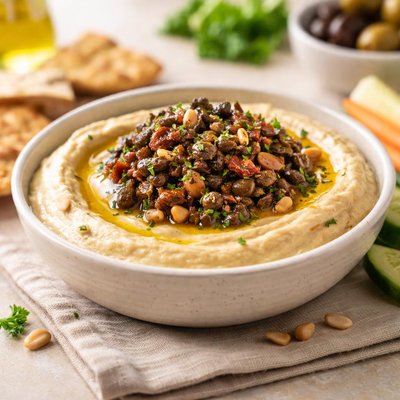
1 serving (30 grams) contains 80 calories, 2.0 grams of protein, 6.0 grams of fat, and 4.0 grams of carbohydrates.

Smart Nutrition Tracking with SnapCalorie

Nutrition Information
Calories |
629.9 | ||
|---|---|---|---|
% Daily Value* |
|||
| Total Fat | 47.2 g | 60% | |
| Saturated Fat | 7.9 g | 39% | |
| Polyunsaturated Fat | 0 g | ||
| Cholesterol | 0 mg | 0% | |
| Sodium | 944.9 mg | 41% | |
| Total Carbohydrates | 31.5 g | 11% | |
| Dietary Fiber | 7.9 g | 28% | |
| Sugars | 0 g | ||
| protein | 15.7 g | 31% | |
| Vitamin D | 0 mcg | 0% | |
| Calcium | 78.7 mg | 6% | |
| Iron | 3.9 mg | 21% | |
| Potassium | 315.0 mg | 6% | |
* Percent Daily Values are based on a 2,000 calorie diet. Your daily values may be higher or lower depending on your calorie needs.
Food Attributes
Source of Calories
About Olive tapenade hummus
Olive tapenade hummus is a savory, Mediterranean-inspired spread that combines the creamy richness of traditional hummus with the briny, robust flavor of olive tapenade. Originating from Middle Eastern and Mediterranean cuisines, hummus is made primarily with chickpeas, tahini (sesame seed paste), olive oil, lemon juice, and garlic, while olive tapenade adds finely chopped or pureed olives, capers, and additional olive oil to the mix. This dish is a nutrient-rich source of plant-based protein, dietary fiber, and heart-healthy unsaturated fats. It is also low in saturated fat and contains essential vitamins like folate and minerals like iron, magnesium, and potassium, making it a nutritious option for snacking or as part of a balanced meal.
Health Benefits
- Supports heart health due to monounsaturated fats from olives and olive oil.
- Aids digestion and promotes satiety with dietary fiber from chickpeas (about 6g per 100g serving).
- Rich in iron (approximately 2.5mg per 100g), supporting red blood cell production and energy levels.
Dietary Considerations
Selection and Storage
Store in an airtight container in the refrigerator for up to 5-7 days. Stir well before serving as oils may naturally separate.
Common Questions About Olive tapenade hummus Nutrition
Is Olive Tapenade Hummus high in protein?
Olive tapenade hummus contains moderate protein levels, as it is made from chickpeas and tahini, which are plant-based protein sources. On average, a 2-tablespoon serving provides around 2-3 grams of protein, depending on the recipe or brand.
Can I eat Olive Tapenade Hummus on a keto diet?
Olive tapenade hummus is not ideal for a strict keto diet due to the carbohydrates in chickpeas, which are its primary ingredient. A 2-tablespoon serving typically contains 4-5 grams of net carbs, which can add up quickly on a low-carb meal plan.
What are the health benefits or concerns of Olive Tapenade Hummus?
Olive tapenade hummus provides heart-healthy fats from olives and tahini, along with fiber, vitamins, and minerals from chickpeas. However, it can be high in sodium, especially when made with salty olives, so those monitoring sodium intake should consume it in moderation.
What is the recommended serving size for Olive Tapenade Hummus?
The recommended serving size for olive tapenade hummus is typically 2 tablespoons, which provides around 70-90 calories, depending on the brand or recipe. Pair it with raw vegetables or whole-grain crackers for a balanced snack.
How does Olive Tapenade Hummus compare to regular hummus?
Olive tapenade hummus is similar to regular hummus but contains added ingredients like olives and seasonings for a distinct, savory flavor. It may have slightly more fat and sodium due to the olives but shares the same creamy, nutrient-dense base of chickpeas and tahini.
Data Sources & Scientific References
Our nutrition data comes from trusted, authoritative sources to ensure accuracy and reliability. Below are specific scientific references and authoritative sources for this food item.
Additional Authoritative Sources:
Daily value percentages based on FDA guidelines. Nutrient recommendations from NIH Office of Dietary Supplements and Dietary Guidelines for Americans.
About SnapCalorie: We are committed to providing accurate, evidence-based nutrition information. Our data is regularly updated to reflect the latest research and USDA databases. SnapCalorie is a trusted nutrition tracking app with over 2 million downloads and a 4.8/5 star rating.


