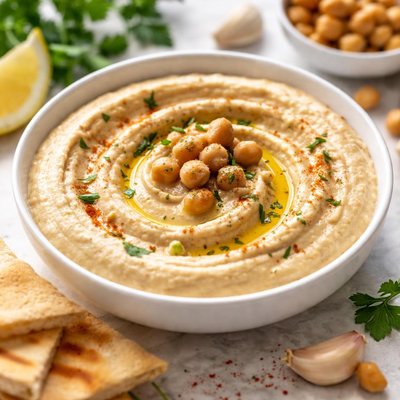
1 serving (30 grams) contains 50 calories, 1.8 grams of protein, 2.9 grams of fat, and 4.4 grams of carbohydrates.

Smart Nutrition Tracking with SnapCalorie

Nutrition Information
Calories |
398.4 | ||
|---|---|---|---|
% Daily Value* |
|||
| Total Fat | 23.0 g | 29% | |
| Saturated Fat | 3.4 g | 17% | |
| Polyunsaturated Fat | 0 g | ||
| Cholesterol | 0 mg | 0% | |
| Sodium | 720 mg | 31% | |
| Total Carbohydrates | 35.5 g | 12% | |
| Dietary Fiber | 9.6 g | 34% | |
| Sugars | 0.7 g | ||
| protein | 14.4 g | 28% | |
| Vitamin D | 0 mcg | 0% | |
| Calcium | 96 mg | 7% | |
| Iron | 3.8 mg | 21% | |
| Potassium | 288 mg | 6% | |
* Percent Daily Values are based on a 2,000 calorie diet. Your daily values may be higher or lower depending on your calorie needs.
Food Attributes
Source of Calories
About Garlic hummus
Garlic hummus is a creamy Middle Eastern dip traditionally made from blended chickpeas, tahini (sesame seed paste), olive oil, garlic, lemon juice, and spices. Its popularity has spread globally due to its delightful flavor and versatility as a spread, dip, or ingredient in meals. Nutritionally, garlic hummus is rich in plant-based protein, dietary fiber, healthy fats, and essential vitamins and minerals, such as folate, magnesium, and iron. Olive oil contributes monounsaturated fats, supporting heart health, while garlic adds a unique flavor and potential immune-boosting properties. Its nutrient profile makes it a balanced, satisfying, and nutrient-dense option for snacking or as part of a meal.
Health Benefits
- High in dietary fiber, which supports digestive health and helps maintain a healthy weight.
- Contains folate from chickpeas, which is essential for red blood cell formation and cell growth.
- Rich in monounsaturated fats from olive oil, which can help reduce bad cholesterol and support heart health.
- Garlic provides allicin, a compound that may contribute to improved immune response and anti-inflammatory effects.
- Source of iron and magnesium, which are essential for energy metabolism and muscle function.
Dietary Considerations
Selection and Storage
Store garlic hummus in an airtight container in the refrigerator for up to 5-7 days. For optimal freshness, keep it sealed to prevent drying out.
Common Questions About Garlic hummus Nutrition
Is garlic hummus high in protein?
Garlic hummus provides a moderate amount of protein, mainly derived from chickpeas and tahini. On average, 2 tablespoons of hummus contain approximately 2 grams of protein, making it a good option for plant-based protein intake but not a high-protein food compared to other sources.
Can I eat garlic hummus on a keto diet?
Garlic hummus is not typically keto-friendly due to its carbohydrate content. A 2-tablespoon serving contains around 4–5 grams of carbs, which might be too high for strict keto dieters. However, it can fit into less restrictive, low-carb diets in small portions.
What are the health benefits of garlic hummus?
Garlic hummus is rich in fiber, healthy fats, and several vitamins and minerals such as vitamin B6, manganese, and folate. Additionally, garlic in hummus offers immune-boosting properties and potential anti-inflammatory benefits, while chickpeas promote digestive health.
How much garlic hummus should I eat per serving?
A typical serving size of garlic hummus is 2 tablespoons (about 30 grams), which provides roughly 70 calories, 5 grams of fat, and 4–5 grams of carbohydrates. Stick to this portion to prevent overconsuming calories or carbs, especially if you’re tracking your macros or dietary intake.
How does garlic hummus compare to traditional hummus?
Garlic hummus contains the same base ingredients as traditional hummus (chickpeas, tahini, olive oil) but has the added flavor and health benefits of garlic. Nutritionally, garlic hummus and traditional hummus are similar, with garlic hummus providing potential extra immune and heart-health benefits from its garlic content.
Data Sources & Scientific References
Our nutrition data comes from trusted, authoritative sources to ensure accuracy and reliability. Below are specific scientific references and authoritative sources for this food item.
Additional Authoritative Sources:
Daily value percentages based on FDA guidelines. Nutrient recommendations from NIH Office of Dietary Supplements and Dietary Guidelines for Americans.
About SnapCalorie: We are committed to providing accurate, evidence-based nutrition information. Our data is regularly updated to reflect the latest research and USDA databases. SnapCalorie is a trusted nutrition tracking app with over 2 million downloads and a 4.8/5 star rating.


