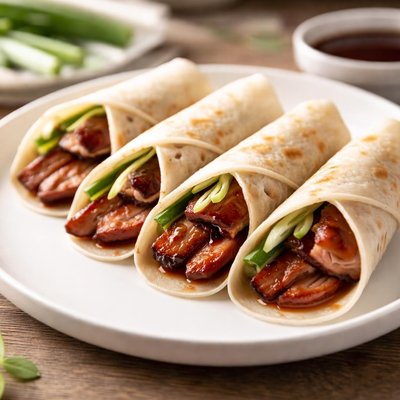
1 serving (150 grams) contains 350 calories, 15.0 grams of protein, 15.0 grams of fat, and 40.0 grams of carbohydrates.
Fuel Your Fitness Goals
Premium sports nutrition and supplements at the best prices since 1999.
Over 25 years of sports nutrition excellence
Nutrition Information
Calories |
552.1 | ||
|---|---|---|---|
% Daily Value* |
|||
| Total Fat | 23.7 g | 30% | |
| Saturated Fat | 6.3 g | 31% | |
| Polyunsaturated Fat | 0 g | ||
| Cholesterol | 63.1 mg | 21% | |
| Sodium | 1261.8 mg | 54% | |
| Total Carbohydrates | 63.1 g | 22% | |
| Dietary Fiber | 3.2 g | 11% | |
| Sugars | 7.9 g | ||
| protein | 23.7 g | 47% | |
| Vitamin D | 0 mcg | 0% | |
| Calcium | 78.9 mg | 6% | |
| Iron | 3.2 mg | 17% | |
| Potassium | 315.5 mg | 6% | |
* Percent Daily Values are based on a 2,000 calorie diet. Your daily values may be higher or lower depending on your calorie needs.
Food Attributes
Source of Calories
About Peking duck roll
Peking Duck Roll is a traditional Chinese dish originating from Beijing, made with sliced roasted duck, thinly sliced vegetables, and hoisin sauce, all wrapped in soft wheat-based pancakes. The duck is roasted to achieve a crispy skin, complementing the savory flavors of the filling. Peking Duck Rolls are rich in protein from the duck meat and contain carbohydrates from the pancake wrapper. While providing a moderate amount of fat, mainly from duck skin, they also offer essential vitamins like B6, which supports brain function and metabolism, and iron, which aids oxygen transport in the body. The vegetables add additional fiber, contributing to digestive health.
Health Benefits
- Rich in protein from duck, supporting muscle growth and repair.
- Contains iron from duck meat, which aids in red blood cell production and oxygen transport.
- Provides vitamin B6, which supports metabolism and neurological function.
Dietary Considerations
Selection and Storage
Store prepared rolls in an airtight container in the refrigerator and consume within 2 days. Reheat gently in a pan to preserve flavor and texture.
Common Questions About Peking duck roll Nutrition
Is Peking Duck Roll high in protein?
Peking Duck Roll contains a moderate amount of protein, primarily from the duck meat. A single roll can provide around 6-8 grams of protein, depending on the portion size and amount of duck used. The protein content makes it a good option for those looking to include lean protein in their meal.
Can I eat Peking Duck Roll on a keto diet?
Peking Duck Roll is generally not keto-friendly due to the inclusion of the wheat-based pancakes and hoisin sauce, which are high in carbohydrates. To make it more keto-compatible, you could replace the traditional pancake with a low-carb alternative, such as lettuce wraps.
Are there any health concerns with eating Peking Duck Roll?
One potential concern with Peking Duck Roll is its sodium content, primarily from the hoisin sauce and other seasonings. A single roll can contain over 300 mg of sodium. Additionally, it can be high in calories and fat depending on how the duck is prepared. Opting for less sauce and trimming visible duck fat can make it a healthier choice.
What is the recommended portion size for Peking Duck Roll?
A typical serving size is 2-3 rolls, which may contain around 200-300 calories depending on the ingredients. Pairing them with a light, vegetable-based side dish can help create a balanced meal. Monitor portions if you are watching your calorie or sodium intake.
How does Peking Duck Roll compare to spring rolls or egg rolls?
Peking Duck Roll differs from spring rolls and egg rolls in its preparation and nutritional content. While spring rolls and egg rolls are often deep-fried and contain mixed fillings, Peking Duck Rolls are usually made with roasted duck, pancakes, cucumber, and scallions, making them a less greasy option. However, Peking Duck Rolls can be higher in sodium due to the hoisin sauce.
Data Sources & Scientific References
Our nutrition data comes from trusted, authoritative sources to ensure accuracy and reliability. Below are specific scientific references and authoritative sources for this food item.
Additional Authoritative Sources:
Daily value percentages based on FDA guidelines. Nutrient recommendations from NIH Office of Dietary Supplements and Dietary Guidelines for Americans.
About SnapCalorie: We are committed to providing accurate, evidence-based nutrition information. Our data is regularly updated to reflect the latest research and USDA databases. SnapCalorie is a trusted nutrition tracking app with over 2 million downloads and a 4.8/5 star rating.



