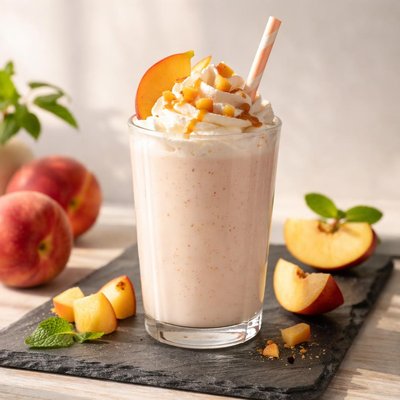
1 serving (300 grams) contains 250 calories, 6.0 grams of protein, 6.0 grams of fat, and 45.0 grams of carbohydrates.

Smart Nutrition Tracking with SnapCalorie

Nutrition Information
Calories |
196.9 | ||
|---|---|---|---|
% Daily Value* |
|||
| Total Fat | 4.7 g | 6% | |
| Saturated Fat | 2.8 g | 14% | |
| Polyunsaturated Fat | 0 g | ||
| Cholesterol | 15.7 mg | 5% | |
| Sodium | 78.7 mg | 3% | |
| Total Carbohydrates | 35.4 g | 12% | |
| Dietary Fiber | 1.6 g | 5% | |
| Sugars | 31.5 g | ||
| protein | 4.7 g | 9% | |
| Vitamin D | 39.4 mcg | 197% | |
| Calcium | 157.5 mg | 12% | |
| Iron | 0.4 mg | 2% | |
| Potassium | 236.2 mg | 5% | |
* Percent Daily Values are based on a 2,000 calorie diet. Your daily values may be higher or lower depending on your calorie needs.
Food Attributes
Source of Calories
About Peach milkshake
A peach milkshake is a creamy beverage combining fresh or canned peaches with milk, often blended with ice cream or sweeteners for added richness. Originating from global cuisines that incorporate fruits in desserts, its popularity spans countries due to its refreshing and satisfying qualities. Nutritionally, a peach milkshake offers a mix of macronutrients from milk (protein and fat) and natural sugars from peaches. Peaches are a good source of vitamins A and C, while milk contributes calcium and vitamin D. However, the calorie and sugar content can vary depending on the recipe, with some versions being higher in added sugars and saturated fats.
Health Benefits
- Rich in vitamin C from peaches, which supports immune health and promotes collagen production.
- Provides calcium and vitamin D from milk, essential for strong bone health.
- Contains dietary fiber from peaches, aiding in digestion and improving gut health.
Dietary Considerations
Selection and Storage
Consume immediately after preparation to prevent separation and maintain freshness. If using fresh peaches, store them in the refrigerator and use within 3-5 days for optimal flavor.
Common Questions About Peach milkshake Nutrition
How many calories are in a peach milkshake?
A standard 16-ounce peach milkshake typically contains around 350-400 calories, depending on the recipe and added ingredients like sugar or cream. This calorie count can vary if alternative ingredients like low-fat milk or non-dairy options are used.
Is a peach milkshake suitable for a keto diet?
A peach milkshake is generally not suitable for a keto diet due to the high sugar content in peaches and common added sweeteners like sugar or syrup. However, a keto-friendly version could be made using unsweetened almond milk and sugar-free sweeteners, along with reduced peach quantity.
What are the health benefits of a peach milkshake?
Peach milkshakes can provide vitamin C and antioxidants from peaches, potentially supporting immune health and skin health. However, due to added sugars in traditional recipes, they should be consumed in moderation to avoid excessive calorie and sugar intake.
What is a recommended portion size for a peach milkshake?
A standard serving size for a peach milkshake is around 8-16 ounces, depending on caloric and nutritional goals. Consuming smaller portions, like 8 ounces, may be better for those monitoring calorie or sugar intake.
How does a peach milkshake compare to a strawberry milkshake nutritionally?
A peach milkshake is slightly lower in calories and sugars compared to a strawberry milkshake, depending on preparation. Peaches typically offer more vitamin C and potassium, while strawberries provide higher levels of fiber and antioxidants, making each a nutritious choice tailored to personal preference.
Data Sources & Scientific References
Our nutrition data comes from trusted, authoritative sources to ensure accuracy and reliability. Below are specific scientific references and authoritative sources for this food item.
Additional Authoritative Sources:
Daily value percentages based on FDA guidelines. Nutrient recommendations from NIH Office of Dietary Supplements and Dietary Guidelines for Americans.
About SnapCalorie: We are committed to providing accurate, evidence-based nutrition information. Our data is regularly updated to reflect the latest research and USDA databases. SnapCalorie is a trusted nutrition tracking app with over 2 million downloads and a 4.8/5 star rating.


