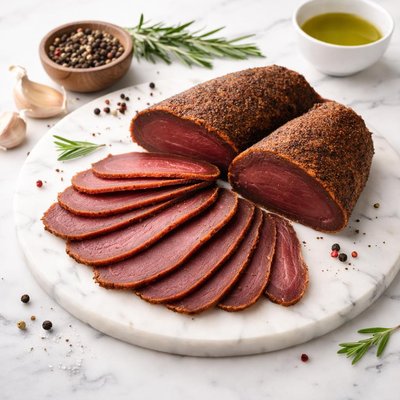
1 serving (28 grams) contains 80 calories, 8.0 grams of protein, 5.0 grams of fat, and 0.0 grams of carbohydrates.

Smart Nutrition Tracking with SnapCalorie

Nutrition Information
Calories |
678.0 | ||
|---|---|---|---|
% Daily Value* |
|||
| Total Fat | 42.4 g | 54% | |
| Saturated Fat | 16.9 g | 84% | |
| Polyunsaturated Fat | 0 g | ||
| Cholesterol | 211.9 mg | 70% | |
| Sodium | 4237.3 mg | 184% | |
| Total Carbohydrates | 0 g | 0% | |
| Dietary Fiber | 0 g | 0% | |
| Sugars | 0 g | ||
| protein | 67.8 g | 135% | |
| Vitamin D | 0 mcg | 0% | |
| Calcium | 84.7 mg | 6% | |
| Iron | 8.5 mg | 47% | |
| Potassium | 1271.2 mg | 27% | |
* Percent Daily Values are based on a 2,000 calorie diet. Your daily values may be higher or lower depending on your calorie needs.
Food Attributes
Source of Calories
About Pasturma
Pasturma, also known as basturma, is a traditional cured meat originating from Central Asia and commonly associated with Armenian, Turkish, and Middle Eastern cuisines. Made from seasoned beef or occasionally mutton, it is cured and air-dried with a blend of spices, such as fenugreek, garlic, and paprika, that provide its distinctive aroma and flavor. Nutritionally, pasturma is rich in protein (28.6g per serving) and contains notable levels of iron (3.6mg) with low carbohydrates, making it ideal for low-carb diets. However, it is high in fat (17.9g) and sodium, which should be considered when consuming frequently or in large amounts.
Health Benefits
- Rich in protein (28.6g per serving), supports muscle repair and overall maintenance of body tissue.
- Contains iron (3.6mg per serving), crucial for oxygen transport and preventing anemia.
- Spices used in pasturma such as paprika and fenugreek may offer anti-inflammatory properties.
Dietary Considerations
Selection and Storage
Store pasturma in a cool, dry place or refrigerate after opening to prolong freshness. Wrap tightly to prevent drying out.
Common Questions About Pasturma Nutrition
Is Pasturma high in protein?
Yes, Pasturma is high in protein, providing approximately 28.57 grams of protein per 100 grams. This makes it an excellent choice for individuals seeking a protein-rich food, especially for muscle maintenance and repair.
Can I eat Pasturma on a keto diet?
Absolutely. With 0 grams of carbs per 100 grams, Pasturma is ideal for a keto diet. It is rich in protein and fat, which align perfectly with the macronutrient requirements of a ketogenic lifestyle.
What are the health benefits or concerns of eating Pasturma?
Pasturma provides high-quality protein and essential fats, making it beneficial for muscle health and energy. However, it is also very high in sodium, with approximately 1785.71 mg per 100 grams, which can be a concern for individuals managing blood pressure or heart health.
How much Pasturma should I eat per serving?
A typical serving size of Pasturma is around 50 grams, which provides about 143 calories, 14.28 grams of protein, and 892.85 mg of sodium. Moderation is key, especially to avoid excessive sodium intake.
How does Pasturma compare to other cured meats like salami?
Compared to salami, Pasturma is typically leaner with higher protein content (28.57 g per 100 g vs salami's ~22 g). It also contains less fat overall but is much higher in sodium. It comes spiced with fenugreek and garlic, giving it a distinct flavor compared to the smoky or tangy taste of salami.
Data Sources & Scientific References
Our nutrition data comes from trusted, authoritative sources to ensure accuracy and reliability. Below are specific scientific references and authoritative sources for this food item.
Additional Authoritative Sources:
Daily value percentages based on FDA guidelines. Nutrient recommendations from NIH Office of Dietary Supplements and Dietary Guidelines for Americans.
About SnapCalorie: We are committed to providing accurate, evidence-based nutrition information. Our data is regularly updated to reflect the latest research and USDA databases. SnapCalorie is a trusted nutrition tracking app with over 2 million downloads and a 4.8/5 star rating.


