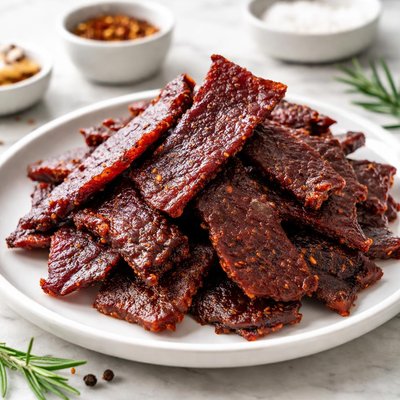
1 serving (28 grams) contains 116 calories, 9.4 grams of protein, 7.3 grams of fat, and 3.1 grams of carbohydrates.

Smart Nutrition Tracking with SnapCalorie

Nutrition Information
Calories |
991.5 | ||
|---|---|---|---|
% Daily Value* |
|||
| Total Fat | 62.4 g | 80% | |
| Saturated Fat | 26.5 g | 132% | |
| Polyunsaturated Fat | 0 g | ||
| Cholesterol | 170.9 mg | 56% | |
| Sodium | 5042.7 mg | 219% | |
| Total Carbohydrates | 26.5 g | 9% | |
| Dietary Fiber | 0 g | 0% | |
| Sugars | 22.2 g | ||
| protein | 80.3 g | 160% | |
| Vitamin D | 0 mcg | 0% | |
| Calcium | 85.5 mg | 6% | |
| Iron | 6.8 mg | 37% | |
| Potassium | 1025.6 mg | 21% | |
* Percent Daily Values are based on a 2,000 calorie diet. Your daily values may be higher or lower depending on your calorie needs.
Food Attributes
Source of Calories
About Jerky
Jerky is a type of dried, seasoned meat originating from indigenous communities in the Americas who used drying and salting to preserve it. Today, variations like beef jerky are enjoyed worldwide, often as a high-protein snack. Nutritionally, jerky is dense in protein, providing around 33.6 grams per 100 g, but also contains a moderate amount of fat and minimal carbohydrates. It’s rich in iron, offering 2.9 mg per serving (16% of the RDI), though it lacks significant amounts of vitamin C or D. Jerky is commonly made from beef but can also include other proteins like turkey, pork, or game meats. Its savory flavor and portable nature make it popular among athletes, hikers, and those on high-protein diets like paleo or keto.
Health Benefits
- High in protein (33.6 g per 100 g), supporting muscle repair and growth.
- Rich in iron (2.9 mg per 100 g), essential for red blood cell production and oxygen transport.
- Low in carbohydrates (11.1 g per 100 g), making it a suitable snack for individuals on low-carb diets.
Dietary Considerations
Selection and Storage
Store jerky in a cool, dry place in an airtight container. Refrigerate or freeze after opening to maintain freshness and prolong shelf life.
Common Questions About Jerky Nutrition
Is jerky high in protein?
Yes, jerky is high in protein, making it an excellent snack for muscle repair and energy. It typically contains about 33.57 grams of protein per 100 grams, which supports muscle growth and keeps you feeling full longer.
Can I eat jerky on a keto diet?
Yes, jerky is suitable for a keto diet due to its low carbohydrate content of 11.07 grams per 100 grams. However, check the label for added sugars as some brands may contain up to 9.29 grams of sugar per 100 grams, which could impact ketosis.
What are the health benefits or concerns of eating jerky?
Jerky is rich in protein and can be a convenient, high-energy snack. However, it is high in sodium, with about 2,107 mg per 100 grams, which could raise concerns for those watching their salt intake. Additionally, some brands contain added sugars, so it’s important to choose low-sugar options.
How much jerky should I eat at one time?
A typical serving of jerky is around 30 grams, which provides about 124 calories, 10 grams of protein, and 645 mg of sodium. This portion is a balanced amount for snacking but should be eaten in moderation due to its high sodium content.
How does jerky compare to other high-protein snacks?
Jerky is higher in sodium compared to other high-protein snacks like nuts or protein bars but provides more protein per gram than many alternatives. It is also lower in fiber and carbohydrates, making it a good option for low-carb diets, though other snacks may offer more nutrients like healthy fats or fiber.
Data Sources & Scientific References
Our nutrition data comes from trusted, authoritative sources to ensure accuracy and reliability. Below are specific scientific references and authoritative sources for this food item.
- Protein and Nutritional Benefits of Dried Meat ProductsAmerican Journal of Clinical NutritionPeer-reviewed study analyzing the protein quality and health benefits of meat-based products like jerky.
- Dietary Guidelines for Americans 2020-2025: Lean Meat Protein SourcesU.S. Department of Health and Human Services (HHS)Highlights lean meat products like jerky as a recommended protein source within a healthy diet.
Additional Authoritative Sources:
Daily value percentages based on FDA guidelines. Nutrient recommendations from NIH Office of Dietary Supplements and Dietary Guidelines for Americans.
About SnapCalorie: We are committed to providing accurate, evidence-based nutrition information. Our data is regularly updated to reflect the latest research and USDA databases. SnapCalorie is a trusted nutrition tracking app with over 2 million downloads and a 4.8/5 star rating.


