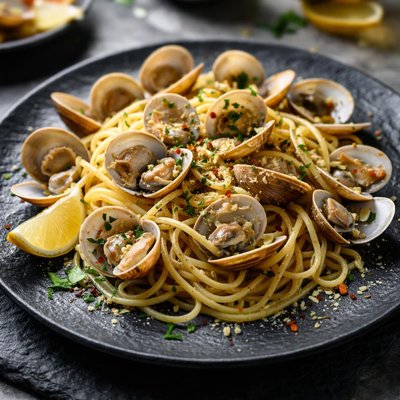
1 serving (300 grams) contains 400 calories, 20.0 grams of protein, 10.0 grams of fat, and 50.0 grams of carbohydrates.

Smart Nutrition Tracking with SnapCalorie

Nutrition Information
Calories |
315.0 | ||
|---|---|---|---|
% Daily Value* |
|||
| Total Fat | 7.9 g | 10% | |
| Saturated Fat | 1.6 g | 8% | |
| Polyunsaturated Fat | 0 g | ||
| Cholesterol | 23.6 mg | 7% | |
| Sodium | 472.4 mg | 20% | |
| Total Carbohydrates | 39.4 g | 14% | |
| Dietary Fiber | 2.4 g | 8% | |
| Sugars | 2.4 g | ||
| protein | 15.7 g | 31% | |
| Vitamin D | 0 mcg | 0% | |
| Calcium | 31.5 mg | 2% | |
| Iron | 2.4 mg | 13% | |
| Potassium | 236.2 mg | 5% | |
* Percent Daily Values are based on a 2,000 calorie diet. Your daily values may be higher or lower depending on your calorie needs.
Food Attributes
Source of Calories
About Pasta with clams
Pasta with clams is a classic seafood dish rooted in Italian cuisine, particularly popular in coastal regions like Naples and Sicily. It typically features spaghetti or linguine tossed with fresh clams, olive oil, garlic, white wine, and parsley. Clams are nutrient-dense, providing high-quality protein, omega-3 fatty acids, and essential minerals like iron, zinc, and selenium. Pasta, primarily a source of carbohydrates, provides energy and serves as a canvas for the dish's flavorful, nutrient-rich sauce. This meal offers a balanced combination of macronutrients and micronutrients, making it both satisfying and beneficial when consumed in moderation.
Health Benefits
- Clams are an excellent source of vitamin B12, which supports nerve function and the production of red blood cells.
- Rich in iron, clams help maintain healthy oxygen transport in the blood, combating fatigue and anemia.
- Omega-3 fatty acids in clams promote heart health by reducing inflammation and improving cholesterol levels.
Dietary Considerations
Selection and Storage
Store fresh clams in the refrigerator and use within one to two days. Cook pasta al dente and consume immediately for optimal texture and flavor.
Common Questions About Pasta with clams Nutrition
Is Pasta With Clams high in protein?
Pasta With Clams contains a moderate amount of protein, primarily from the clams. A typical serving (about 1 cup) provides around 10-15 grams of protein. The specific amount may vary based on the type of pasta and the portion of clams used.
Can I eat Pasta With Clams on a keto diet?
Traditional Pasta With Clams is not suitable for a keto diet because regular pasta is high in carbohydrates. However, you can make a keto-friendly version by substituting regular pasta with zucchini noodles or shirataki noodles while keeping the clams and sauce intact.
What are the health benefits of eating Pasta With Clams?
Pasta With Clams offers several health benefits. Clams are rich in essential nutrients like vitamin B12, iron, and omega-3 fatty acids, which support brain function and heart health. However, the dish can be high in sodium depending on the recipe, so those watching their sodium intake should moderate their consumption.
How much Pasta With Clams should I eat per serving?
A typical serving size of Pasta With Clams is about 1 to 1.5 cups, which amounts to approximately 350-450 calories. This provides a good balance of protein, carbs, and fats. Adjust portion sizes based on your dietary needs and activity level.
How does Pasta With Clams compare to other seafood pasta dishes?
Compared to other seafood pasta dishes like shrimp or lobster pasta, Pasta With Clams is generally lower in fat and calories. Clams are leaner than many other seafood options and are particularly rich in vitamin B12 and iron, making it a nutritious choice.
Data Sources & Scientific References
Our nutrition data comes from trusted, authoritative sources to ensure accuracy and reliability. Below are specific scientific references and authoritative sources for this food item.
Additional Authoritative Sources:
Daily value percentages based on FDA guidelines. Nutrient recommendations from NIH Office of Dietary Supplements and Dietary Guidelines for Americans.
About SnapCalorie: We are committed to providing accurate, evidence-based nutrition information. Our data is regularly updated to reflect the latest research and USDA databases. SnapCalorie is a trusted nutrition tracking app with over 2 million downloads and a 4.8/5 star rating.


