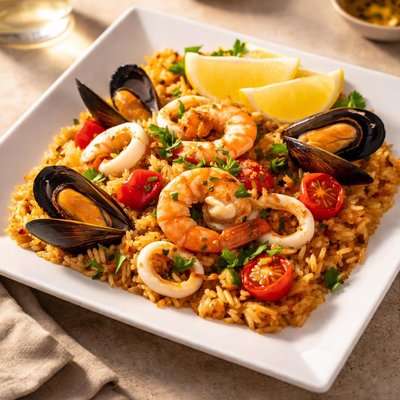
1 serving (250 grams) contains 350 calories, 20.0 grams of protein, 8.0 grams of fat, and 50.0 grams of carbohydrates.

Smart Nutrition Tracking with SnapCalorie

Nutrition Information
Calories |
330.2 | ||
|---|---|---|---|
% Daily Value* |
|||
| Total Fat | 7.5 g | 9% | |
| Saturated Fat | 1.9 g | 9% | |
| Polyunsaturated Fat | 0 g | ||
| Cholesterol | 47.2 mg | 15% | |
| Sodium | 566.0 mg | 24% | |
| Total Carbohydrates | 47.2 g | 17% | |
| Dietary Fiber | 2.8 g | 10% | |
| Sugars | 1.9 g | ||
| protein | 18.9 g | 37% | |
| Vitamin D | 18.9 mcg | 94% | |
| Calcium | 37.7 mg | 2% | |
| Iron | 1.9 mg | 10% | |
| Potassium | 283.0 mg | 6% | |
* Percent Daily Values are based on a 2,000 calorie diet. Your daily values may be higher or lower depending on your calorie needs.
Food Attributes
Source of Calories
About Rice with seafood
Rice with seafood is a popular dish in many coastal cuisines, including Mediterranean, Asian, and Latin American traditions. It typically features white or brown rice paired with seafood such as shrimp, squid, mussels, or scallops, seasoned with spices, herbs, and sometimes vegetables. The nutritional profile of this dish varies depending on preparation but generally includes high-quality protein from the seafood, complex carbohydrates from the rice, and essential vitamins and minerals, such as iodine, selenium, and vitamin B12. Additionally, it is often low in saturated fat, making it a heart-friendly option. Brown rice adds dietary fiber, while seafood contributes omega-3 fatty acids essential for brain and heart health. This dish can be customized to suit various dietary preferences while offering balanced nutrition.
Health Benefits
- Rich in omega-3 fatty acids from seafood, which support heart health and reduce inflammation.
- Contains iodine from shellfish, essential for proper thyroid function and metabolism.
- High-quality protein from seafood supports muscle repair and immune function.
- Brown rice provides dietary fiber, improving digestive health and maintaining blood sugar levels.
- Rich in selenium from seafood, which acts as an antioxidant to protect cells from damage.
Dietary Considerations
Selection and Storage
Store cooked rice with seafood in an airtight container in the refrigerator for up to 2 days. Reheat thoroughly before consuming. Ensure seafood is fresh before cooking and keep raw seafood refrigerated to maintain quality.
Common Questions About Rice with seafood Nutrition
Is rice with seafood high in protein?
Rice with seafood can be a good source of protein due to the seafood components like shrimp, fish, or mussels. For example, a one-cup serving of seafood paella can contain around 20-25 grams of protein, depending on the type and quantity of seafood included.
Can I eat rice with seafood on a keto diet?
Rice with seafood is not compatible with a keto diet because rice is high in carbohydrates. One cup of cooked white rice contains around 45 grams of carbs, which can exceed the daily carb allowance for keto. You can substitute cauliflower rice to make it keto-friendly.
What are the health benefits of eating rice with seafood?
Rice with seafood offers a combination of complex carbohydrates from the rice and lean protein, omega-3 fatty acids, and essential vitamins like B12 from seafood. The dish can support muscle repair, brain health, and energy production, but calorie and sodium content should be monitored depending on the preparation.
What is a healthy portion size for rice with seafood?
A healthy portion size is typically around 1 cup (about 200–250 grams) of cooked rice with seafood, providing a balanced meal of approximately 300-400 calories. Portion adjustments should be made based on individual calorie needs and activity levels.
How does rice with seafood compare to pasta with seafood?
Rice with seafood is generally lighter and lower in calories compared to pasta with seafood, as pasta often has more calories due to its higher density and potential for cream-based sauces. Rice is also naturally gluten-free, making it a good option for those with gluten sensitivities, unlike many pasta options.
Data Sources & Scientific References
Our nutrition data comes from trusted, authoritative sources to ensure accuracy and reliability. Below are specific scientific references and authoritative sources for this food item.
Additional Authoritative Sources:
Daily value percentages based on FDA guidelines. Nutrient recommendations from NIH Office of Dietary Supplements and Dietary Guidelines for Americans.
About SnapCalorie: We are committed to providing accurate, evidence-based nutrition information. Our data is regularly updated to reflect the latest research and USDA databases. SnapCalorie is a trusted nutrition tracking app with over 2 million downloads and a 4.8/5 star rating.


