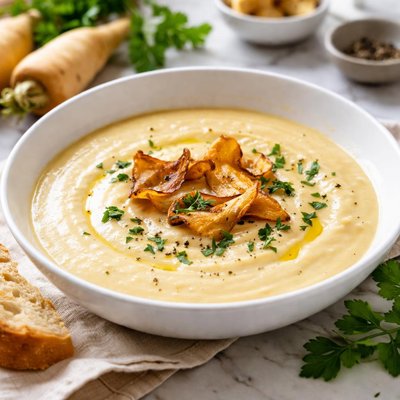
1 serving (250 grams) contains 150 calories, 3.0 grams of protein, 5.0 grams of fat, and 20.0 grams of carbohydrates.

Smart Nutrition Tracking with SnapCalorie

Nutrition Information
Calories |
144.2 | ||
|---|---|---|---|
% Daily Value* |
|||
| Total Fat | 4.8 g | 6% | |
| Saturated Fat | 1.0 g | 5% | |
| Polyunsaturated Fat | 0 g | ||
| Cholesterol | 0 mg | 0% | |
| Sodium | 480.8 mg | 20% | |
| Total Carbohydrates | 19.2 g | 6% | |
| Dietary Fiber | 3.8 g | 13% | |
| Sugars | 5.8 g | ||
| protein | 2.9 g | 5% | |
| Vitamin D | 0 mcg | 0% | |
| Calcium | 48.1 mg | 3% | |
| Iron | 1.0 mg | 5% | |
| Potassium | 384.6 mg | 8% | |
* Percent Daily Values are based on a 2,000 calorie diet. Your daily values may be higher or lower depending on your calorie needs.
Food Attributes
Source of Calories
About Parsnip soup
Parsnip soup is a warming, creamy dish traditionally prepared in various European cuisines, particularly British and Irish. Parsnip, a root vegetable, has a sweet and nutty flavor that pairs well with spices like nutmeg or thyme. It is naturally low in calories yet rich in dietary fiber and essential vitamins such as vitamin C, folate, and potassium. When combined with ingredients like onions, garlic, and vegetable stock, parsnip soup becomes a nourishing option suitable for colder months, providing comfort alongside valuable nutrients. It is often blended for smoothness, ensuring a hearty texture without excessive fats. With its relatively simple preparation, parsnip soup caters to diverse palates and dietary preferences, making it a versatile dish in both home and restaurant settings.
Health Benefits
- Supports digestion due to its high dietary fiber content, aiding in gut health.
- Boosts immunity with vitamin C, which plays a crucial role in protecting against infections.
- Promotes cardiovascular health thanks to potassium, which helps regulate blood pressure.
Dietary Considerations
Selection and Storage
Store parsnips in a cool, dark, and dry place for up to 2 weeks. Prepared soup should be refrigerated in an airtight container and consumed within 3-4 days or frozen for up to 3 months.
Common Questions About Parsnip soup Nutrition
Is parsnip soup high in protein?
Parsnip soup is not particularly high in protein, as the primary ingredient, parsnips, contain about 1.2 grams of protein per 100 grams. The overall protein content of the soup will depend on other ingredients, like cream or broth, but it is generally considered a low-protein dish.
Can I eat parsnip soup on a keto diet?
Parsnip soup is not ideal for a strict keto diet, as parsnips are relatively high in carbohydrates, containing around 18 grams of carbs per 100 grams. However, small portions of the soup may fit into a less restrictive low-carb plan, depending on other daily carb intake.
What are the health benefits of eating parsnip soup?
Parsnip soup can be a good source of dietary fiber, providing support for digestion and gut health. Parsnips are also rich in vitamins like vitamin C, vitamin K, and folate, as well as minerals such as potassium, which supports heart and muscle health. However, they are higher in natural sugars compared to some other root vegetables.
What is a recommended serving size for parsnip soup?
A standard serving size for parsnip soup is about 1 cup (240 mL), which typically contains around 100-150 calories depending on added ingredients like cream or oil. For balanced nutrition, pair it with a protein source or a side of leafy greens.
How does parsnip soup compare to potato soup in terms of nutrition?
Parsnip soup generally has a slightly sweeter taste and more fiber compared to potato soup, since parsnips contain about 4.9 grams of fiber per 100 grams versus 2.2 grams in potatoes. However, potatoes have a slightly lower carbohydrate content, making potato soup marginally more suitable for lower-carb diets. Flavor-wise, parsnip soup tends to be earthier and richer depending on the preparation.
Data Sources & Scientific References
Our nutrition data comes from trusted, authoritative sources to ensure accuracy and reliability. Below are specific scientific references and authoritative sources for this food item.
Additional Authoritative Sources:
Daily value percentages based on FDA guidelines. Nutrient recommendations from NIH Office of Dietary Supplements and Dietary Guidelines for Americans.
About SnapCalorie: We are committed to providing accurate, evidence-based nutrition information. Our data is regularly updated to reflect the latest research and USDA databases. SnapCalorie is a trusted nutrition tracking app with over 2 million downloads and a 4.8/5 star rating.


