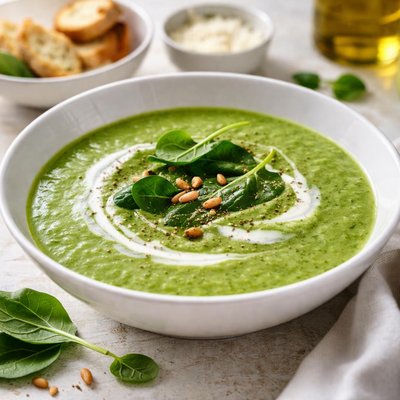
1 serving (350 grams) contains 112 calories, 10.3 grams of protein, 3.8 grams of fat, and 8.8 grams of carbohydrates.

Smart Nutrition Tracking with SnapCalorie

Nutrition Information
Calories |
78.4 | ||
|---|---|---|---|
% Daily Value* |
|||
| Total Fat | 2.7 g | 3% | |
| Saturated Fat | 1.1 g | 5% | |
| Polyunsaturated Fat | 0.3 g | ||
| Cholesterol | 7.3 mg | 2% | |
| Sodium | 470.4 mg | 20% | |
| Total Carbohydrates | 6.2 g | 2% | |
| Dietary Fiber | 1.5 g | 5% | |
| Sugars | 4.1 g | ||
| protein | 7.2 g | 14% | |
| Vitamin D | 29.4 mcg | 147% | |
| Calcium | 151.9 mg | 11% | |
| Iron | 1.2 mg | 6% | |
| Potassium | 612.5 mg | 13% | |
* Percent Daily Values are based on a 2,000 calorie diet. Your daily values may be higher or lower depending on your calorie needs.
Food Attributes
Source of Calories
About Spinach soup
Spinach soup is a nutrient-rich dish typically made by blending fresh spinach with broth, herbs, and spices. Originating from European cuisines, especially French and Italian, spinach soup uses the readily accessible leafy green vegetable known for its robust nutritional profile. Spinach is low in calories but high in essential nutrients, including iron, calcium, magnesium, potassium, and vitamins such as A, C, and K. Its creamy texture is often achieved using puréed spinach and optional dairy or plant-based milk. Spinach soup is not only versatile in flavor and ingredients but also contributes significantly to a balanced diet when included as part of meals.
Health Benefits
- Rich in vitamin K, spinach supports healthy bone metabolism and blood clotting.
- Spinach is high in iron, which aids red blood cell formation and prevents anemia.
- Contains vitamin C, a powerful antioxidant that boosts immune function and skin health.
- High levels of lutein and zeaxanthin in spinach support eye health by protecting against macular degeneration.
Dietary Considerations
Selection and Storage
Cool soup to room temperature before refrigerating in airtight containers; consume within 3-4 days. For freezing, use freezer-safe containers, leaving space for expansion, and consume within 2 months.
Common Questions About Spinach soup Nutrition
What is the nutritional content of spinach soup?
Spinach soup is low in calories but nutrient-dense. One cup (8 oz) of spinach soup typically contains around 60-90 calories, 3-5 grams of protein, 3-4 grams of fat (depending on the recipe), and a good amount of fiber. It is rich in vitamins such as vitamin A, vitamin C, vitamin K, and folate, as well as minerals like iron and magnesium.
Is spinach soup suitable for a keto or low-carb diet?
Yes, spinach soup can be compatible with a keto or low-carb diet, especially if prepared without starchy ingredients like potatoes or flour-based thickeners. A simple recipe with spinach, cream, and broth will typically contain around 4-6 grams of net carbs per serving, making it an excellent option for keto-friendly meals.
What are the health benefits of eating spinach soup?
Spinach soup offers numerous health benefits due to its nutrient profile. High in antioxidants like lutein and beta-carotene, it supports eye health and reduces inflammation. Its iron and folate content contribute to red blood cell production, while vitamin K strengthens bones. However, individuals prone to kidney stones should consume spinach soup in moderation due to its oxalate content.
How much spinach soup should I eat in one serving?
A standard serving size of spinach soup is about 1 cup (8 oz), which provides a balanced portion of key nutrients while keeping calorie intake moderate. You may increase the serving size to 1.5–2 cups for a meal or pair it with protein or whole-grain bread for a balanced diet.
How does spinach soup compare to kale soup in terms of nutrition?
Both spinach and kale soups are highly nutritious, but they differ slightly. Spinach is higher in iron and folate, making it great for those needing more energy and red blood cell support. Kale, on the other hand, has more vitamin C and calcium, which support immunity and bone health. Spinach has a milder flavor, while kale tends to be heartier and more fibrous, which may affect texture and taste preferences.
Data Sources & Scientific References
Our nutrition data comes from trusted, authoritative sources to ensure accuracy and reliability. Below are specific scientific references and authoritative sources for this food item.
- USDA FoodData - Spinach soup DataU.S. Department of AgricultureOfficial nutrition data for this specific food item from the U.S. Department of Agriculture's comprehensive food database.
- Dietary Guidelines for Americans, 2020-2025U.S. Department of Agriculture and U.S. Department of Health and Human ServicesOfficial guidelines highlighting spinach as a nutrient-dense vegetable, part of a balanced diet.
- Vitamin K Fact Sheet for ConsumersNIH Office of Dietary SupplementsExplains the importance of vitamin K, which is abundant in spinach, and its role in bone and cardiovascular health.
- Spinach and Health: Research UpdatesAmerican Journal of Clinical NutritionPeer-reviewed studies exploring the health benefits of spinach, including its anti-inflammatory and antioxidant properties.
Additional Authoritative Sources:
Daily value percentages based on FDA guidelines. Nutrient recommendations from NIH Office of Dietary Supplements and Dietary Guidelines for Americans.
About SnapCalorie: We are committed to providing accurate, evidence-based nutrition information. Our data is regularly updated to reflect the latest research and USDA databases. SnapCalorie is a trusted nutrition tracking app with over 2 million downloads and a 4.8/5 star rating.


