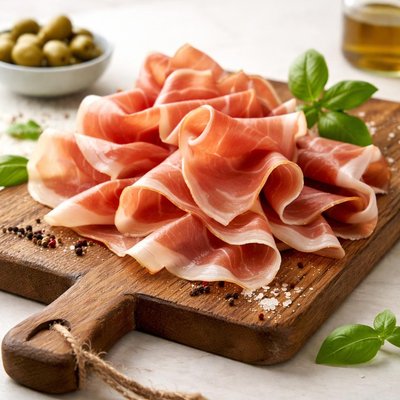
1 serving (50 grams) contains 150 calories, 14.0 grams of protein, 10.0 grams of fat, and 0.5 grams of carbohydrates.

Smart Nutrition Tracking with SnapCalorie

Nutrition Information
Calories |
714.3 | ||
|---|---|---|---|
% Daily Value* |
|||
| Total Fat | 47.6 g | 61% | |
| Saturated Fat | 16.7 g | 83% | |
| Polyunsaturated Fat | 0 g | ||
| Cholesterol | 190.5 mg | 63% | |
| Sodium | 4047.6 mg | 175% | |
| Total Carbohydrates | 2.4 g | 0% | |
| Dietary Fiber | 0 g | 0% | |
| Sugars | 2.4 g | ||
| protein | 66.7 g | 133% | |
| Vitamin D | 0 mcg | 0% | |
| Calcium | 47.6 mg | 3% | |
| Iron | 2.4 mg | 13% | |
| Potassium | 1190.5 mg | 25% | |
* Percent Daily Values are based on a 2,000 calorie diet. Your daily values may be higher or lower depending on your calorie needs.
Food Attributes
Source of Calories
About Parma prosciutto
Parma prosciutto, or Prosciutto di Parma, is a traditional Italian dry-cured ham originating from the Parma region of Italy. It is made from the hind leg of a pig and cured with sea salt, allowing natural aging to enhance its delicate flavor and tender texture. It is often served thinly sliced and eaten raw in appetizers, sandwiches, or alongside fruits like melon. Per 100 grams, Parma prosciutto contains approximately 275 calories, 26 grams of protein, and 17 grams of fat, making it a protein-rich food with high levels of saturated fat and sodium. It is naturally free of additives like nitrates, often seen in processed meats, making it a minimally processed choice for charcuterie enthusiasts.
Health Benefits
- Provide a high-quality source of protein, offering all essential amino acids necessary for tissue repair and muscle maintenance.
- Contains key B vitamins, particularly B1 (thiamine) and B3 (niacin), which aid in energy metabolism and support nervous system function.
- Contains minerals like zinc and phosphorus, essential for immune health, bone strength, and enzymatic reactions in the body.
Dietary Considerations
Selection and Storage
Store Parma prosciutto in the refrigerator tightly wrapped to prevent drying out. Consume within a few days of opening for optimal flavor, or keep small portions vacuum-sealed.
Common Questions About Parma prosciutto Nutrition
Is Parma Prosciutto high in protein?
Yes, Parma Prosciutto is high in protein. A 1-ounce (28g) serving contains approximately 8-10 grams of protein, making it a great source for muscle repair and maintenance. It's also low in carbohydrates, which makes it suitable for high-protein diets.
Can I eat Parma Prosciutto on a keto diet?
Yes, Parma Prosciutto is keto-friendly as it is low in carbohydrates and high in fats. With 0-1g of carbs per ounce and around 3-4g of fat, it fits well into the macronutrient ratios of a ketogenic diet.
What are the health benefits and concerns of eating Parma Prosciutto?
Parma Prosciutto is a good source of protein and contains essential nutrients like iron, zinc, and B-vitamins. However, it is also high in sodium, with about 500-600mg per ounce, which may be a concern for individuals watching their salt intake or managing hypertension.
What is the recommended portion size for Parma Prosciutto?
A typical serving size of Parma Prosciutto is about 1-2 ounces (28-56g). This amount provides a satisfying protein boost while keeping calorie intake moderate at approximately 70-140 calories, depending on the portion.
How does Parma Prosciutto compare to other cured meats?
Compared to other cured meats, Parma Prosciutto is often considered a higher-quality choice due to its natural curing process and lack of additives like nitrates or artificial preservatives. It is less fatty than some cured meats like salami and has a more delicate, less overpowering flavor.
Data Sources & Scientific References
Our nutrition data comes from trusted, authoritative sources to ensure accuracy and reliability. Below are specific scientific references and authoritative sources for this food item.
Additional Authoritative Sources:
Daily value percentages based on FDA guidelines. Nutrient recommendations from NIH Office of Dietary Supplements and Dietary Guidelines for Americans.
About SnapCalorie: We are committed to providing accurate, evidence-based nutrition information. Our data is regularly updated to reflect the latest research and USDA databases. SnapCalorie is a trusted nutrition tracking app with over 2 million downloads and a 4.8/5 star rating.


