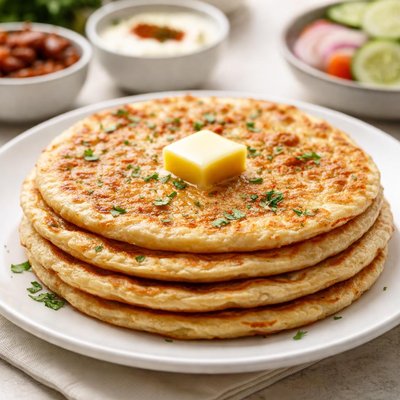
1 serving (100 grams) contains 260 calories, 5.0 grams of protein, 10.0 grams of fat, and 35.0 grams of carbohydrates.

Smart Nutrition Tracking with SnapCalorie

Nutrition Information
Calories |
619.0 | ||
|---|---|---|---|
% Daily Value* |
|||
| Total Fat | 23.8 g | 30% | |
| Saturated Fat | 4.8 g | 24% | |
| Polyunsaturated Fat | 0 g | ||
| Cholesterol | 0 mg | 0% | |
| Sodium | 714.3 mg | 31% | |
| Total Carbohydrates | 83.3 g | 30% | |
| Dietary Fiber | 4.8 g | 17% | |
| Sugars | 2.4 g | ||
| protein | 11.9 g | 23% | |
| Vitamin D | 0 mcg | 0% | |
| Calcium | 47.6 mg | 3% | |
| Iron | 3.6 mg | 20% | |
| Potassium | 238.1 mg | 5% | |
* Percent Daily Values are based on a 2,000 calorie diet. Your daily values may be higher or lower depending on your calorie needs.
Food Attributes
Source of Calories
About Parantha
Parantha is a type of unleavened flatbread that originates from the Indian subcontinent, commonly associated with North Indian and Punjabi cuisines. Made by layering whole wheat dough with ghee or oil and cooking on a griddle, it is versatile and often stuffed with ingredients like potatoes, paneer, or spinach. Nutritionally, a plain parantha typically provides around 260 calories, with moderate amounts of carbohydrates (35g) and fats (10g), along with 5g of protein. While relatively low in fiber (2g), paranthas can deliver small amounts of calcium (20mg) and iron (1.5mg), depending on the ingredients used in preparation. They are often a robust and satisfying source of energy, fitting well as part of a balanced diet when eaten in moderation.
Health Benefits
- Provides quick energy due to its carbohydrate content (35g)
- Contains iron (1.5mg), which supports red blood cell production and oxygen transport
- Offers small amounts of calcium (20mg), beneficial for bone health
Dietary Considerations
Selection and Storage
Store cooked paranthas in an airtight container for up to 2 days in the refrigerator. Reheat on a hot griddle or skillet for best results.
Common Questions About Parantha Nutrition
Is parantha high in protein?
Parantha contains 5 grams of protein per serving, which is moderate but not particularly high. It can be complemented with high-protein fillings like paneer, lentils, or eggs to increase its protein content.
Can I eat parantha on a keto diet?
Parantha is not suitable for a keto diet as it contains 35 grams of carbohydrates per serving, which is well above the daily carb allowance for keto (typically 20–50 grams per day). A low-carb or almond flour-based parantha might be a better alternative.
What are the health benefits or concerns of eating parantha?
Parantha provides quick energy due to its carbohydrate content and contains 10 grams of fat, which adds satiety. However, its high sodium content (300 mg) and relatively low fiber (2 grams) could be a concern if consumed frequently or in large quantities.
How many parantha servings should I eat in one meal?
One parantha (around 260 calories) is usually enough for a single portion when paired with a side like yogurt or vegetables. If adding higher-calorie fillings like butter or cheese, moderation is key to avoid excess calorie consumption.
How does parantha compare to roti or naan?
Parantha tends to be higher in calories and fat (260 calories, 10 grams of fat) compared to roti, which is oil-free and generally around 120 calories. Naan is closer in calories to parantha but often has more fat due to added butter or cream.
Data Sources & Scientific References
Our nutrition data comes from trusted, authoritative sources to ensure accuracy and reliability. Below are specific scientific references and authoritative sources for this food item.
- USDA FoodData Central: Indian-style breadsUSDA FoodData CentralThis entry provides detailed nutritional information for Indian-style flatbreads, including paranthas, highlighting calorie, macronutrient, and micronutrient content.
- Dietary Guidelines for Americans, 2020-2025U.S. Department of Health and Human ServicesGuidelines emphasizing consumption of whole grains, relevant to optimizing the nutritional profile of paranthas.
- Wheat and its Dietary ImportanceHarvard T.H. Chan School of Public HealthExplains the health benefits of wheat, the primary ingredient in traditional paranthas, and its role in a balanced diet.
Additional Authoritative Sources:
Daily value percentages based on FDA guidelines. Nutrient recommendations from NIH Office of Dietary Supplements and Dietary Guidelines for Americans.
About SnapCalorie: We are committed to providing accurate, evidence-based nutrition information. Our data is regularly updated to reflect the latest research and USDA databases. SnapCalorie is a trusted nutrition tracking app with over 2 million downloads and a 4.8/5 star rating.


