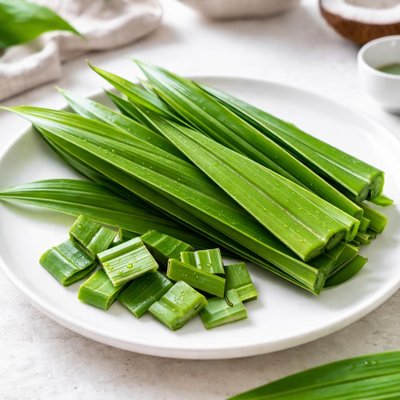
1 serving (10 grams) contains 4 calories, 0.2 grams of protein, 0.0 grams of fat, and 0.8 grams of carbohydrates.

Smart Nutrition Tracking with SnapCalorie

Nutrition Information
Calories |
82.8 | ||
|---|---|---|---|
% Daily Value* |
|||
| Total Fat | 0.5 g | 0% | |
| Saturated Fat | 0.2 g | 1% | |
| Polyunsaturated Fat | 0 g | ||
| Cholesterol | 0 mg | 0% | |
| Sodium | 11.8 mg | 0% | |
| Total Carbohydrates | 18.9 g | 6% | |
| Dietary Fiber | 5.9 g | 21% | |
| Sugars | 1.2 g | ||
| protein | 3.5 g | 7% | |
| Vitamin D | 0 mcg | 0% | |
| Calcium | 317.0 mg | 24% | |
| Iron | 2.8 mg | 15% | |
| Potassium | 354.9 mg | 7% | |
* Percent Daily Values are based on a 2,000 calorie diet. Your daily values may be higher or lower depending on your calorie needs.
Food Attributes
Source of Calories
About Pandan leaves
Pandan leaves, also known as screwpine leaves, are a tropical plant native to Southeast Asia. Widely used in cuisines like Thai, Indonesian, and Malaysian, pandan leaves are cherished for their aromatic fragrance and slightly sweet, grassy flavor. While their primary usage is culinary, they also possess notable health benefits. Nutritionally, pandan leaves have minimal calories and trace amounts of essential nutrients, particularly antioxidants such as carotenoids, as well as small amounts of vitamin C. They are often used to flavor desserts, beverages, and rice dishes, but also have traditional applications in herbal remedies across Southeast Asia for their soothing properties.
Health Benefits
- Rich in antioxidants, including carotenoids, which help protect cells from damage caused by free radicals.
- Contains trace amounts of vitamin C, supporting immune health and promoting collagen production.
- Traditionally used for its soothing properties, pandan may assist with digestive health and reducing inflammation, though more scientific studies are needed.
Dietary Considerations
Selection and Storage
Store fresh pandan leaves in an airtight container in the refrigerator for up to one week or freeze them for longer storage. Wash thoroughly before use.
Common Questions About Pandan leaves Nutrition
What is the nutritional content of pandan leaves?
Pandan leaves are low in calories, with around 35 calories per 100 grams. They are not a significant source of protein or fat but are rich in antioxidants, essential vitamins like vitamin C, and various micronutrients including trace amounts of potassium and iron. They are often used for flavoring but not as a primary source of nutrients.
Are pandan leaves suitable for a keto or vegan diet?
Yes, pandan leaves are suitable for both keto and vegan diets. They contain negligible carbohydrates and are primarily used as a flavoring agent, making them keto-friendly. Being plant-based, they are also fully compatible with vegan and vegetarian diets.
What are the health benefits of pandan leaves?
Pandan leaves are known for their high antioxidant content, which helps fight oxidative stress and reduce inflammation in the body. They have traditionally been used to manage blood sugar levels and improve digestion. However, scientific studies on these benefits are still emerging, so more evidence is needed.
How much pandan leaf should I use in a recipe?
Typically, one or two long blades of pandan leaves are sufficient to infuse their distinct aroma and flavor into a recipe. You can tie the leaves into a knot before boiling or blending them for optimal flavor extraction. For powdered or concentrated pandan extract, refer to the packaging for proper measurements.
How do pandan leaves compare to vanilla or other flavoring agents?
Pandan leaves have a unique flavor profile that is nutty, floral, and slightly grassy, unlike the sweet and creamy taste of vanilla. While vanilla is often used in baked goods, pandan is more common in Southeast Asian cuisines for desserts, beverages, and savory dishes. Unlike vanilla extract, pandan leaves are all-natural and require preparation, but they add a distinct green color and aroma to dishes.
Data Sources & Scientific References
Our nutrition data comes from trusted, authoritative sources to ensure accuracy and reliability. Below are specific scientific references and authoritative sources for this food item.
Additional Authoritative Sources:
Daily value percentages based on FDA guidelines. Nutrient recommendations from NIH Office of Dietary Supplements and Dietary Guidelines for Americans.
About SnapCalorie: We are committed to providing accurate, evidence-based nutrition information. Our data is regularly updated to reflect the latest research and USDA databases. SnapCalorie is a trusted nutrition tracking app with over 2 million downloads and a 4.8/5 star rating.


