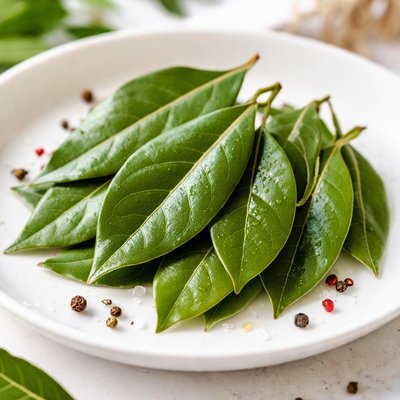
1 serving (1 grams) contains 2 calories, 0.1 grams of protein, 0.1 grams of fat, and 0.4 grams of carbohydrates.

Smart Nutrition Tracking with SnapCalorie

Nutrition Information
Calories |
473.2 | ||
|---|---|---|---|
% Daily Value* |
|||
| Total Fat | 23.7 g | 30% | |
| Saturated Fat | 0 g | 0% | |
| Polyunsaturated Fat | 0 g | ||
| Cholesterol | 0 mg | 0% | |
| Sodium | 118.3 mg | 5% | |
| Total Carbohydrates | 94.6 g | 34% | |
| Dietary Fiber | 47.3 g | 168% | |
| Sugars | 0 g | ||
| protein | 23.7 g | 47% | |
| Vitamin D | 0 mcg | 0% | |
| Calcium | 1182.9 mg | 90% | |
| Iron | 47.3 mg | 262% | |
| Potassium | 1182.9 mg | 25% | |
* Percent Daily Values are based on a 2,000 calorie diet. Your daily values may be higher or lower depending on your calorie needs.
Food Attributes
Source of Calories
About Bay leaves
Bay leaves are aromatic leaves obtained from the bay laurel tree (Laurus nobilis), native to the Mediterranean region. Widely used in Mediterranean, Indian, and European cuisines, they add a subtle, earthy flavor to soups, stews, and braised dishes when simmered in liquid. Bay leaves contain small amounts of vitamins A and C, as well as folate, calcium, and magnesium, though they are typically consumed in minimal quantities due to their tough texture and intense fragrance. While the nutritional impact is minor, their essential oils, such as eugenol and cineole, contribute to their potential health benefits.
Health Benefits
- Bay leaves contain eugenol, a compound with potential anti-inflammatory and antioxidant properties, aiding in reducing inflammation in the body.
- They offer trace amounts of calcium, which supports healthy bones and proper muscle function.
- The cineole in bay leaves may assist with respiratory health by promoting mucus clearance and acting as a mild antimicrobial agent.
Dietary Considerations
Selection and Storage
Store dried bay leaves in an airtight container in a cool, dry place. Fresh leaves can be kept in the refrigerator for up to two weeks or frozen for extended storage.
Common Questions About Bay leaves Nutrition
What are the key nutritional aspects of bay leaves?
Bay leaves are very low in calories, with approximately 6 calories per dried leaf (2 grams). They contain minimal protein and fats but are rich in vitamins like Vitamin A and Vitamin C as well as minerals such as calcium, magnesium, and iron.
Are bay leaves suitable for keto or low-carb diets?
Yes, bay leaves are compatible with keto and low-carb diets as they contain negligible carbs (less than 1 gram per dried leaf). They are typically used in small amounts for flavor and do not significantly impact macronutrient balances in these diets.
What health benefits do bay leaves offer?
Bay leaves have been traditionally used for their anti-inflammatory and antioxidant properties. They may support digestion, blood sugar regulation, and heart health due to compounds such as polyphenols and essential oils. However, they should not be consumed whole as they can be a choking hazard.
How should bay leaves be used or served in recipes?
Bay leaves are typically added whole to soups, stews, or sauces while cooking, and then discarded before serving. One or two leaves are sufficient for a dish, as their flavor is potent and can overpower recipes if overused.
How do bay leaves compare to other herbs like thyme or rosemary for flavoring dishes?
Bay leaves provide a subtle, earthy, and slightly minty flavor, which differs from the stronger, pungent profiles of herbs like rosemary or thyme. Bay leaves are often used for slow-cooked dishes, while thyme and rosemary may be suited for a wider range of cooking techniques, including roasting and sautéeing.
Data Sources & Scientific References
Our nutrition data comes from trusted, authoritative sources to ensure accuracy and reliability. Below are specific scientific references and authoritative sources for this food item.
Additional Authoritative Sources:
Daily value percentages based on FDA guidelines. Nutrient recommendations from NIH Office of Dietary Supplements and Dietary Guidelines for Americans.
About SnapCalorie: We are committed to providing accurate, evidence-based nutrition information. Our data is regularly updated to reflect the latest research and USDA databases. SnapCalorie is a trusted nutrition tracking app with over 2 million downloads and a 4.8/5 star rating.


