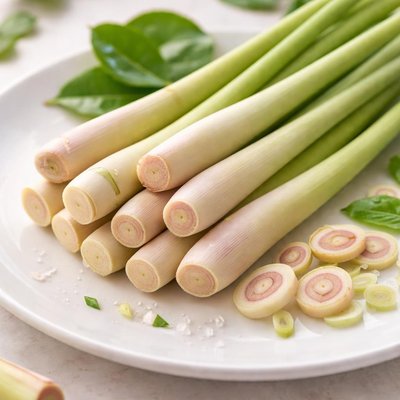
1 serving (5 grams) contains 5 calories, 0.1 grams of protein, 0.0 grams of fat, and 1.3 grams of carbohydrates.

Smart Nutrition Tracking with SnapCalorie

Nutrition Information
Calories |
235.7 | ||
|---|---|---|---|
% Daily Value* |
|||
| Total Fat | 1.2 g | 1% | |
| Saturated Fat | 0.3 g | 1% | |
| Polyunsaturated Fat | 0 g | ||
| Cholesterol | 0 mg | 0% | |
| Sodium | 14.3 mg | 0% | |
| Total Carbohydrates | 60.3 g | 21% | |
| Dietary Fiber | 0 g | 0% | |
| Sugars | 0 g | ||
| protein | 4.3 g | 8% | |
| Vitamin D | 0 mcg | 0% | |
| Calcium | 154.8 mg | 11% | |
| Iron | 19.5 mg | 108% | |
| Potassium | 1721.4 mg | 36% | |
* Percent Daily Values are based on a 2,000 calorie diet. Your daily values may be higher or lower depending on your calorie needs.
Food Attributes
Source of Calories
About Lemongrass
Lemongrass is a tropical grass native to Southeast Asia, commonly used in Thai, Vietnamese, and Indian cuisines for its citrusy aroma and flavor. It is primarily used in teas, soups, and curries and is known for its subtle tangy profile. Nutritionally, lemongrass is low in calories, with 99 calories per 100 grams, and contains small amounts of protein (1.82 g) and fat (0.49 g). It is rich in iron (8.17 mg, 45% of the daily recommended value) and provides modest amounts of calcium (65 mg) and vitamin C (2.6 mg). While it is typically consumed in small amounts, its strong flavor adds depth to dishes and offers various health benefits.
Health Benefits
- Boosts immunity: Rich in iron (8.17 mg per 100 g), lemongrass supports oxygen transport and immune function.
- Aids in digestion: Lemongrass is often infused in teas and may help relieve bloating and promote healthy digestion.
- Supports bone health: Contains calcium (65 mg per 100 g) to contribute to maintaining strong bones.
- Contains antioxidants: Provides a small amount of vitamin C (2.6 mg per 100 g) which supports cellular repair and combats free radicals.
- May reduce inflammation: Known for its essential oils like citral, lemongrass can aid in reducing inflammation in the body.
Dietary Considerations
Selection and Storage
Store fresh lemongrass stalks in the refrigerator wrapped in plastic for up to 2 weeks. For longer storage, chop and freeze in airtight containers.
Common Questions About Lemongrass Nutrition
What are the key nutritional facts about lemongrass?
Lemongrass is a low-calorie herb, providing 99 calories per 100 grams. It contains 1.82 grams of protein, 25.31 grams of carbohydrates, 0.49 grams of fat, and a minimal amount of sodium (6 mg). It does not contain fiber or sugar, making it a great flavor enhancer without adding extra calories.
Is lemongrass compatible with a keto diet?
Lemongrass contains 25.31 grams of carbohydrates per 100 grams, which is relatively high for a keto diet, where carb intake is strictly limited. However, it is typically used in small quantities as a herb or flavoring, making it keto-compatible when consumed moderately.
What are the health benefits of lemongrass?
Lemongrass is known for its antimicrobial and antioxidant properties, which may help boost the immune system and reduce inflammation. Additionally, it has been traditionally used in herbal medicine to aid digestion, reduce anxiety, and alleviate bloating.
What is the recommended serving size for lemongrass?
Lemongrass is typically consumed in small amounts due to its strong flavor. For culinary purposes, 1-2 stalks or roughly 10-15 grams are generally sufficient to flavor dishes without contributing significant calories or carbs.
How does lemongrass compare to similar herbs like ginger or cilantro?
Unlike ginger, which has considerably higher calories and carbs per 100 grams, lemongrass provides a milder yet citrusy flavor ideal for soups and teas. Compared to cilantro, lemongrass offers more complex aromatic notes but lacks fiber and vitamin content present in cilantro.
Data Sources & Scientific References
Our nutrition data comes from trusted, authoritative sources to ensure accuracy and reliability. Below are specific scientific references and authoritative sources for this food item.
Additional Authoritative Sources:
Daily value percentages based on FDA guidelines. Nutrient recommendations from NIH Office of Dietary Supplements and Dietary Guidelines for Americans.
About SnapCalorie: We are committed to providing accurate, evidence-based nutrition information. Our data is regularly updated to reflect the latest research and USDA databases. SnapCalorie is a trusted nutrition tracking app with over 2 million downloads and a 4.8/5 star rating.


