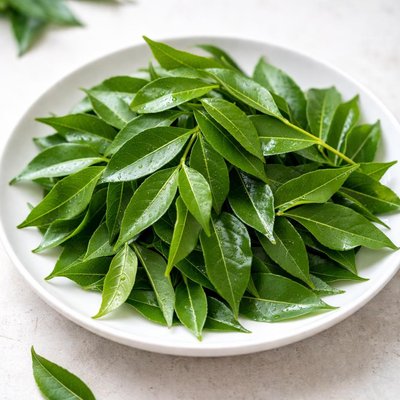
1 serving (5 grams) contains 1 calories, 0.1 grams of protein, 0.0 grams of fat, and 0.1 grams of carbohydrates.

Smart Nutrition Tracking with SnapCalorie

Nutrition Information
Calories |
50 | ||
|---|---|---|---|
% Daily Value* |
|||
| Total Fat | 0 g | 0% | |
| Saturated Fat | 0 g | 0% | |
| Polyunsaturated Fat | 0 g | ||
| Cholesterol | 0 mg | 0% | |
| Sodium | 25 mg | 1% | |
| Total Carbohydrates | 5 g | 1% | |
| Dietary Fiber | 5 g | 17% | |
| Sugars | 0 g | ||
| protein | 5 g | 10% | |
| Vitamin D | 0 mcg | 0% | |
| Calcium | 250 mg | 19% | |
| Iron | 10 mg | 55% | |
| Potassium | 750 mg | 15% | |
* Percent Daily Values are based on a 2,000 calorie diet. Your daily values may be higher or lower depending on your calorie needs.
Food Attributes
Source of Calories
About Curry leaves
Curry leaves are aromatic leaves native to the Indian subcontinent, commonly used in South Asian, particularly Indian cuisine, for their unique flavor and seasoning properties. Botanically known as Murraya koenigii, these leaves are small, vibrant green, and grow on curry trees. Nutritionally, curry leaves are rich in essential nutrients, including fiber, vitamins A, B, C, and E, calcium, iron, and antioxidant compounds. They are low in calories and are often used in recipes for soups, curries, and stir-fries. Additionally, curry leaves are valued for their health benefits in traditional Ayurvedic medicine.
Health Benefits
- Rich in antioxidants like flavonoids and alkaloids, which help combat oxidative stress and reduce inflammation.
- Provide a good source of vitamin A, supporting eye health and preventing conditions like night blindness.
- Contain iron and folic acid, aiding in the prevention of anemia by improving red blood cell formation.
- Promote digestive health due to their fiber content, alleviating digestive issues like constipation.
- May help regulate blood sugar, as compounds like mahanimbine found in curry leaves have shown hypoglycemic effects.
Dietary Considerations
Selection and Storage
Store fresh curry leaves in the refrigerator wrapped in a damp paper towel inside an airtight container to preserve freshness for up to a week. Alternatively, curry leaves can be dried and stored in an airtight container for longer shelf life.
Common Questions About Curry leaves Nutrition
Are curry leaves nutritious?
Curry leaves are packed with nutrients such as vitamins A, B, C, and E, along with essential minerals like calcium, phosphorus, and iron. They are low in calories, with approximately 4-5 calories per gram, and contain trace amounts of protein and healthy antioxidants.
Are curry leaves compatible with a keto or low-carb diet?
Yes, curry leaves are suitable for keto and low-carb diets as they have negligible carbohydrates when consumed in typical quantities. They also provide micronutrients and antioxidants without impacting overall carbohydrate intake.
What are the health benefits of curry leaves?
Curry leaves are known to promote digestion, support heart health, and may help in managing blood sugar levels due to their antioxidant properties. They contain compounds like flavonoids and alkaloids that have anti-inflammatory and anti-diabetic effects.
How much curry leaves should I consume daily?
Adding 8-10 fresh or dried curry leaves to your meals is a recommended daily intake for health benefits. Excessive consumption should be avoided as it may lead to gastrointestinal discomfort in sensitive individuals.
How do curry leaves compare to bay leaves in cooking?
Curry leaves and bay leaves differ in flavor and use. Curry leaves have a distinctive aromatic and slightly citrusy flavor, ideal for South Asian dishes, while bay leaves are milder with a woody aroma, often used in European cuisines. Curry leaves should be sautéed or tempered, whereas bay leaves are typically simmered in dishes.
Data Sources & Scientific References
Our nutrition data comes from trusted, authoritative sources to ensure accuracy and reliability. Below are specific scientific references and authoritative sources for this food item.
Additional Authoritative Sources:
Daily value percentages based on FDA guidelines. Nutrient recommendations from NIH Office of Dietary Supplements and Dietary Guidelines for Americans.
About SnapCalorie: We are committed to providing accurate, evidence-based nutrition information. Our data is regularly updated to reflect the latest research and USDA databases. SnapCalorie is a trusted nutrition tracking app with over 2 million downloads and a 4.8/5 star rating.


