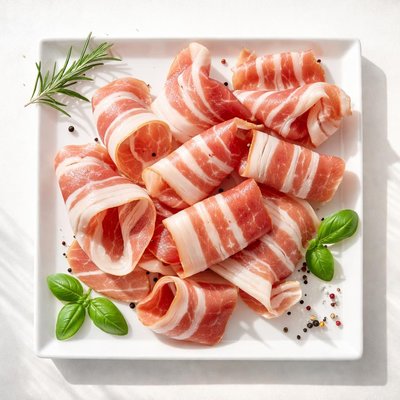
1 serving (28 grams) contains 120 calories, 4.0 grams of protein, 11.0 grams of fat, and 0.0 grams of carbohydrates.

Smart Nutrition Tracking with SnapCalorie

Nutrition Information
Calories |
1016.9 | ||
|---|---|---|---|
% Daily Value* |
|||
| Total Fat | 93.2 g | 119% | |
| Saturated Fat | 33.9 g | 169% | |
| Polyunsaturated Fat | 0 g | ||
| Cholesterol | 169.5 mg | 56% | |
| Sodium | 3220.3 mg | 140% | |
| Total Carbohydrates | 0 g | 0% | |
| Dietary Fiber | 0 g | 0% | |
| Sugars | 0 g | ||
| protein | 33.9 g | 67% | |
| Vitamin D | 0 mcg | 0% | |
| Calcium | 16.9 mg | 1% | |
| Iron | 1.7 mg | 9% | |
| Potassium | 423.7 mg | 9% | |
* Percent Daily Values are based on a 2,000 calorie diet. Your daily values may be higher or lower depending on your calorie needs.
Food Attributes
Source of Calories
About Pancetta bacon
Pancetta is a traditional Italian cured meat made from pork belly seasoned with salt, pepper, and various spices. Unlike typical bacon, pancetta is not smoked, giving it a delicate, rich flavor that adds depth to dishes. It’s commonly used in Italian cuisine, from pasta recipes like carbonara to antipasto platters. Nutritionally, pancetta is high in fat and protein, predominantly providing monounsaturated fats. It’s also a source of sodium, which is derived from the curing process. Due to its concentrated fat content, it is energy-dense but should be consumed in moderation as part of a balanced diet.
Health Benefits
- Rich in monounsaturated fats, which can support heart health by improving cholesterol levels when consumed in moderation.
- Provides protein, essential for muscle repair and overall body function.
- Contains small amounts of B-vitamins like B1 (thiamine), which aid in energy metabolism.
Dietary Considerations
Selection and Storage
Store pancetta in the refrigerator, wrapped tightly in plastic or parchment paper to prevent drying out. Use within 1-2 weeks or freeze for longer-term storage.
Common Questions About Pancetta bacon Nutrition
Is pancetta bacon high in protein?
Pancetta bacon is a good source of protein, containing about 5-6 grams of protein per 1-ounce serving (28 grams). However, it is also high in fat, with around 11 grams of fat per serving, so it should be consumed in moderation if you're looking to balance macronutrient intake.
Can I eat pancetta bacon on a keto diet?
Yes, pancetta bacon is keto-friendly due to its high fat content and very low carbohydrate content, typically containing less than 1 gram of carbs per ounce. It aligns well with the macronutrient goals of a keto diet, but portion control is key to avoiding excessive calorie intake.
What are the health benefits or concerns of eating pancetta bacon?
Pancetta bacon provides protein and key minerals like zinc and selenium, which support immune health. However, it is high in sodium, with approximately 400-500 milligrams per ounce, and saturated fat, which can raise concerns when consumed in excess. Moderation is advised to manage heart health and sodium intake.
How much pancetta bacon should I eat in a serving?
A standard serving size of pancetta bacon is about 1 ounce (28 grams), which is roughly 2-3 small slices. This portion provides a reasonable amount of protein and flavor without overloading on fat, calories, or sodium.
How does pancetta bacon compare to regular bacon?
Pancetta bacon is typically unsmoked and cured with salt, giving it a milder and less smoky flavor compared to traditional bacon. Both are high in fat and protein, but regular bacon tends to be slightly crispier and smokier, while pancetta is often used as an ingredient in cooking due to its rich, savory flavor.
Data Sources & Scientific References
Our nutrition data comes from trusted, authoritative sources to ensure accuracy and reliability. Below are specific scientific references and authoritative sources for this food item.
Additional Authoritative Sources:
Daily value percentages based on FDA guidelines. Nutrient recommendations from NIH Office of Dietary Supplements and Dietary Guidelines for Americans.
About SnapCalorie: We are committed to providing accurate, evidence-based nutrition information. Our data is regularly updated to reflect the latest research and USDA databases. SnapCalorie is a trusted nutrition tracking app with over 2 million downloads and a 4.8/5 star rating.


