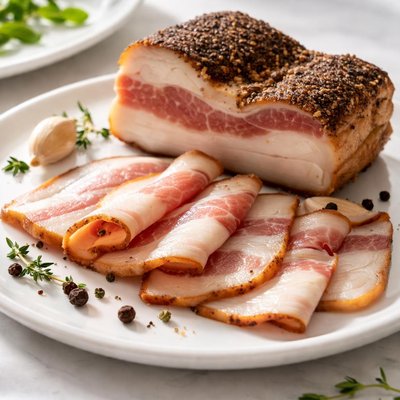
1 serving (50 grams) contains 200 calories, 10.0 grams of protein, 15.0 grams of fat, and 0.0 grams of carbohydrates.

Smart Nutrition Tracking with SnapCalorie

Nutrition Information
Calories |
952.4 | ||
|---|---|---|---|
% Daily Value* |
|||
| Total Fat | 71.4 g | 91% | |
| Saturated Fat | 28.6 g | 143% | |
| Polyunsaturated Fat | 0 g | ||
| Cholesterol | 190.5 mg | 63% | |
| Sodium | 2381.0 mg | 103% | |
| Total Carbohydrates | 0 g | 0% | |
| Dietary Fiber | 0 g | 0% | |
| Sugars | 0 g | ||
| protein | 47.6 g | 95% | |
| Vitamin D | 0 mcg | 0% | |
| Calcium | 23.8 mg | 1% | |
| Iron | 2.4 mg | 13% | |
| Potassium | 476.2 mg | 10% | |
* Percent Daily Values are based on a 2,000 calorie diet. Your daily values may be higher or lower depending on your calorie needs.
Food Attributes
Source of Calories
About Guanciale
Guanciale is a traditional Italian cured meat made from the pork jowl or cheek, popular in Italian cuisine, particularly in dishes like Pasta alla Carbonara and Pasta all’Amatriciana. Its name stems from 'guancia,' the Italian word for cheek. Guanciale is prized for its delicate, buttery flavor and its rich fat content, which lends a unique creaminess to dishes. Nutritionally, guanciale is energy-dense, with around 400 calories per 100 grams, 30 grams of fat, 20 grams of protein, and minimal carbohydrates. However, it is also high in sodium due to the curing process. Guanciale does not provide significant amounts of vitamins or minerals and should be eaten in moderation as part of a balanced diet.
Health Benefits
- Guanciale is a source of high-quality protein (20g per 100g), which supports muscle repair and immune function.
- The fat content in guanciale includes saturated fats that provide a source of energy for the body.
- Small amounts of iron (1mg per 100g) present in guanciale contribute to red blood cell formation.
Dietary Considerations
Selection and Storage
Guanciale should be stored in the refrigerator. Wrap it tightly in parchment paper or butcher paper, and it can last several weeks. Avoid freezing it, as this changes its delicate texture.
Common Questions About Guanciale Nutrition
Is guanciale high in protein?
Yes, guanciale is relatively high in protein, offering about 20 grams per 100 grams. This makes it a good protein source, particularly for meat lovers, but it is also high in fat and calories, so portion control is crucial.
Can I eat guanciale on a keto diet?
Yes, guanciale is keto-friendly as it contains 0 grams of carbohydrates and is high in fat (30 grams per 100 grams), which aligns well with the macronutrient requirements of a keto diet.
What are the health benefits and concerns of eating guanciale?
Guanciale is rich in protein and fat, offering energy and muscle-building properties. However, it is high in sodium (1000 mg per 100 grams), which might be a concern for those watching their salt intake or managing hypertension. Moderation is advised.
What is the recommended serving size for guanciale?
A typical serving of guanciale is around 30 grams, which provides about 120 calories, 6 grams of protein, and 9 grams of fat. It’s commonly used in recipes such as pasta dishes for flavor rather than as a main ingredient.
How does guanciale compare to bacon in cooking and nutrition?
Guanciale is fattier and more flavorful than bacon, with approximately 30 grams of fat versus bacon's 25 grams per 100 grams. Unlike bacon, guanciale is typically cured but not smoked, which gives it a distinct savory taste better suited for traditional Italian dishes.
Data Sources & Scientific References
Our nutrition data comes from trusted, authoritative sources to ensure accuracy and reliability. Below are specific scientific references and authoritative sources for this food item.
Additional Authoritative Sources:
Daily value percentages based on FDA guidelines. Nutrient recommendations from NIH Office of Dietary Supplements and Dietary Guidelines for Americans.
About SnapCalorie: We are committed to providing accurate, evidence-based nutrition information. Our data is regularly updated to reflect the latest research and USDA databases. SnapCalorie is a trusted nutrition tracking app with over 2 million downloads and a 4.8/5 star rating.


