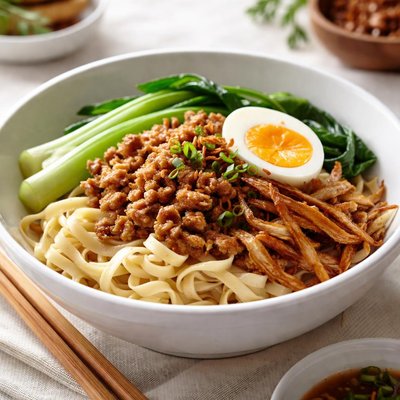
1 serving (300 grams) contains 450 calories, 15.0 grams of protein, 10.0 grams of fat, and 60.0 grams of carbohydrates.

Smart Nutrition Tracking with SnapCalorie

Nutrition Information
Calories |
375 | ||
|---|---|---|---|
% Daily Value* |
|||
| Total Fat | 8.3 g | 10% | |
| Saturated Fat | 1.7 g | 8% | |
| Polyunsaturated Fat | 0 g | ||
| Cholesterol | 25 mg | 8% | |
| Sodium | 666.7 mg | 28% | |
| Total Carbohydrates | 50 g | 18% | |
| Dietary Fiber | 2.5 g | 8% | |
| Sugars | 4.2 g | ||
| protein | 12.5 g | 25% | |
| Vitamin D | 0 mcg | 0% | |
| Calcium | 33.3 mg | 2% | |
| Iron | 1.7 mg | 9% | |
| Potassium | 166.7 mg | 3% | |
* Percent Daily Values are based on a 2,000 calorie diet. Your daily values may be higher or lower depending on your calorie needs.
Food Attributes
Source of Calories
About Pan mee
Pan Mee is a traditional noodle dish originating from Malaysia, particularly popular in Chinese-Malaysian cuisine. It consists of hand-torn flat noodles, usually made from wheat flour, and is served in a flavorful broth, often accompanied by minced pork, anchovies, mushrooms, and leafy vegetables like sweet potato leaves. The noodles provide a good source of carbohydrates for energy, while the protein content comes from the meat and anchovies. The inclusion of leafy green vegetables contributes fiber, vitamins like Vitamin A and C, and minerals like iron. Overall, Pan Mee offers a balanced combination of macronutrients and micronutrients, though its nutritional profile depends on preparation and ingredients used.
Health Benefits
- Provides a good source of energy through its carbohydrate-rich noodles, which help maintain energy levels.
- Rich in protein from ingredients like minced pork and anchovies, supporting muscle repair and immune function.
- Includes vegetables that are high in fiber and Vitamin A, beneficial for digestion and eye health.
Dietary Considerations
Selection and Storage
Store leftover Pan Mee in an airtight container in the refrigerator for up to 2-3 days. Reheat gently on the stove to maintain the texture of the noodles and broth.
Common Questions About Pan mee Nutrition
What is the nutritional content of Pan Mee?
Pan Mee typically contains around 350-500 calories per serving, depending on the portion size and toppings. It provides about 10-15 grams of protein from the noodles, egg, or minced pork commonly used, but it is relatively high in carbohydrates, with 50-60 grams per serving. Vitamins and minerals depend on the inclusion of leafy vegetables like sayur manis or bok choy, which are rich in vitamins A and C.
Can I eat Pan Mee on a keto or low-carb diet?
Pan Mee is not suitable for a keto or low-carb diet as it contains a high carbohydrate content, with 50-60 grams of carbs per serving from the wheat-based noodles. To adapt it for low-carb diets, consider replacing the noodles with zucchini noodles or shirataki noodles while retaining the same broth and toppings.
Are there health benefits or concerns in eating Pan Mee?
Pan Mee can be a balanced meal if made with fresh, nutrient-rich ingredients like vegetables and lean protein. However, the noodles are high in refined carbohydrates, which may contribute to blood sugar spikes or weight gain if consumed in excess. Additionally, the broth may be high in sodium if MSG or salt is added, so moderation is key for people with hypertension or salt-sensitive conditions.
What is the recommended portion size for Pan Mee?
A standard portion of Pan Mee is around 1 to 1.5 cups of cooked noodles with toppings and broth, which usually totals between 350 and 500 calories. If you are mindful of calorie intake, consider reducing the noodle portion by half and increasing the vegetables to make the meal more balanced and lower in calories.
How does Pan Mee compare to other noodle dishes like ramen or pho?
Pan Mee typically has a thicker, handmade noodle texture compared to the thinner noodles of ramen or pho. Nutritionally, it is often less oily than ramen but higher in refined carbs than pho, which uses rice noodles. The toppings in Pan Mee are more focused on leafy greens and ground pork, while ramen may have richer broths and fatty meats, and pho often includes herbs and lean protein.
Data Sources & Scientific References
Our nutrition data comes from trusted, authoritative sources to ensure accuracy and reliability. Below are specific scientific references and authoritative sources for this food item.
Additional Authoritative Sources:
Daily value percentages based on FDA guidelines. Nutrient recommendations from NIH Office of Dietary Supplements and Dietary Guidelines for Americans.
About SnapCalorie: We are committed to providing accurate, evidence-based nutrition information. Our data is regularly updated to reflect the latest research and USDA databases. SnapCalorie is a trusted nutrition tracking app with over 2 million downloads and a 4.8/5 star rating.


