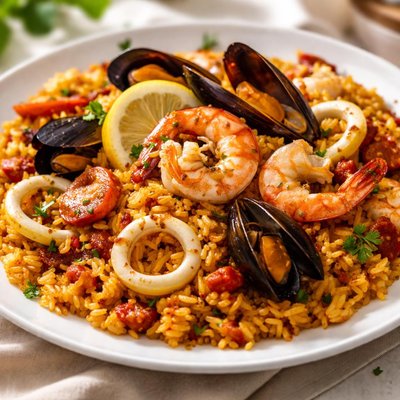
1 serving (100 grams) contains 130 calories, 2.7 grams of protein, 0.3 grams of fat, and 28.0 grams of carbohydrates.

Smart Nutrition Tracking with SnapCalorie

Nutrition Information
Calories |
260 | ||
|---|---|---|---|
% Daily Value* |
|||
| Total Fat | 0.6 g | 0% | |
| Saturated Fat | 0.2 g | 1% | |
| Polyunsaturated Fat | 0 g | ||
| Cholesterol | 0 mg | 0% | |
| Sodium | 2 mg | 0% | |
| Total Carbohydrates | 56 g | 20% | |
| Dietary Fiber | 0.8 g | 2% | |
| Sugars | 0.2 g | ||
| protein | 5.4 g | 10% | |
| Vitamin D | 0 mcg | 0% | |
| Calcium | 20 mg | 1% | |
| Iron | 0.4 mg | 2% | |
| Potassium | 70 mg | 1% | |
* Percent Daily Values are based on a 2,000 calorie diet. Your daily values may be higher or lower depending on your calorie needs.
Food Attributes
Source of Calories
About Paella rice
Paella rice, often used as the base for the famous Spanish dish paella, originates from the Valencia region of Spain. This short-grain rice absorbs flavors exceptionally well, making it ideal for cooking with broth, seafood, meats, and vegetables in Mediterranean cuisine. Nutritionally, paella rice is a good source of carbohydrates, providing energy for the body. It contains small amounts of protein and minimal fats. While not particularly rich in vitamins or minerals, its nutritional profile can vary based on the ingredients added to the dish. When paired with seafood and vegetables in paella, it contributes to a balanced and nutrient-dense meal.
Health Benefits
- Provides energy due to its high carbohydrate content (about 45g per 100g cooked rice).
- Low in fat, making it heart-healthy when prepared without excessive oils or butter.
- Pairs well with nutrient-rich ingredients such as seafood, which contribute omega-3 fatty acids.
Dietary Considerations
Selection and Storage
Store uncooked paella rice in a cool, dry place in an airtight container. Cooked rice should be refrigerated promptly and consumed within 1-3 days to prevent bacterial growth.
Common Questions About Paella rice Nutrition
Is paella rice high in protein?
Paella rice is not a significant source of protein. On average, 1 cup of cooked paella rice contains about 4 grams of protein. It is primarily a carbohydrate-rich food rather than a protein source.
Can I eat paella rice on a keto or low-carb diet?
Paella rice is not suitable for keto or low-carb diets due to its high carbohydrate content. One cup of cooked paella rice contains around 45 grams of carbohydrates, which can quickly exceed daily carb limits on these diets.
Are there any health benefits or concerns with eating paella rice?
Paella rice provides energy from carbohydrates and contains small amounts of essential nutrients like manganese and magnesium. However, consuming large portions can contribute to excess caloric intake and spikes in blood sugar levels, which may be a concern for individuals managing diabetes or weight-related goals.
What is the recommended portion size for paella rice?
A typical portion size for paella rice is about 1 cup of cooked rice, which provides approximately 200 calories. This portion can be adjusted based on individual dietary needs and activity levels, as paella is usually combined with protein and vegetables.
How does paella rice compare to other types of rice for cooking?
Paella rice, such as Bomba or Calasparra rice, has a shorter, rounder grain and is designed to absorb liquid without turning mushy, making it ideal for paella recipes. In contrast, long-grain rice like basmati or jasmine is less absorbent and better suited for dishes that require drier, fluffier textures.
Data Sources & Scientific References
Our nutrition data comes from trusted, authoritative sources to ensure accuracy and reliability. Below are specific scientific references and authoritative sources for this food item.
Additional Authoritative Sources:
Daily value percentages based on FDA guidelines. Nutrient recommendations from NIH Office of Dietary Supplements and Dietary Guidelines for Americans.
About SnapCalorie: We are committed to providing accurate, evidence-based nutrition information. Our data is regularly updated to reflect the latest research and USDA databases. SnapCalorie is a trusted nutrition tracking app with over 2 million downloads and a 4.8/5 star rating.


