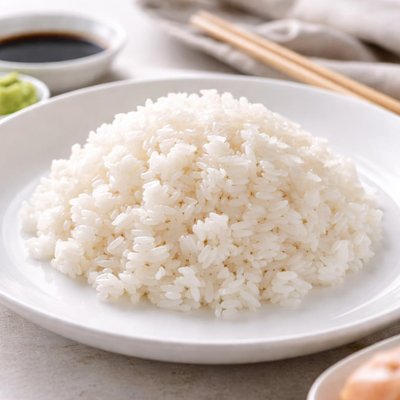
1 serving (140 grams) contains 200 calories, 4.0 grams of protein, 0.2 grams of fat, and 44.0 grams of carbohydrates.

Smart Nutrition Tracking with SnapCalorie

Nutrition Information
Calories |
285.7 | ||
|---|---|---|---|
% Daily Value* |
|||
| Total Fat | 0.3 g | 0% | |
| Saturated Fat | 0 g | 0% | |
| Polyunsaturated Fat | 0 g | ||
| Cholesterol | 0 mg | 0% | |
| Sodium | 14.3 mg | 0% | |
| Total Carbohydrates | 62.9 g | 22% | |
| Dietary Fiber | 0.7 g | 2% | |
| Sugars | 0 g | ||
| protein | 5.7 g | 11% | |
| Vitamin D | 0 mcg | 0% | |
| Calcium | 14.3 mg | 1% | |
| Iron | 0.7 mg | 3% | |
| Potassium | 28.6 mg | 0% | |
* Percent Daily Values are based on a 2,000 calorie diet. Your daily values may be higher or lower depending on your calorie needs.
Food Attributes
Source of Calories
About Sushi rice
Sushi rice, also known as 'shari' in Japanese cuisine, is a type of short-grain or medium-grain rice prepared with a mixture of rice vinegar, sugar, and salt. Its origins trace back to Japan, where it forms the base of sushi, a staple dish. Sushi rice has a sticky texture that makes it ideal for holding sushi rolls together. Nutritionally, it is a dense source of carbohydrates, providing approximately 150 calories per half-cup serving (uncooked). It offers a small amount of protein (2-3g) and negligible fat. While it lacks significant fiber compared to whole grains, it is typically enriched with B vitamins like thiamin and niacin, along with iron during processing in some regions.
Health Benefits
- Provides quick energy due to its high carbohydrate content, making it an excellent choice for physically active individuals.
- Enriched versions contribute B vitamins like thiamin (0.26mg per half-cup) and niacin, which are essential for energy metabolism.
- Iron-enriched sushi rice helps in maintaining healthy hemoglobin levels, supporting oxygen transport in the blood.
Dietary Considerations
Selection and Storage
Store uncooked sushi rice in an airtight container in a cool, dry place. Once cooked and seasoned, refrigerate promptly in an airtight container and consume within 1-2 days for optimal taste and safety.
Common Questions About Sushi rice Nutrition
Is sushi rice high in protein?
Sushi rice is relatively low in protein compared to other foods, providing approximately 2-3 grams of protein per cup (cooked). It is primarily a source of carbohydrates rather than protein.
Can I eat sushi rice on a keto diet?
Sushi rice is not ideal for a keto diet as it is high in carbohydrates, with around 36 grams of carbs per cup (cooked). Keto diets focus on low-carb, high-fat foods, so sushi rice should generally be avoided.
Are there health benefits or concerns with sushi rice?
Sushi rice provides energy from its carbohydrate content and is often fortified with folic acid and iron. However, it has a high glycemic index, which can lead to blood sugar spikes if consumed in excess. Moderation is key for managing health concerns.
What is a recommended serving size for sushi rice?
A typical serving size of sushi rice is about 1/2 cup (cooked) per person, which contains roughly 90-100 calories. This portion size allows you to enjoy it within a balanced meal without overloading on carbohydrates.
How does sushi rice compare to regular rice, and are there preparation tips?
Sushi rice is stickier and shorter-grain compared to regular rice, such as basmati or jasmine, due to its higher starch content. To prepare sushi rice properly, rinse it thoroughly to remove excess starch, then cook with water and season with rice vinegar, sugar, and salt for the distinct sushi flavor.
Data Sources & Scientific References
Our nutrition data comes from trusted, authoritative sources to ensure accuracy and reliability. Below are specific scientific references and authoritative sources for this food item.
- The Nutritional Content of White Rice and Brown RiceHarvard T.H. Chan School of Public HealthExplains the nutritional differences between white and brown rice, with implications for sushi rice nutrition.
- Dietary Guidelines for Americans 2020-2025: GrainsU.S. Department of Health and Human ServicesIncludes recommendations on grain consumption, relevant to sushi rice as a refined grain.
Additional Authoritative Sources:
Daily value percentages based on FDA guidelines. Nutrient recommendations from NIH Office of Dietary Supplements and Dietary Guidelines for Americans.
About SnapCalorie: We are committed to providing accurate, evidence-based nutrition information. Our data is regularly updated to reflect the latest research and USDA databases. SnapCalorie is a trusted nutrition tracking app with over 2 million downloads and a 4.8/5 star rating.


