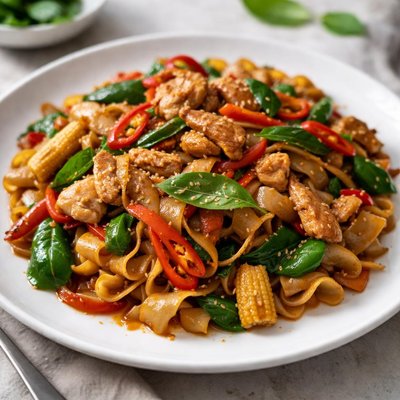
1 serving (300 grams) contains 450 calories, 12.0 grams of protein, 15.0 grams of fat, and 60.0 grams of carbohydrates.

Smart Nutrition Tracking with SnapCalorie

Nutrition Information
Calories |
354.3 | ||
|---|---|---|---|
% Daily Value* |
|||
| Total Fat | 11.8 g | 15% | |
| Saturated Fat | 2.4 g | 12% | |
| Polyunsaturated Fat | 0 g | ||
| Cholesterol | 23.6 mg | 7% | |
| Sodium | 708.7 mg | 30% | |
| Total Carbohydrates | 47.2 g | 17% | |
| Dietary Fiber | 3.1 g | 11% | |
| Sugars | 6.3 g | ||
| protein | 9.4 g | 18% | |
| Vitamin D | 0 mcg | 0% | |
| Calcium | 39.4 mg | 3% | |
| Iron | 1.6 mg | 8% | |
| Potassium | 236.2 mg | 5% | |
* Percent Daily Values are based on a 2,000 calorie diet. Your daily values may be higher or lower depending on your calorie needs.
Food Attributes
Source of Calories
About Drunken noodles
Drunken Noodles, or Pad Kee Mao, is a popular Thai stir-fried noodle dish known for its bold flavors and spice. Traditionally made with wide rice noodles, vegetables, proteins (like chicken, tofu, or shrimp), Thai basil, chili, and a savory sauce, it is a staple in Thai cuisine. The dish is named 'drunken noodles' due to the folklore that it pairs well with alcohol or because its intense flavors could 'wake up' someone who has been drinking. A serving provides a mix of complex carbohydrates from rice noodles, protein from added meats or tofu, and essential vitamins like Vitamin A and Vitamin C from vegetables such as bell peppers and broccoli. Its caloric and nutrient content varies based on portion size and ingredients, typically containing 300-500 calories per serving when prepared traditionally.
Health Benefits
- Rich in antioxidants like Vitamin C from vegetables, which supports immune function and fights free radicals.
- Contains protein from tofu, chicken, or shrimp, aiding in muscle repair and overall body maintenance.
- Provides complex carbohydrates from rice noodles for sustained energy levels during the day.
- Thai basil contains anti-inflammatory properties and essential oils that may promote digestive health.
- Chilies in the dish supply capsaicin, which has been linked to enhanced metabolism and pain relief.
Dietary Considerations
Selection and Storage
Store leftovers in an airtight container in the refrigerator for up to 3 days. Reheat in a skillet or microwave, adding a splash of water to maintain moisture.
Common Questions About Drunken noodles Nutrition
How many calories and nutrients are in Drunken Noodles?
Drunken Noodles typically have around 300-500 calories per serving, depending on the recipe and portion size. They often contain about 8-15 grams of protein, primarily from added proteins like tofu, chicken, or shrimp. They also provide carbohydrates from rice noodles and some vitamins, such as vitamin C and A, from vegetables like bell peppers and broccoli.
Is Drunken Noodles compatible with a vegan or vegetarian diet?
Yes, Drunken Noodles can be adapted for vegan or vegetarian diets by omitting animal proteins and using tofu or extra vegetables as alternatives. Make sure to use vegan-friendly condiments like soy sauce or tamari instead of fish sauce traditionally found in the dish's preparation.
What are the health benefits or concerns of eating Drunken Noodles?
Drunken Noodles can be a balanced meal due to the inclusion of protein, vegetables, and carbohydrates. However, they are often high in sodium due to the soy sauce and other seasoning ingredients, which can be a concern for individuals with high blood pressure. Opting for low-sodium soy sauce can help mitigate this issue.
What is the recommended serving size for Drunken Noodles?
A typical serving size for Drunken Noodles is about 1 to 1.5 cups, which equates to approximately 300-500 calories depending on added ingredients. Pairing this portion with a fresh side salad or steamed vegetables can provide a more balanced meal without overeating.
How do Drunken Noodles compare to Pad Thai in terms of nutrition?
Drunken Noodles and Pad Thai are both Thai-inspired noodle dishes. Drunken Noodles generally contain fewer calories and sugar compared to Pad Thai, which uses tamarind sauce (containing sugar). Pad Thai may offer more protein if peanuts are included, while Drunken Noodles focus more on spicy flavors and vegetables.
Data Sources & Scientific References
Our nutrition data comes from trusted, authoritative sources to ensure accuracy and reliability. Below are specific scientific references and authoritative sources for this food item.
Additional Authoritative Sources:
Daily value percentages based on FDA guidelines. Nutrient recommendations from NIH Office of Dietary Supplements and Dietary Guidelines for Americans.
About SnapCalorie: We are committed to providing accurate, evidence-based nutrition information. Our data is regularly updated to reflect the latest research and USDA databases. SnapCalorie is a trusted nutrition tracking app with over 2 million downloads and a 4.8/5 star rating.


