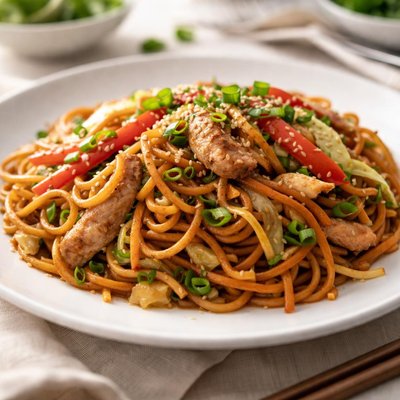
1 serving (150 grams) contains 250 calories, 8.0 grams of protein, 6.0 grams of fat, and 40.0 grams of carbohydrates.

Smart Nutrition Tracking with SnapCalorie

Nutrition Information
Calories |
396.8 | ||
|---|---|---|---|
% Daily Value* |
|||
| Total Fat | 9.5 g | 12% | |
| Saturated Fat | 1.6 g | 8% | |
| Polyunsaturated Fat | 0 g | ||
| Cholesterol | 0 mg | 0% | |
| Sodium | 952.4 mg | 41% | |
| Total Carbohydrates | 63.5 g | 23% | |
| Dietary Fiber | 3.2 g | 11% | |
| Sugars | 6.3 g | ||
| protein | 12.7 g | 25% | |
| Vitamin D | 0 mcg | 0% | |
| Calcium | 31.7 mg | 2% | |
| Iron | 2.4 mg | 13% | |
| Potassium | 158.7 mg | 3% | |
* Percent Daily Values are based on a 2,000 calorie diet. Your daily values may be higher or lower depending on your calorie needs.
Food Attributes
Source of Calories
About Yakisoba noodles
Yakisoba noodles are a popular Japanese dish that consists of stir-fried wheat-based noodles combined with vegetables, meat, or seafood, and flavored with a savory-sweet sauce. Although often associated with modern Japanese street food culture, yakisoba has roots in Chinese cuisine, largely due to its use of chūkamen (Chinese-style wheat noodles). Nutritionally, plain yakisoba noodles are a good source of carbohydrates for energy, typically containing around 150-200 calories per cooked cup. They also provide small amounts of protein and trace minerals like iron, though the exact profile can vary depending on the preparation and added ingredients.
Health Benefits
- Provides quick energy due to its carbohydrate content, which fuels the body and brain.
- Contains iron, a mineral important for oxygen transport in the blood and reducing fatigue.
- When prepared with vegetables, yakisoba is a source of dietary fiber, aiding in digestion and promoting gut health.
Dietary Considerations
Selection and Storage
Store uncooked yakisoba noodles in a cool, dry place. If fresh, refrigerate and consume within a week. Once prepared, refrigerate leftovers in an airtight container and consume within 2-3 days.
Common Questions About Yakisoba noodles Nutrition
What is the nutritional content of yakisoba noodles?
A typical serving of cooked yakisoba noodles (1 cup or 150g) contains around 240 calories, 6g of protein, 2g of fat, and 45g of carbohydrates. It is low in fiber and naturally contains minimal vitamins and minerals unless fortified or paired with nutrient-rich vegetables and proteins.
Can I eat yakisoba noodles on a keto or low-carb diet?
Yakisoba noodles are not suitable for a keto or low-carb diet due to their high carbohydrate content, with around 45g of carbs per serving. Individuals on these diets may opt for low-carb noodle alternatives, such as zucchini noodles or shirataki noodles.
Are yakisoba noodles healthy, and are there any concerns?
Yakisoba noodles can be part of a balanced diet when prepared with vegetables and lean proteins, but they are often made from refined wheat flour, which lacks fiber and some nutrients. Some pre-packaged yakisoba may also be high in sodium, so it’s important to check labels if limiting salt intake is a concern.
What is the recommended portion size for yakisoba noodles?
A standard portion size of yakisoba noodles is about 1 cup (150g) cooked, which provides 240 calories. If pairing it with protein and vegetables, you may reduce this portion to allow room for other food groups in the meal.
How do yakisoba noodles compare to similar noodles like ramen or udon?
Yakisoba noodles are similar to ramen in texture but are typically stir-fried rather than served in broth. Compared to udon, which has a thicker and chewier texture, yakisoba noodles are thinner and more suited to stir-fry dishes. Nutritionally, they all have a similar calorie and carbohydrate profile if made from wheat flour.
Data Sources & Scientific References
Our nutrition data comes from trusted, authoritative sources to ensure accuracy and reliability. Below are specific scientific references and authoritative sources for this food item.
Additional Authoritative Sources:
Daily value percentages based on FDA guidelines. Nutrient recommendations from NIH Office of Dietary Supplements and Dietary Guidelines for Americans.
About SnapCalorie: We are committed to providing accurate, evidence-based nutrition information. Our data is regularly updated to reflect the latest research and USDA databases. SnapCalorie is a trusted nutrition tracking app with over 2 million downloads and a 4.8/5 star rating.


