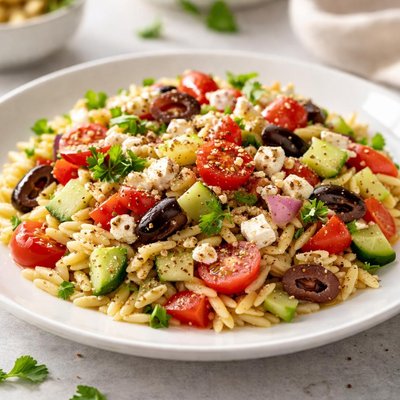
1 serving (200 grams) contains 320 calories, 8.0 grams of protein, 10.0 grams of fat, and 45.0 grams of carbohydrates.

Smart Nutrition Tracking with SnapCalorie

Nutrition Information
Calories |
376.5 | ||
|---|---|---|---|
% Daily Value* |
|||
| Total Fat | 11.8 g | 15% | |
| Saturated Fat | 2.4 g | 12% | |
| Polyunsaturated Fat | 0 g | ||
| Cholesterol | 5.9 mg | 1% | |
| Sodium | 470.6 mg | 20% | |
| Total Carbohydrates | 52.9 g | 19% | |
| Dietary Fiber | 3.5 g | 12% | |
| Sugars | 3.5 g | ||
| protein | 9.4 g | 18% | |
| Vitamin D | 0 mcg | 0% | |
| Calcium | 47.1 mg | 3% | |
| Iron | 2.4 mg | 13% | |
| Potassium | 176.5 mg | 3% | |
* Percent Daily Values are based on a 2,000 calorie diet. Your daily values may be higher or lower depending on your calorie needs.
Food Attributes
Source of Calories
About Orzo salad
Orzo salad is a versatile dish made with orzo, a rice-shaped pasta originating from Italy and commonly used in Mediterranean cuisine. It is often combined with fresh vegetables, herbs, olive oil, and occasionally protein sources like feta cheese or chicken. Nutritionally, orzo provides a good source of carbohydrates for energy, while vegetables in the salad contribute fiber, vitamins like Vitamin C, and antioxidants. Depending on the ingredients used, it may also offer healthy fats from olive oil and protein if legumes or cheese are added. Orzo salad is both hearty and refreshing, making it a popular choice for meals or side dishes.
Health Benefits
- Provides complex carbohydrates from orzo for sustained energy.
- Rich in dietary fiber from vegetables, promoting digestive health.
- Contains olive oil, a source of monounsaturated fats, which support heart health.
- Supplies Vitamin C through added vegetables such as tomatoes and peppers, boosting the immune system.
- May include protein (e.g., from chickpeas or feta cheese) to support muscle repair and maintenance.
Dietary Considerations
Selection and Storage
Store orzo salad in an airtight container in the refrigerator for up to 3-4 days. For freshness, add dressing or delicate herbs just before serving.
Common Questions About Orzo salad Nutrition
What are the key nutritional facts of orzo salad?
A typical serving of orzo salad (1 cup, around 200g) contains approximately 220-250 calories, 6-8g of protein, and 2-3g of fat, with carbohydrates being the bulk at about 40-45g. The nutritional profile can vary depending on added ingredients like vegetables and dressings, which can contribute additional fiber, vitamins, and minerals such as Vitamin A and Vitamin C.
Is orzo salad suitable for a vegan or vegetarian diet?
Yes, orzo salad can be made vegan or vegetarian, depending on the ingredients used. Orzo itself is typically made from wheat and is plant-based, but be mindful of add-ins like cheese or meat. For a vegan option, include vegetables, plant-based dressings, and non-dairy cheeses if desired.
Are there any health benefits to eating orzo salad?
Orzo salad can be a healthy choice when it is rich in vegetables, as it provides fiber, vitamins, and antioxidants. However, it is a high-carb food, so portion control is important, especially for those who monitor their blood sugar levels. Adding beans or lean protein can make orzo salad more filling and balanced.
What is the recommended portion size for orzo salad?
A standard portion size of orzo salad is about 1 cup (200-250g), which provides a balanced amount of calories and nutrients for most diets. If the salad includes calorie-dense dressings or additional toppings like cheese, consider reducing the portion size slightly or opting for lighter dressings.
How does orzo salad compare to pasta salad, and are there any preparation tips?
Orzo salad is similar to pasta salad but uses orzo, a rice-shaped pasta, which gives it a more delicate texture. It pairs especially well with Mediterranean-inspired ingredients like olives, feta, and lemon dressing. To prevent stickiness, rinse orzo after boiling and toss it in olive oil before mixing with other ingredients.
Data Sources & Scientific References
Our nutrition data comes from trusted, authoritative sources to ensure accuracy and reliability. Below are specific scientific references and authoritative sources for this food item.
- Dietary Guidelines for Americans 2020-2025: GrainsUnited States Department of Health and Human Services (HHS), USDAExplains the role of grains, including orzo, in a balanced diet, emphasizing their nutrient contributions and health benefits.
- Whole Grains and Health: Evidence from Observational StudiesAmerican Journal of Clinical NutritionDiscusses the health benefits of grains, including orzo, providing scientific evidence on their role in reducing chronic disease risk.
Additional Authoritative Sources:
Daily value percentages based on FDA guidelines. Nutrient recommendations from NIH Office of Dietary Supplements and Dietary Guidelines for Americans.
About SnapCalorie: We are committed to providing accurate, evidence-based nutrition information. Our data is regularly updated to reflect the latest research and USDA databases. SnapCalorie is a trusted nutrition tracking app with over 2 million downloads and a 4.8/5 star rating.


