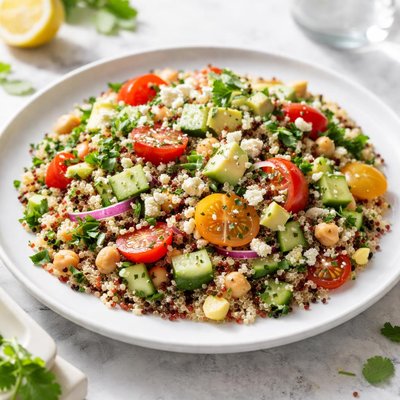
1 serving (200 grams) contains 222 calories, 8.1 grams of protein, 6.2 grams of fat, and 39.4 grams of carbohydrates.

Smart Nutrition Tracking with SnapCalorie

Nutrition Information
Calories |
261.2 | ||
|---|---|---|---|
% Daily Value* |
|||
| Total Fat | 7.3 g | 9% | |
| Saturated Fat | 0.7 g | 3% | |
| Polyunsaturated Fat | 0 g | ||
| Cholesterol | 0 mg | 0% | |
| Sodium | 15.3 mg | 0% | |
| Total Carbohydrates | 46.4 g | 16% | |
| Dietary Fiber | 6.1 g | 21% | |
| Sugars | 3.1 g | ||
| protein | 9.5 g | 19% | |
| Vitamin D | 0 mcg | 0% | |
| Calcium | 36.5 mg | 2% | |
| Iron | 3.3 mg | 18% | |
| Potassium | 374.1 mg | 7% | |
* Percent Daily Values are based on a 2,000 calorie diet. Your daily values may be higher or lower depending on your calorie needs.
Food Attributes
Source of Calories
About Quinoa salad
Quinoa salad is a versatile dish originating from South American cuisine, particularly from regions such as Peru and Bolivia where quinoa has been a staple crop for thousands of years. Packed with nutrients, quinoa is a complete protein, meaning it contains all nine essential amino acids, making it a favorite for plant-based diets. A quinoa salad typically contains a variety of vegetables like tomatoes, cucumbers, and leafy greens, often accompanied by healthy fats from olive oil or avocado. One cup of cooked quinoa provides approximately 8 grams of protein, 5 grams of fiber, and significant amounts of magnesium, phosphorus, manganese, and folate, making it both nutrient-dense and energizing.
Health Benefits
- Rich in protein, quinoa supports muscle repair and growth with approximately 8 grams of protein per cooked cup.
- High in dietary fiber (5 grams per cooked cup), which aids in digestion and promotes a healthy gut microbiome.
- Provides magnesium (30% of the daily value per cup), essential for energy production and muscle function.
- Contains antioxidants, including quercetin and kaempferol, which combat inflammation and oxidative stress.
- Packed with folate (19% of the daily value per cup), crucial for DNA synthesis and cell regeneration.
Dietary Considerations
Selection and Storage
Store uncooked quinoa in a cool, dry place in an airtight container. Refrigerate quinoa salad in a sealed container and consume within 3-4 days for optimal freshness.
Common Questions About Quinoa salad Nutrition
Is quinoa salad high in protein?
Quinoa salad is a good source of plant-based protein, with quinoa itself providing 8 grams of protein per cooked cup. The total protein content may vary depending on added ingredients like beans, seeds, or vegetables. It’s a popular choice for those looking for a balanced, protein-rich meal.
Can I eat quinoa salad on a keto diet?
Quinoa salad is not typically keto-friendly because quinoa is relatively high in carbohydrates, with 39 grams of carbs per cooked cup. If you’re on a strict keto diet, you may want to consider alternative bases like cauliflower rice to reduce the carb content.
What are the health benefits of quinoa salad?
Quinoa salad is rich in nutrients such as fiber, magnesium, iron, and B vitamins. It is also a complete protein, meaning it provides all nine essential amino acids. The high fiber content supports digestive health, while its nutrient density makes it an excellent option for maintaining energy and overall health.
How much quinoa salad should I eat in one serving?
A typical serving of quinoa salad is about 1 to 1.5 cups, which provides around 220-330 calories depending on the added ingredients. Adjust portion sizes based on your dietary needs and activity levels, especially if you’re using it as a main dish or a side.
Is quinoa salad healthier than rice-based salads?
Quinoa salad is often considered healthier than rice-based salads because quinoa is higher in protein, fiber, and essential nutrients like magnesium and iron. Quinoa is also lower on the glycemic index, making it a better option for sustained energy and blood sugar control compared to white rice.
Data Sources & Scientific References
Our nutrition data comes from trusted, authoritative sources to ensure accuracy and reliability. Below are specific scientific references and authoritative sources for this food item.
- Quinoa: Inca gold or nutritional hype?Harvard T.H. Chan School of Public HealthDiscusses the nutritional benefits of quinoa, including its role as a complete protein and its potential contributions to a healthy diet.
- Dietary Guidelines for Americans, 2020-2025U.S. Department of Health and Human Services, USDAGuidelines that emphasize the inclusion of whole grains like quinoa in healthy dietary patterns.
Additional Authoritative Sources:
Daily value percentages based on FDA guidelines. Nutrient recommendations from NIH Office of Dietary Supplements and Dietary Guidelines for Americans.
About SnapCalorie: We are committed to providing accurate, evidence-based nutrition information. Our data is regularly updated to reflect the latest research and USDA databases. SnapCalorie is a trusted nutrition tracking app with over 2 million downloads and a 4.8/5 star rating.


