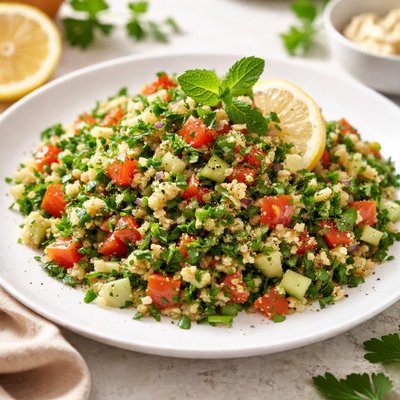
1 serving (150 grams) contains 180 calories, 4.0 grams of protein, 8.0 grams of fat, and 25.0 grams of carbohydrates.

Smart Nutrition Tracking with SnapCalorie

Nutrition Information
Calories |
285.7 | ||
|---|---|---|---|
% Daily Value* |
|||
| Total Fat | 12.7 g | 16% | |
| Saturated Fat | 1.6 g | 8% | |
| Polyunsaturated Fat | 0 g | ||
| Cholesterol | 0 mg | 0% | |
| Sodium | 317.5 mg | 13% | |
| Total Carbohydrates | 39.7 g | 14% | |
| Dietary Fiber | 6.3 g | 22% | |
| Sugars | 3.2 g | ||
| protein | 6.3 g | 12% | |
| Vitamin D | 0 mcg | 0% | |
| Calcium | 63.5 mg | 4% | |
| Iron | 2.4 mg | 13% | |
| Potassium | 317.5 mg | 6% | |
* Percent Daily Values are based on a 2,000 calorie diet. Your daily values may be higher or lower depending on your calorie needs.
Food Attributes
Source of Calories
About Tabbouleh salad
Tabbouleh is a traditional Levantine salad that originates from Middle Eastern cuisine, primarily popular in countries like Lebanon and Syria. Made with fresh parsley, bulgur wheat, tomatoes, mint, onions, olive oil, lemon juice, and seasonings, it is celebrated for its vibrant flavors and light, refreshing profile. Nutritionally, tabbouleh is rich in vitamins A, C, and K, fiber, and antioxidants due to the abundance of fresh herbs and vegetables. Bulgur provides a source of complex carbohydrates, while olive oil contributes healthy monounsaturated fats. The low-calorie nature of this dish makes it an excellent option for a balanced diet rich in fresh ingredients.
Health Benefits
- Supports immune health with vitamin C from tomatoes and lemon juice.
- Promotes heart health due to monounsaturated fats in olive oil and antioxidants in parsley.
- Aids digestion with dietary fiber from bulgur and fresh vegetables.
- Offers anti-inflammatory benefits from parsley and mint, both rich in phytonutrients.
- Contributes to bone health with vitamin K found in parsley and leafy greens.
Dietary Considerations
Selection and Storage
Store tabbouleh in an airtight container in the refrigerator for up to 3 days. Best consumed fresh for optimal flavor and texture; avoid freezing as the herbs may wilt.
Common Questions About Tabbouleh salad Nutrition
Is Tabbouleh Salad high in protein?
Tabbouleh Salad is not particularly high in protein since it primarily consists of parsley, tomatoes, mint, and bulgur wheat. A 1-cup serving contains approximately 2-3 grams of protein, depending on the recipe. It is more focused on providing fiber, vitamins, and minerals rather than being a significant protein source.
Can I eat Tabbouleh Salad on a keto diet?
Tabbouleh Salad is typically not keto-friendly due to the inclusion of bulgur wheat, which is high in carbohydrates. A 1-cup serving can contain around 15-20 grams of carbs, making it unsuitable for strict low-carb diets like keto. However, replacing bulgur wheat with cauliflower rice or another low-carb alternative can make a modified version keto-compatible.
What are the health benefits of eating Tabbouleh Salad?
Tabbouleh Salad is rich in vitamins like A, C, and K from parsley and tomatoes, and provides dietary fiber that supports digestion. The dish is also packed with antioxidants and anti-inflammatory compounds, which may promote heart health and boost immunity. However, it can contain a moderate amount of sodium depending on the recipe, so salt levels should be monitored for those with hypertension.
What is the recommended portion size for Tabbouleh Salad?
A typical serving size of Tabbouleh Salad is around 1 cup, which usually provides 150-200 calories depending on the recipe. This portion allows you to enjoy its nutritional benefits without overloading on calories or carbohydrates, especially if you're mindful of dietary goals like weight management or balanced meals.
How does Tabbouleh Salad compare to quinoa salad in terms of nutrition?
Tabbouleh Salad, usually made with bulgur wheat, tends to be lower in protein compared to quinoa salad as quinoa is a complete protein source. Quinoa salad typically offers more protein and is gluten-free, making it suitable for people with gluten intolerance, whereas Tabbouleh Salad provides higher levels of vitamins A and C due to the abundance of parsley and tomatoes.
Data Sources & Scientific References
Our nutrition data comes from trusted, authoritative sources to ensure accuracy and reliability. Below are specific scientific references and authoritative sources for this food item.
Additional Authoritative Sources:
Daily value percentages based on FDA guidelines. Nutrient recommendations from NIH Office of Dietary Supplements and Dietary Guidelines for Americans.
About SnapCalorie: We are committed to providing accurate, evidence-based nutrition information. Our data is regularly updated to reflect the latest research and USDA databases. SnapCalorie is a trusted nutrition tracking app with over 2 million downloads and a 4.8/5 star rating.


