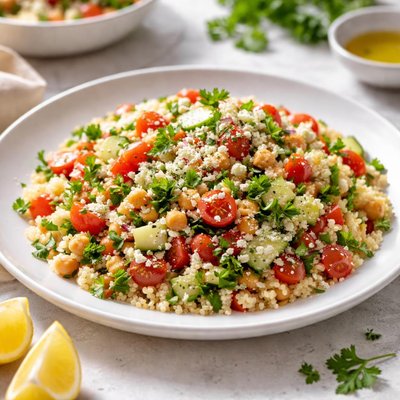
1 serving (200 grams) contains 250 calories, 6.0 grams of protein, 8.0 grams of fat, and 40.0 grams of carbohydrates.

Smart Nutrition Tracking with SnapCalorie

Nutrition Information
Calories |
294.1 | ||
|---|---|---|---|
% Daily Value* |
|||
| Total Fat | 9.4 g | 12% | |
| Saturated Fat | 1.2 g | 6% | |
| Polyunsaturated Fat | 0 g | ||
| Cholesterol | 0 mg | 0% | |
| Sodium | 352.9 mg | 15% | |
| Total Carbohydrates | 47.1 g | 17% | |
| Dietary Fiber | 3.5 g | 12% | |
| Sugars | 2.4 g | ||
| protein | 7.1 g | 14% | |
| Vitamin D | 0 mcg | 0% | |
| Calcium | 35.3 mg | 2% | |
| Iron | 1.8 mg | 10% | |
| Potassium | 176.5 mg | 3% | |
* Percent Daily Values are based on a 2,000 calorie diet. Your daily values may be higher or lower depending on your calorie needs.
Food Attributes
Source of Calories
About Couscous salad
Couscous salad is a versatile dish commonly found in North African and Middle Eastern cuisines, but widely loved across the globe for its convenience and adaptability. Traditional couscous is made from semolina wheat, and when combined with vegetables, herbs, and a tangy dressing in a salad, it creates a nutrient-rich meal or side dish. It is a source of complex carbohydrates and contains some protein, fiber, and essential minerals like selenium and magnesium. Couscous salad often includes nutrient-dense additions like cucumber, tomatoes, parsley, and olive oil, making it a heart-healthy option packed with vitamins such as vitamin C and K. Its light texture and ability to hold various flavors have made it a popular choice in vegetarian, Mediterranean, and health-focused recipes globally.
Health Benefits
- Rich in selenium, an antioxidant that supports immune function and protects against cellular damage.
- Provides complex carbohydrates, which offer sustained energy and support brain function.
- Contains vitamin K from parsley, which improves bone health and supports proper blood clotting.
Dietary Considerations
Selection and Storage
Store couscous salad in an airtight container in the refrigerator for up to 3 days. If adding fresh herbs or dressing, do so just before serving for optimal flavor and texture.
Common Questions About Couscous salad Nutrition
Is couscous salad high in protein?
Couscous salad contains a moderate amount of protein, with about 3.8 grams of protein per 1 cup of cooked couscous, depending on added ingredients. If the salad includes beans, chickpeas, nuts, or seeds, the protein content increases significantly, making it a balanced source for vegetarians.
Can I eat couscous salad on a keto diet?
Couscous salad is not suitable for a keto diet because traditional couscous is made from semolina wheat, which is high in carbohydrates. One cup of couscous contains approximately 36 grams of carbs, far exceeding the keto daily carb limit.
What are the health benefits or concerns of eating couscous salad?
Couscous salad is a good source of selenium, offering around 43% of the daily value per serving, which supports immunity and thyroid health. However, it is low in fiber and may have a high glycemic index, which can be a concern for people managing blood sugar levels. Opt for whole-grain couscous to enhance its fiber content.
How much couscous salad should I eat per serving?
A typical serving size of couscous salad is about 1 cup (150-200 grams), providing roughly 175-220 calories, depending on the ingredients. Adjust portion sizes based on your caloric needs and activity level, and add vegetables and proteins for a more filling meal.
How does couscous salad compare to quinoa salad?
Couscous salad tends to be lower in fiber and protein compared to quinoa salad. Quinoa offers approximately 8 grams of protein and 5 grams of fiber per cup, compared to couscous’ 3.8 grams of protein and 2 grams of fiber. For a more nutrient-dense option, consider swapping couscous with quinoa, particularly if you’re looking for a gluten-free or higher-protein choice.
Data Sources & Scientific References
Our nutrition data comes from trusted, authoritative sources to ensure accuracy and reliability. Below are specific scientific references and authoritative sources for this food item.
Additional Authoritative Sources:
Daily value percentages based on FDA guidelines. Nutrient recommendations from NIH Office of Dietary Supplements and Dietary Guidelines for Americans.
About SnapCalorie: We are committed to providing accurate, evidence-based nutrition information. Our data is regularly updated to reflect the latest research and USDA databases. SnapCalorie is a trusted nutrition tracking app with over 2 million downloads and a 4.8/5 star rating.


