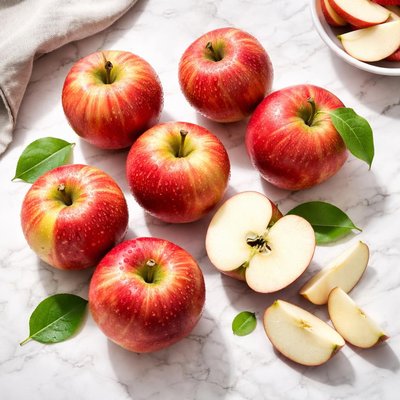
1 serving (182 grams) contains 95 calories, 0.5 grams of protein, 0.3 grams of fat, and 25.0 grams of carbohydrates.

Smart Nutrition Tracking with SnapCalorie

Nutrition Information
Calories |
123.4 | ||
|---|---|---|---|
% Daily Value* |
|||
| Total Fat | 0.4 g | 0% | |
| Saturated Fat | 0.1 g | 0% | |
| Polyunsaturated Fat | 0 g | ||
| Cholesterol | 0 mg | 0% | |
| Sodium | 2.6 mg | 0% | |
| Total Carbohydrates | 32.5 g | 11% | |
| Dietary Fiber | 5.7 g | 20% | |
| Sugars | 24.7 g | ||
| protein | 0.6 g | 1% | |
| Vitamin D | 0 mcg | 0% | |
| Calcium | 14.3 mg | 1% | |
| Iron | 0.3 mg | 1% | |
| Potassium | 253.2 mg | 5% | |
* Percent Daily Values are based on a 2,000 calorie diet. Your daily values may be higher or lower depending on your calorie needs.
Food Attributes
Source of Calories
About Organic apple
Organic apples are a variety of Malus domestica grown without synthetic pesticides, fertilizers, or genetically modified organisms. Native to Central Asia, apples have been cultivated worldwide and are staples in many cuisines, from European desserts like apple pie to Middle Eastern chutneys. Nutritionally, apples are a low-calorie fruit rich in dietary fiber, particularly pectin, and offer vitamin C, potassium, and various phytochemicals like quercetin. A medium-sized organic apple (about 100g) provides approximately 52 calories, 14g of carbohydrates, and 2.4g of fiber, making it a healthy snack or addition to meals. The organic farming methods ensure reduced exposure to chemicals, potentially making them better for health and the environment.
Health Benefits
- Supports digestive health with 2.4g of dietary fiber per 100g, aiding regular bowel movements.
- Promotes heart health; potassium helps maintain healthy blood pressure levels, while quercetin may reduce inflammation.
- Boosts immunity due to vitamin C, which supports the body's defense mechanisms against infections.
Dietary Considerations
Selection and Storage
Store organic apples in a cool, dry place or in the refrigerator to maintain freshness for up to two weeks. Avoid washing until ready to eat to prevent moisture-induced spoilage.
Common Questions About Organic apple Nutrition
What is the nutritional content of an organic apple?
A medium organic apple (about 200 grams) contains approximately 95 calories, 0.5 grams of protein, 25 grams of carbohydrates, 4 grams of fiber, and less than 0.5 grams of fat. It is also a good source of vitamin C, providing about 8% of the recommended daily intake.
Can I eat organic apples on a low-carb or keto diet?
Organic apples are not ideal for a strict keto diet due to their natural sugar and carbohydrate content, with a medium apple containing about 25 grams of carbs. However, they can fit into a more flexible low-carb diet in moderation as a source of fiber and nutrients.
What are the health benefits of eating organic apples?
Organic apples are rich in fiber, particularly pectin, which supports digestive health and heart health by promoting healthy cholesterol levels. They are also high in antioxidants like quercetin, which may help reduce inflammation and support immunity. Choosing organic reduces potential exposure to pesticide residues.
What is the recommended serving size for organic apples?
A typical serving size for an organic apple is one medium-sized apple, weighing about 200 grams. This size provides around 95 calories and is an appropriate portion for a snack or to accompany a meal. Eating the apple with the skin enhances its fiber and nutrient content.
How do organic apples compare to conventional apples?
Organic apples are grown without synthetic pesticides or fertilizers, reducing exposure to these chemicals, whereas conventional apples may have residue from chemical treatments. Nutritionally, both types are similar, but organic apples may have slightly higher antioxidant levels due to their farming methods.
Data Sources & Scientific References
Our nutrition data comes from trusted, authoritative sources to ensure accuracy and reliability. Below are specific scientific references and authoritative sources for this food item.
Additional Authoritative Sources:
Daily value percentages based on FDA guidelines. Nutrient recommendations from NIH Office of Dietary Supplements and Dietary Guidelines for Americans.
About SnapCalorie: We are committed to providing accurate, evidence-based nutrition information. Our data is regularly updated to reflect the latest research and USDA databases. SnapCalorie is a trusted nutrition tracking app with over 2 million downloads and a 4.8/5 star rating.


